
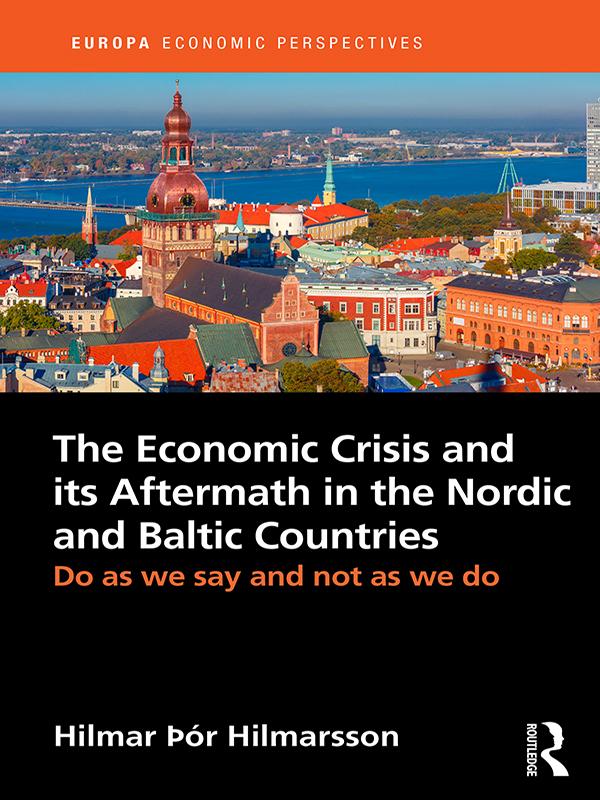
The Nordic-Baltic region has become highly integrated. The Nordic countries have been successful in balancing competitiveness and economic growth with social inclusiveness, while the Baltic States have grown economically but remain vulnerable with weak social systems and highly unequal income distribution. European Union (EU) membership and inter-linkages with the continental Nordic banking systems appear to have affected the 2008/09 crisis response of the Baltic States.
In spite of their strengths, including their social systems, continental Nordic states are faced with a challenging mix of large, cross-border banks and highly indebted households at a time of rather weak global growth. The Baltic States are challenged by slow economic growth post-crisis, security concerns, and large-scale outward migration of the youngest and most highly educated people.
It is now a decade since the Baltic States were hit by the global crisis. It is time to take stock of their progress and assess their relations with other countries in the region and with the EU. This book focuses on the Baltics and their Nordic partners pre- and post-crisis: successes, failures, lessons learned, and future challenges, examining and comparing the crisis response of these various small states that enjoy different income levels, operate different welfare and tax systems, and seek different levels of integration with the EU.
Betal nemt med kort, Klarna, Apple Pay eller Google Pay. Ikke tilfreds? Du har altid 14 dages fortrydelsesret. Læs mere i vores vilkår. Har du spørgsmål, så send os en mail på hello@memmo.org.
Memmo gør det nemmere at studere – uanset hvor du er i verden. Hos os samler du dine kursusbøger og smarte studieværktøjer ét sted: resuméer, quizzer, podcasts og flashcards. Og så er der Ted, din studieven, der svarer på alt, du undrer dig over. Over 50 000 studerende studerer allerede her – bygget til at hjælpe dig med at lære hurtigere og stresse mindre.