
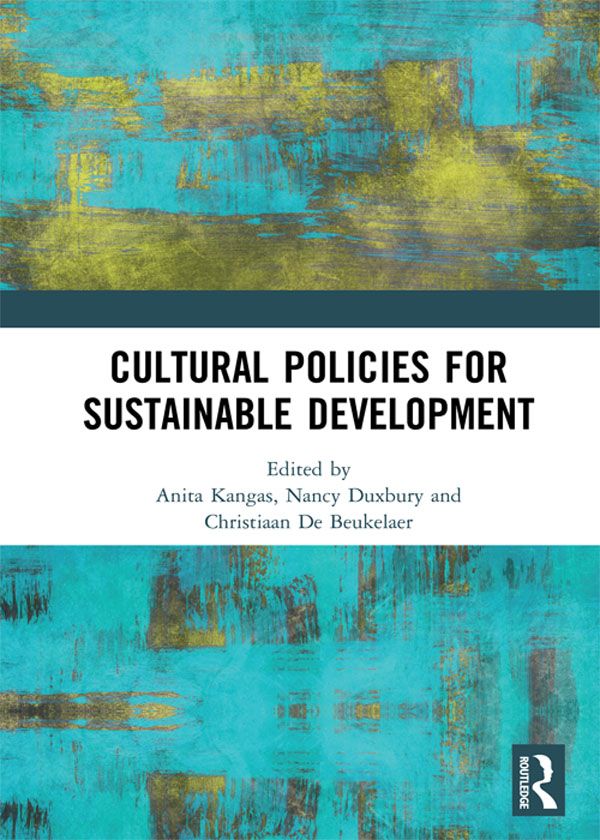
The concept of sustainable development is commonly divided into environmental, economic, social and cultural dimensions. While a variety of international actors have declared the importance of culture in sustainable development, jointly articulating this clearly has been difficult. For example, the Sustainable Development Goals (SDGs) that were adopted by the UN General Assembly in September 2015 contained only the most fleeting mention of culture. None of the SDGs referred directly to the case for integrating culture into sustainable development planning and decision-making. The role of cultural policy has remained unclear.
This book contributes to a better understanding of the role of culture in achieving sustainability, focusing on the particular roles for cultural policy in this context. Cultural sustainability is conceptualised as the sustainability of cultural and artistic practices and patterns, and to the role of cultural traits and actions to inform and compose part of the pathways towards more sustainable societies. The links between culture and sustainable development are analysed in ways that articulate and contemplate different roles for cultural policy. The contributors take up the concerns and perspectives of international, national, and local authorities and actors, illuminating ways in which these multi-scale efforts both intersect and diverge.
This book was originally published as a special issue of the International Journal of Cultural Policy.
Betal nemt med kort, Klarna, Apple Pay eller Google Pay. Ikke tilfreds? Du har altid 14 dages fortrydelsesret. Læs mere i vores vilkår. Har du spørgsmål, så send os en mail på hello@memmo.org.
Memmo gør det nemmere at studere – uanset hvor du er i verden. Hos os samler du dine kursusbøger og smarte studieværktøjer ét sted: resuméer, quizzer, podcasts og flashcards. Og så er der Ted, din studieven, der svarer på alt, du undrer dig over. Over 50 000 studerende studerer allerede her – bygget til at hjælpe dig med at lære hurtigere og stresse mindre.