
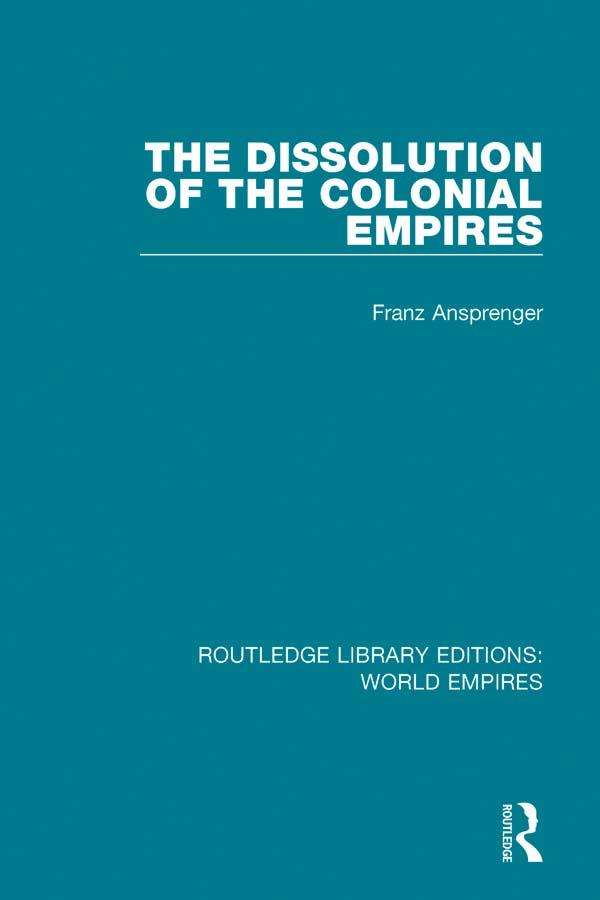
First published in 1989. On the eve of the First World War, almost 72 million square kilometres of territory and more than 560 million people were under colonial rule. By 1980 the European colonial empires had disappeared from the map. Concentrating in particular on the British Commonwealth and the French colonial empire, the author shows how economic and political changes in the mother countries, the awakening national consciousness of the African and Asian peoples, and the effects of two World Wars had all compelled Europe to decolonize. He argues that although a satisfactory new order in world politics and the global economy has not been achieved in the process, the dissolution of the empires came about with remarkably little bloodshed, thereby laying a solid foundation for the future.
The author concludes by looking at the legacy of the decolonized world in the late 1980s. He examines the last bastion of European colonial domination (South Africa) and discusses the emerging new North-South relations.
Betal nemt med kort, Klarna, Apple Pay eller Google Pay. Ikke tilfreds? Du har altid 14 dages fortrydelsesret. Læs mere i vores vilkår. Har du spørgsmål, så send os en mail på hello@memmo.org.
Memmo gør det nemmere at studere – uanset hvor du er i verden. Hos os samler du dine kursusbøger og smarte studieværktøjer ét sted: resuméer, quizzer, podcasts og flashcards. Og så er der Ted, din studieven, der svarer på alt, du undrer dig over. Over 50 000 studerende studerer allerede her – bygget til at hjælpe dig med at lære hurtigere og stresse mindre.