
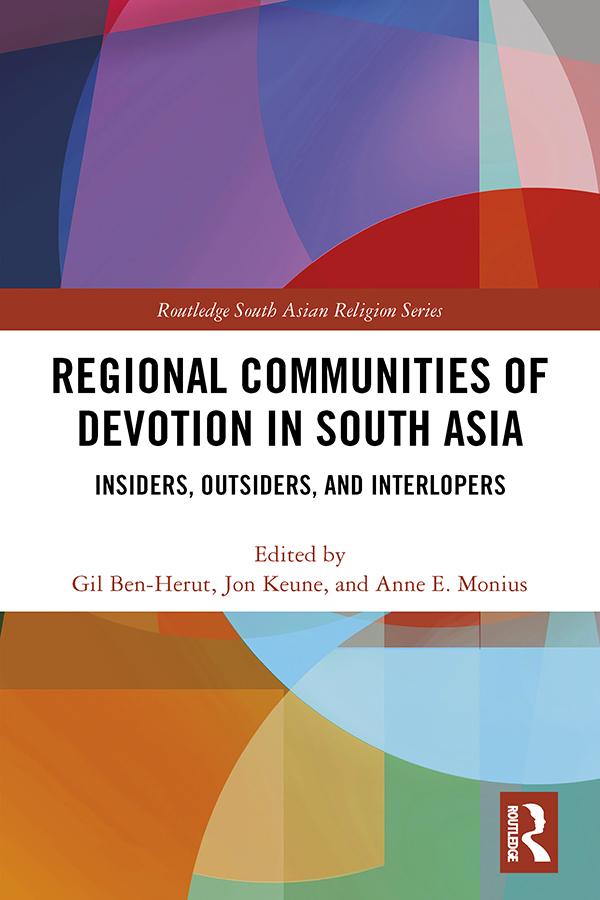
This book explores the key motif of the religious other in devotional (bhakti) literatures and practices from across the Indian subcontinent unmasks processes of representation that involve adoption, appropriation, and rejection of different social and religious agents.
The book reconsiders and challenges inherited notions of the bhakta’s or devotee’s other. Considering the ways in which bhakti might be conceived as having an inter-regional impact—as a force, discourse, network, mythology, ethic—the book critically engages with extant scholarly narratives about what bhakti is and traces when and how those narratives have been used. The sheer diversity of South Asia’s devotional traditions renders them an especially rich resource for examining social and religious fault lines, thereby furthering scholarly understanding of how communalism and sectarianism originate and develop on local or regional levels, with wider geographic implications.
Bringing together studies from a subcontinent-wide variety of linguistic, geographical, and historical frames for the first time, this book will be an important contribution to the literature on bhakti and will be of interest to scholars of South Asian Religions and Asian Religions.
Betal nemt med kort, Klarna, Apple Pay eller Google Pay. Ikke tilfreds? Du har altid 14 dages fortrydelsesret. Læs mere i vores vilkår. Har du spørgsmål, så send os en mail på hello@memmo.org.
Memmo gør det nemmere at studere – uanset hvor du er i verden. Hos os samler du dine kursusbøger og smarte studieværktøjer ét sted: resuméer, quizzer, podcasts og flashcards. Og så er der Ted, din studieven, der svarer på alt, du undrer dig over. Over 50 000 studerende studerer allerede her – bygget til at hjælpe dig med at lære hurtigere og stresse mindre.