
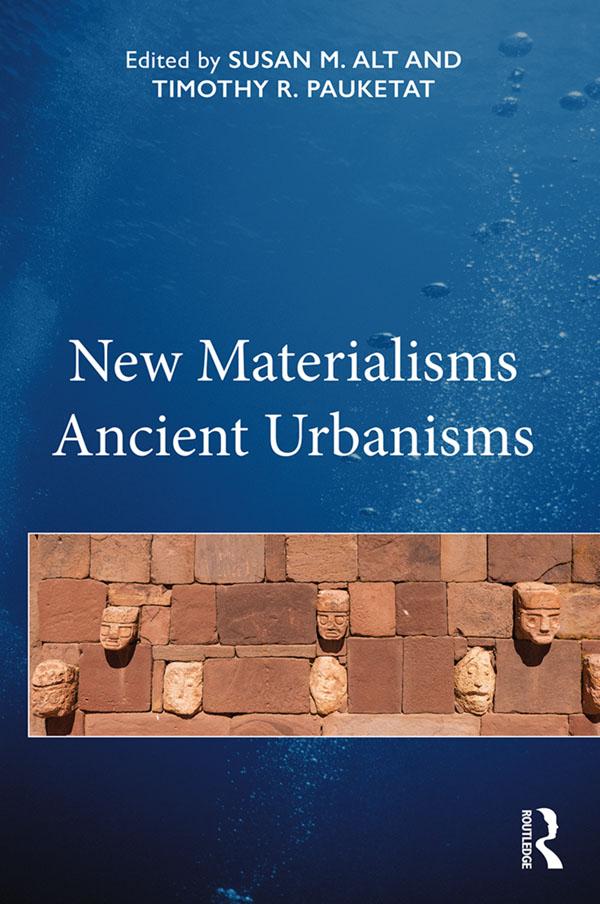
The future of humanity is urban, and knowledge of urbanism’s deep past is critical for us all to navigate that future. The time has come for archaeologists to rethink this global phenomenon by asking what urbanism is and, more to the point, was. Can we truly understand ancient urbanism by only asking after the human element, or are the properties and qualities of landscapes, materials, and atmospheres equally causal?
The nine authors of New Materialisms Ancient Urbanisms seek less anthropocentric answers to questions about the historical relationships between urbanism and humanity in Africa, Asia, and the Americas. They analyze the movements and flows of materials, things, phenomena, and beings—human and otherwise—as these were assembled to produce the kinds of complex, dense, and stratified relationships that we today label urban. In so doing, the book emerges as a work of both theory and historical anthropology. It breaks new ground in the archaeology of urbanism, building on the latest ‘New Materialist’, ‘relational-ontological’, and ‘realist’ trends in social theory.
This book challenges a new generation of students to think outside the box, and provides scholars of urbanism, archaeology, and anthropology with a fresh perspective on the development of urban society.
Betal nemt med kort, Klarna, Apple Pay eller Google Pay. Ikke tilfreds? Du har altid 14 dages fortrydelsesret. Læs mere i vores vilkår. Har du spørgsmål, så send os en mail på hello@memmo.org.
Memmo gør det nemmere at studere – uanset hvor du er i verden. Hos os samler du dine kursusbøger og smarte studieværktøjer ét sted: resuméer, quizzer, podcasts og flashcards. Og så er der Ted, din studieven, der svarer på alt, du undrer dig over. Over 50 000 studerende studerer allerede her – bygget til at hjælpe dig med at lære hurtigere og stresse mindre.