
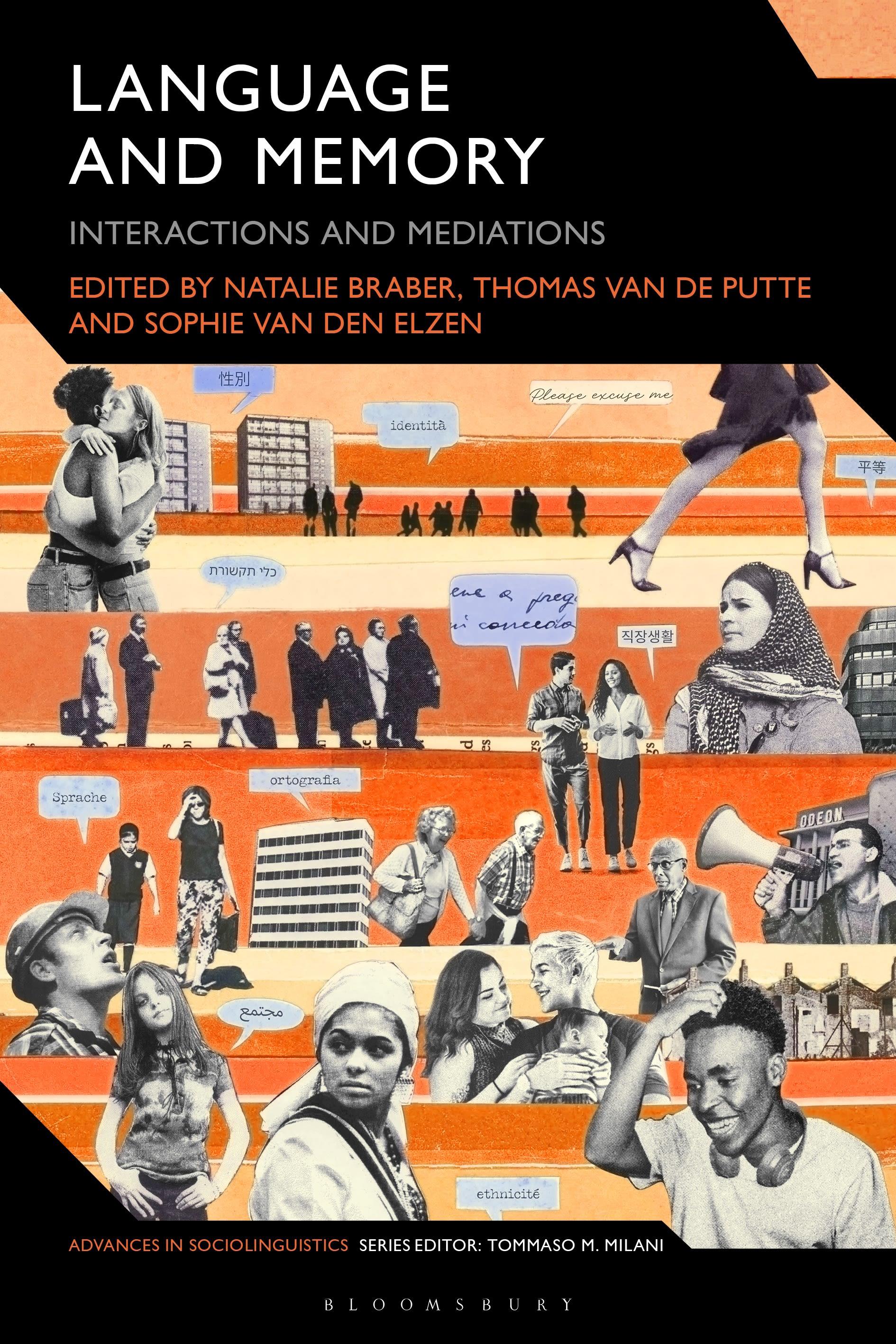
This interdisciplinary edited volume combines linguistic and memory approaches to study how people attribute meaning to the past.
It includes contributions by linguists who consider memory and its theories, and by memory scholars without linguistic background who look at sociolinguistic methods and concepts.
The book is divided into three parts and includes case studies from countries including Belgium, Chile, Cyprus, India, Italy, Poland and Sri Lanka. The first part considers ways in which memory scholars might reach out to discourse analytical and other sociolinguistic methods to make sense of a variety of memory phenomena. The second considers cutting-edge linguistic research which reaches out to memory scholars and their body of theories. The final section centres on how language itself can be studied as a 'site of memory'. Its symbolic power is salient for communities to make sense of continuities between past, present and future.
In addition to offering relevant theoretical recombinations and concrete methodological ways forward, the chapters indicate the different scales that come into play in this type of research, and what is at stake. The case studies from each chapter vary from the intimate, such as oral histories in the family setting and the difficult work of translators for asylum seekers, to the networked contexts of diasporic internet fora, and the grand-historical scale of the role of heritage in long-standing territorial disputes, as in the case of Cyprus. By bringing these scales together, readers are poised to discover new connections and instances of interscalar transfer.
This book makes a powerful case that the connections between language and memory are crucial across cultures and at different scales.
It includes contributions by linguists who consider memory and its theories, and by memory scholars without linguistic background who look at sociolinguistic methods and concepts.
The book is divided into three parts and includes case studies from countries including Belgium, Chile, Cyprus, India, Italy, Poland and Sri Lanka. The first part considers ways in which memory scholars might reach out to discourse analytical and other sociolinguistic methods to make sense of a variety of memory phenomena. The second considers cutting-edge linguistic research which reaches out to memory scholars and their body of theories. The final section centres on how language itself can be studied as a 'site of memory'. Its symbolic power is salient for communities to make sense of continuities between past, present and future.
In addition to offering relevant theoretical recombinations and concrete methodological ways forward, the chapters indicate the different scales that come into play in this type of research, and what is at stake. The case studies from each chapter vary from the intimate, such as oral histories in the family setting and the difficult work of translators for asylum seekers, to the networked contexts of diasporic internet fora, and the grand-historical scale of the role of heritage in long-standing territorial disputes, as in the case of Cyprus. By bringing these scales together, readers are poised to discover new connections and instances of interscalar transfer.
This book makes a powerful case that the connections between language and memory are crucial across cultures and at different scales.
Betal nemt med kort, Klarna, Apple Pay eller Google Pay. Ikke tilfreds? Du har altid 14 dages fortrydelsesret. Læs mere i vores vilkår. Har du spørgsmål, så send os en mail på hello@memmo.org.
Memmo gør det nemmere at studere – uanset hvor du er i verden. Hos os samler du dine kursusbøger og smarte studieværktøjer ét sted: resuméer, quizzer, podcasts og flashcards. Og så er der Ted, din studieven, der svarer på alt, du undrer dig over. Over 50 000 studerende studerer allerede her – bygget til at hjælpe dig med at lære hurtigere og stresse mindre.