
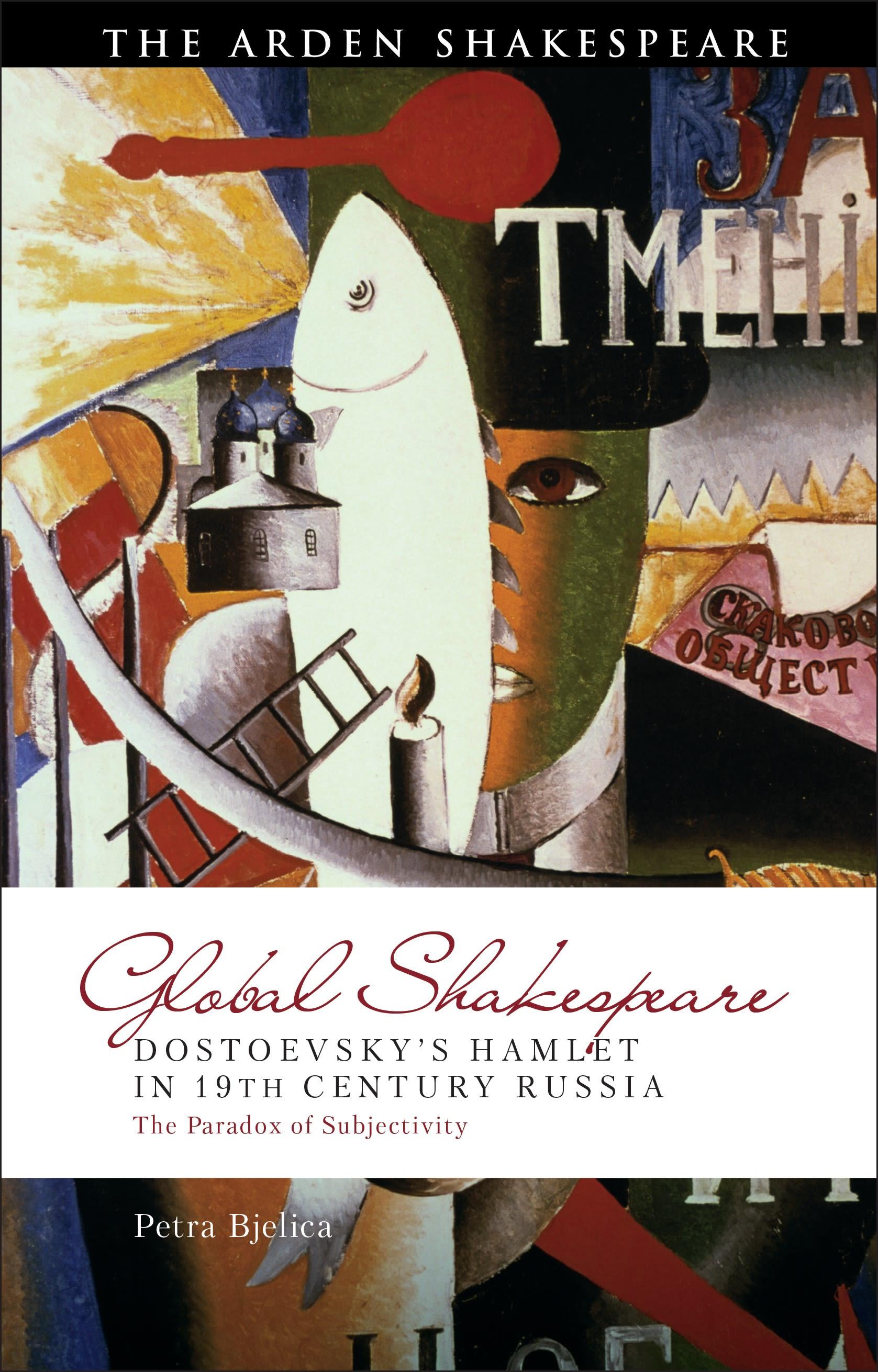
Dostoevsky uses Hamlet to address some of the most important problems in Russian culture in the second half of the 19th century. Approaching Dostoevsky's engagement with Shakespeare through a focus on his novel, Demons, Petra Bjelica considers the figure of Hamlet as it connects to Russian national identity, spirituality and cultural migration.
Bjelica argues that Russian Hamletism is a perfect example of how a literary phenomenon forms through a specific culture. She reads Dostoevsky's use of Hamlet through the Tsarist government, the wide gap between the aristocratic, working and peasant class, and the educated intelligentsia of the period. Russian Hamletism is shown to reflect the hegemony of power as well as the intricate debates that arise via political, ideological and philosophical differences between Slavophiles and Westerners. The book touches on the translatability and universality of Shakespeare, his cultural hegemony and the ethics of appropriating the 'other' by exploring Dostoevsky's highly original interpretation of Hamlet. Rather than just referencing the play, Dostoevsky's engagement with opposing and contradictory elements of Russian Hamletism dramatize the Hamletian dilemma anew. By re-thinking literary transmission and the concept of source, the intertextuality of Shakespeare and Russian Hamletism in Dostoevsky finds new ground.
Bjelica argues that Russian Hamletism is a perfect example of how a literary phenomenon forms through a specific culture. She reads Dostoevsky's use of Hamlet through the Tsarist government, the wide gap between the aristocratic, working and peasant class, and the educated intelligentsia of the period. Russian Hamletism is shown to reflect the hegemony of power as well as the intricate debates that arise via political, ideological and philosophical differences between Slavophiles and Westerners. The book touches on the translatability and universality of Shakespeare, his cultural hegemony and the ethics of appropriating the 'other' by exploring Dostoevsky's highly original interpretation of Hamlet. Rather than just referencing the play, Dostoevsky's engagement with opposing and contradictory elements of Russian Hamletism dramatize the Hamletian dilemma anew. By re-thinking literary transmission and the concept of source, the intertextuality of Shakespeare and Russian Hamletism in Dostoevsky finds new ground.
Betal nemt med kort, Klarna, Apple Pay eller Google Pay. Ikke tilfreds? Du har altid 14 dages fortrydelsesret. Læs mere i vores vilkår. Har du spørgsmål, så send os en mail på hello@memmo.org.
Memmo gør det nemmere at studere – uanset hvor du er i verden. Hos os samler du dine kursusbøger og smarte studieværktøjer ét sted: resuméer, quizzer, podcasts og flashcards. Og så er der Ted, din studieven, der svarer på alt, du undrer dig over. Over 50 000 studerende studerer allerede her – bygget til at hjælpe dig med at lære hurtigere og stresse mindre.