
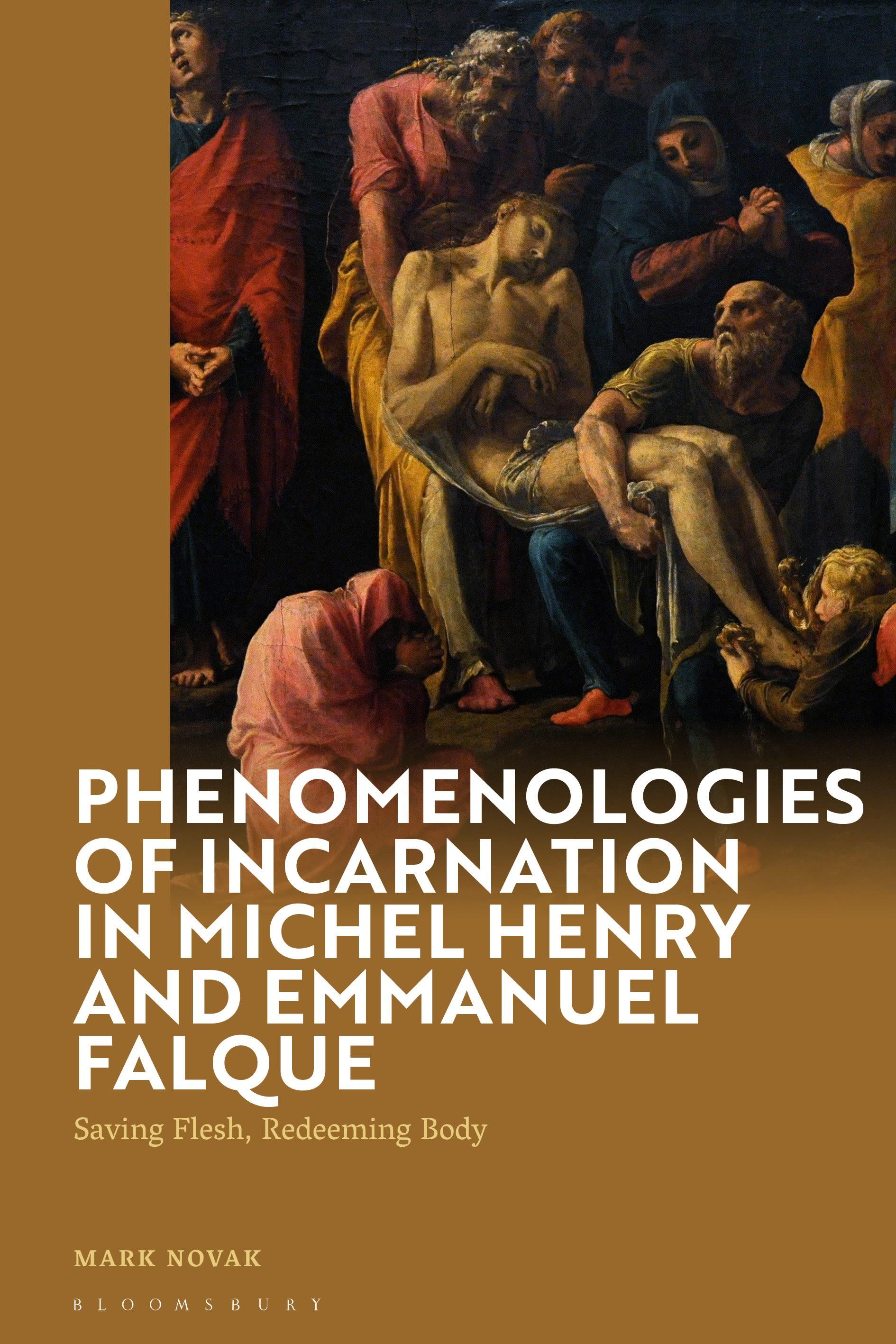
Bringing Michel Henry and Emmanuel Falque into dialogue, Mark Novak explores how they both articulate a phenomenology of the body and flesh in relation to incarnation.
As key proponents of the 'theological turn' in phenomenology, this volume illustrates how philosophical foundations inform Henry and Falque's theological views and uncovers the differences, and in some cases, surprising similarities between the two thinkers' positions on this central Christian tenet.
Beginning with a succinct overview of the origins of phenomenology and the shift towards embodiment, Novak surveys a number of different theories from Husserl's foundational distinction between flesh (Leib) and body (Körper) to Heidegger, Merleau-Ponty and Dominique Janicaud. With this, focus turns to Henry and Falque. Methodically examining each thinker's key texts on flesh and the body, Novak proposes that their views on incarnation are not as different as philosophers might think. Even despite Falque's claim that Henry's views on the incarnation neglect materiality by understanding the human being as flesh, Novak demonstrates how Falque's critical response to Henry's idea ironically mirrors it. By turning to material forces to better describe the body in his recent work, Falque recapitulates Henry's understanding of flesh.
Phenomenologies of Incarnation in Michel Henry and Emmanuel Falque provides a much-needed introduction to the phenomenology of embodiment and its important implications for philosophical theology.
As key proponents of the 'theological turn' in phenomenology, this volume illustrates how philosophical foundations inform Henry and Falque's theological views and uncovers the differences, and in some cases, surprising similarities between the two thinkers' positions on this central Christian tenet.
Beginning with a succinct overview of the origins of phenomenology and the shift towards embodiment, Novak surveys a number of different theories from Husserl's foundational distinction between flesh (Leib) and body (Körper) to Heidegger, Merleau-Ponty and Dominique Janicaud. With this, focus turns to Henry and Falque. Methodically examining each thinker's key texts on flesh and the body, Novak proposes that their views on incarnation are not as different as philosophers might think. Even despite Falque's claim that Henry's views on the incarnation neglect materiality by understanding the human being as flesh, Novak demonstrates how Falque's critical response to Henry's idea ironically mirrors it. By turning to material forces to better describe the body in his recent work, Falque recapitulates Henry's understanding of flesh.
Phenomenologies of Incarnation in Michel Henry and Emmanuel Falque provides a much-needed introduction to the phenomenology of embodiment and its important implications for philosophical theology.
Betal nemt med kort, Klarna, Apple Pay eller Google Pay. Ikke tilfreds? Du har altid 14 dages fortrydelsesret. Læs mere i vores vilkår. Har du spørgsmål, så send os en mail på hello@memmo.org.
Memmo gør det nemmere at studere – uanset hvor du er i verden. Hos os samler du dine kursusbøger og smarte studieværktøjer ét sted: resuméer, quizzer, podcasts og flashcards. Og så er der Ted, din studieven, der svarer på alt, du undrer dig over. Over 50 000 studerende studerer allerede her – bygget til at hjælpe dig med at lære hurtigere og stresse mindre.