
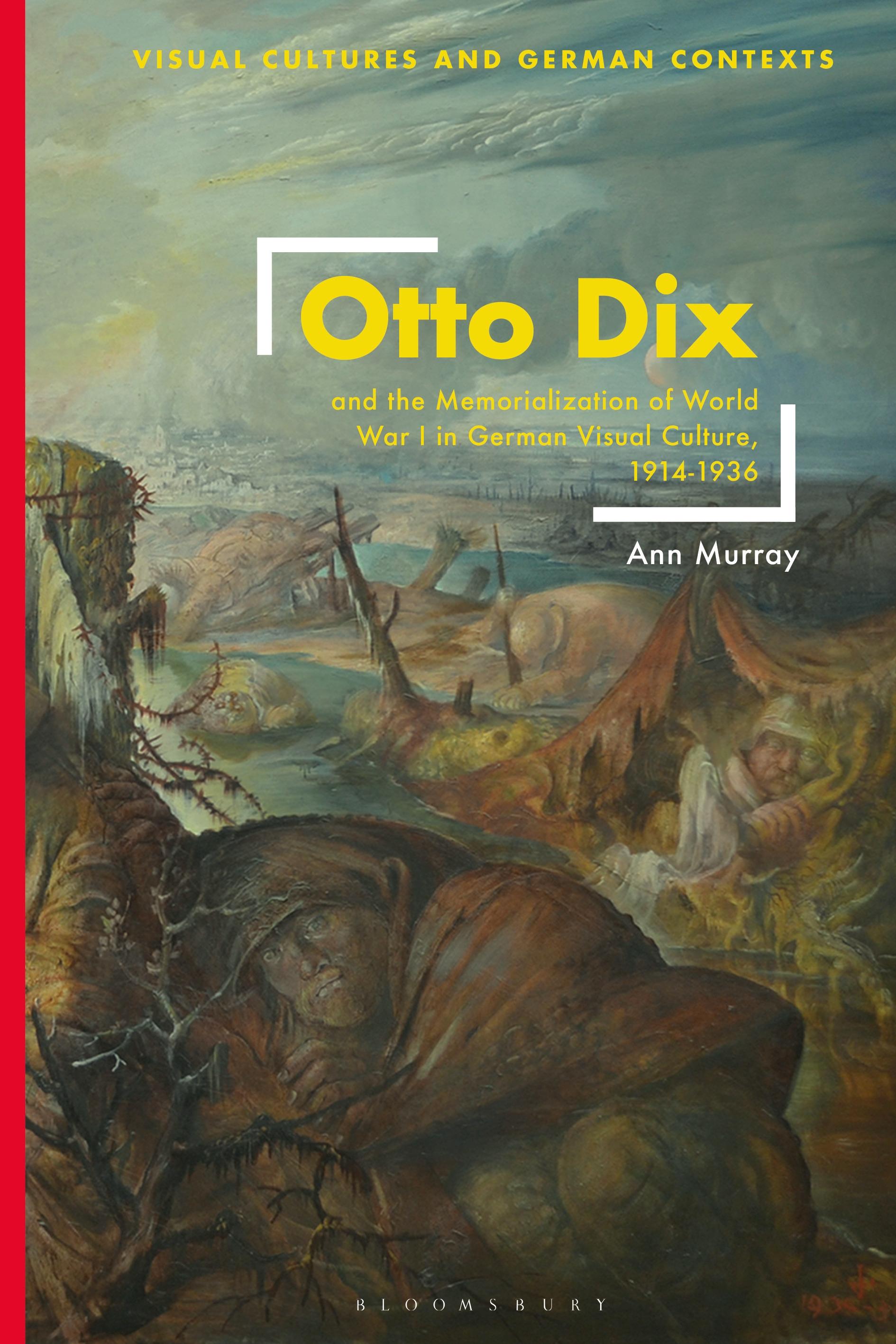
The harsh realities of wartime and Weimar-era Germany called for a new kind of art. Dada, followed by Neue Sachlichkeit (New Objectivity), confronted social and political issues in new and bold ways. This book highlights how Otto Dix (1891–1969) – one of the leading artists connected to these artistic movements – employed these new approaches to reveal the injustices of wartime and post-World War I Germany. Having spent 38 months on the frontline, his pictures revealed the brutalities of the conflict and helped establish him as one of Europe's leading modernists.
Offering substantial new research and presenting numerous primary sources to an English readership for the first time, the book examines Dix's war pictures within the broader visual culture of war in order to assess how they functioned alternatively as cutting-edge modernist art and transgressive war commemoration.
Each chapter provides a case study of the first public display of one or more of Dix's war pictures at key exhibitions and explores how their reception was subjected to changing socio-political and cultural conditions as well as divergent attitudes to the lost war. It pulls together a number of key approaches and texts: contemporary reviews, contemporary cultural productions (such as novels and cartoons), and theoretical and historical approaches from history, memory studies and art history.
Bringing a unique perspective and original scholarship to Dix's war works, this book is essential reading for art historians of World War I and the visual culture of Weimar Germany.
Offering substantial new research and presenting numerous primary sources to an English readership for the first time, the book examines Dix's war pictures within the broader visual culture of war in order to assess how they functioned alternatively as cutting-edge modernist art and transgressive war commemoration.
Each chapter provides a case study of the first public display of one or more of Dix's war pictures at key exhibitions and explores how their reception was subjected to changing socio-political and cultural conditions as well as divergent attitudes to the lost war. It pulls together a number of key approaches and texts: contemporary reviews, contemporary cultural productions (such as novels and cartoons), and theoretical and historical approaches from history, memory studies and art history.
Bringing a unique perspective and original scholarship to Dix's war works, this book is essential reading for art historians of World War I and the visual culture of Weimar Germany.
Betal nemt med kort, Klarna, Apple Pay eller Google Pay. Ikke tilfreds? Du har altid 14 dages fortrydelsesret. Læs mere i vores vilkår. Har du spørgsmål, så send os en mail på hello@memmo.org.
Memmo gør det nemmere at studere – uanset hvor du er i verden. Hos os samler du dine kursusbøger og smarte studieværktøjer ét sted: resuméer, quizzer, podcasts og flashcards. Og så er der Ted, din studieven, der svarer på alt, du undrer dig over. Over 50 000 studerende studerer allerede her – bygget til at hjælpe dig med at lære hurtigere og stresse mindre.