
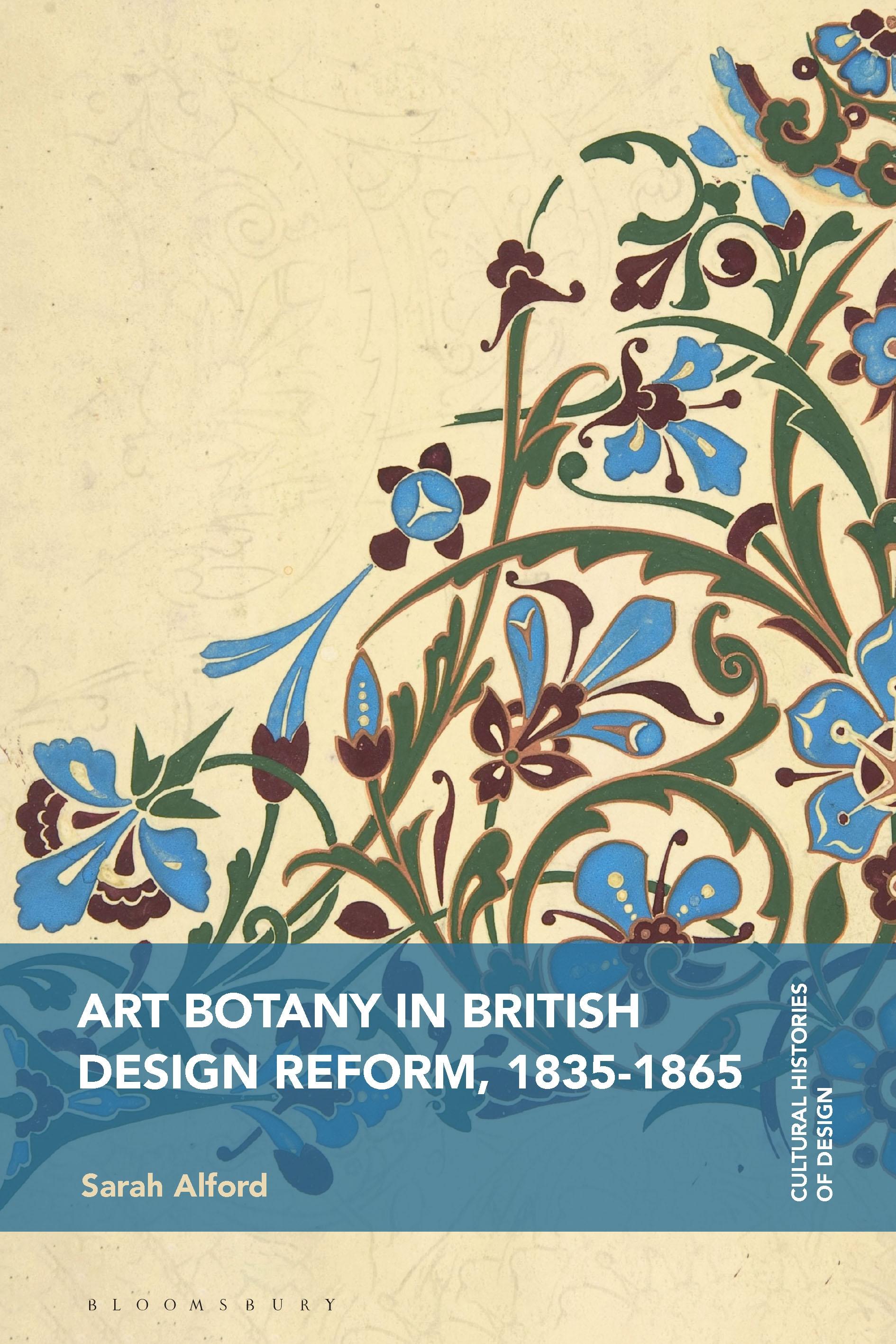
Drawing on the fields of design history and the history of science, this book examines the important role that botanical science played in the emergence of Victorian design theory.
In early 19th-century Britain, a rapid influx of plants from other countries began to confuse the orders of classification. As these new specimens arrived in nurseries and conservatories, botanists revised and promoted a new taxonomy: the Natural System. In parallel, in 1835, British manufacturers faced a government inquiry in order to improve the output of the British design industry. They needed a nationally identifiable design aesthetic and the inquiry led to the creation of the Government Schools of Design and the Design Reform movement. This book explores how, whilst botanists used drawings to clarify new systems of plant classification, designers learnt 'art botany', the practice of basing decorative form and ornament on the hidden, natural laws that govern plant growth and structure. Design reformers used botany as a model for how to create and identify what is new and incorporate it into what was already familiar and meaningful, all within the purview of developing a professional field of practice.
Sarah Alford provides a rich, interdisciplinary study of how the fields of design and botanical science came together. Through a framework of material culture, Alford sheds new light on the work of leading botanists, designers and illustrators such as Sarah Drake, John Lindley, Richard Redgrave, Owen Jones and Christopher Dresser. This book reveals how the designation of what design reformers deemed appropriate for the surface decoration of material structures as varied as carpets, jugs, wallpaper, and furniture, was an embrace of botanical science as a source of fantasy and imagination.
In early 19th-century Britain, a rapid influx of plants from other countries began to confuse the orders of classification. As these new specimens arrived in nurseries and conservatories, botanists revised and promoted a new taxonomy: the Natural System. In parallel, in 1835, British manufacturers faced a government inquiry in order to improve the output of the British design industry. They needed a nationally identifiable design aesthetic and the inquiry led to the creation of the Government Schools of Design and the Design Reform movement. This book explores how, whilst botanists used drawings to clarify new systems of plant classification, designers learnt 'art botany', the practice of basing decorative form and ornament on the hidden, natural laws that govern plant growth and structure. Design reformers used botany as a model for how to create and identify what is new and incorporate it into what was already familiar and meaningful, all within the purview of developing a professional field of practice.
Sarah Alford provides a rich, interdisciplinary study of how the fields of design and botanical science came together. Through a framework of material culture, Alford sheds new light on the work of leading botanists, designers and illustrators such as Sarah Drake, John Lindley, Richard Redgrave, Owen Jones and Christopher Dresser. This book reveals how the designation of what design reformers deemed appropriate for the surface decoration of material structures as varied as carpets, jugs, wallpaper, and furniture, was an embrace of botanical science as a source of fantasy and imagination.
Betal nemt med kort, Klarna, Apple Pay eller Google Pay. Ikke tilfreds? Du har altid 14 dages fortrydelsesret. Læs mere i vores vilkår. Har du spørgsmål, så send os en mail på hello@memmo.org.
Memmo gør det nemmere at studere – uanset hvor du er i verden. Hos os samler du dine kursusbøger og smarte studieværktøjer ét sted: resuméer, quizzer, podcasts og flashcards. Og så er der Ted, din studieven, der svarer på alt, du undrer dig over. Over 50 000 studerende studerer allerede her – bygget til at hjælpe dig med at lære hurtigere og stresse mindre.