
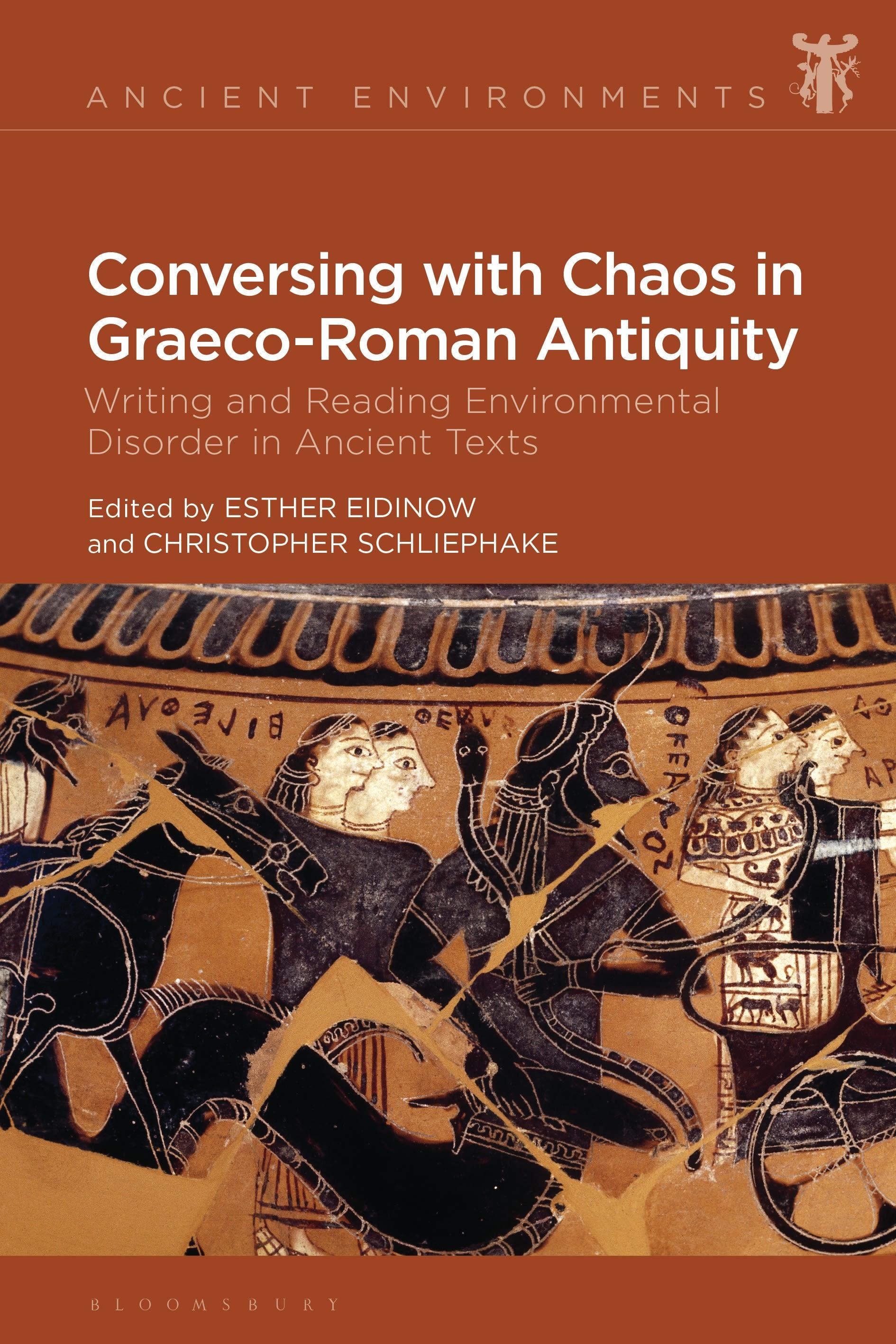
How did ancient Greeks and Romans perceive their environments: did they see order or chaos, chance or control? And how do their views compare to modern perceptions? Conversing with Chaos in Graeco-Roman Antiquity challenges prevailing ideas that ancient perceptions of the non-human world rested on a profound belief in universal order, and that the cosmos was harmonious and under human control. Engaging with the concept of chaos in both its ancient and modern meanings, and focusing on the ancient Mediterranean and Near East, this book reveals another sense of environmental awareness, one that paid equal attention to chance and chaos, and the sometimes-fatal consequences of human interventions in nature.
Bringing together a team of international scholars, the volume investigates the experience of the interaction of humans with the environment, as reflected in ancient evidence from myths and philosophical treatises, to epigraphic evidence and archaeological remains. The contributors consider the role of the human in the formation of perspectives about the natural world and explore themes of agency, affordances, ecophobia, gender and temporality. Overall, the volume reveals how, in ancient imaginations, environments were perceived as living entities with their own agency, and respondent (or even vulnerable) to human actions and decision-making. It highlights how modern insights can enrich our understanding of the past, and demonstrates the increasing relevance of ancient historical research for reflecting on current relations to the natural world.
Bringing together a team of international scholars, the volume investigates the experience of the interaction of humans with the environment, as reflected in ancient evidence from myths and philosophical treatises, to epigraphic evidence and archaeological remains. The contributors consider the role of the human in the formation of perspectives about the natural world and explore themes of agency, affordances, ecophobia, gender and temporality. Overall, the volume reveals how, in ancient imaginations, environments were perceived as living entities with their own agency, and respondent (or even vulnerable) to human actions and decision-making. It highlights how modern insights can enrich our understanding of the past, and demonstrates the increasing relevance of ancient historical research for reflecting on current relations to the natural world.
Betal nemt med kort, Klarna, Apple Pay eller Google Pay. Ikke tilfreds? Du har altid 14 dages fortrydelsesret. Læs mere i vores vilkår. Har du spørgsmål, så send os en mail på hello@memmo.org.
Memmo gør det nemmere at studere – uanset hvor du er i verden. Hos os samler du dine kursusbøger og smarte studieværktøjer ét sted: resuméer, quizzer, podcasts og flashcards. Og så er der Ted, din studieven, der svarer på alt, du undrer dig over. Over 50 000 studerende studerer allerede her – bygget til at hjælpe dig med at lære hurtigere og stresse mindre.