
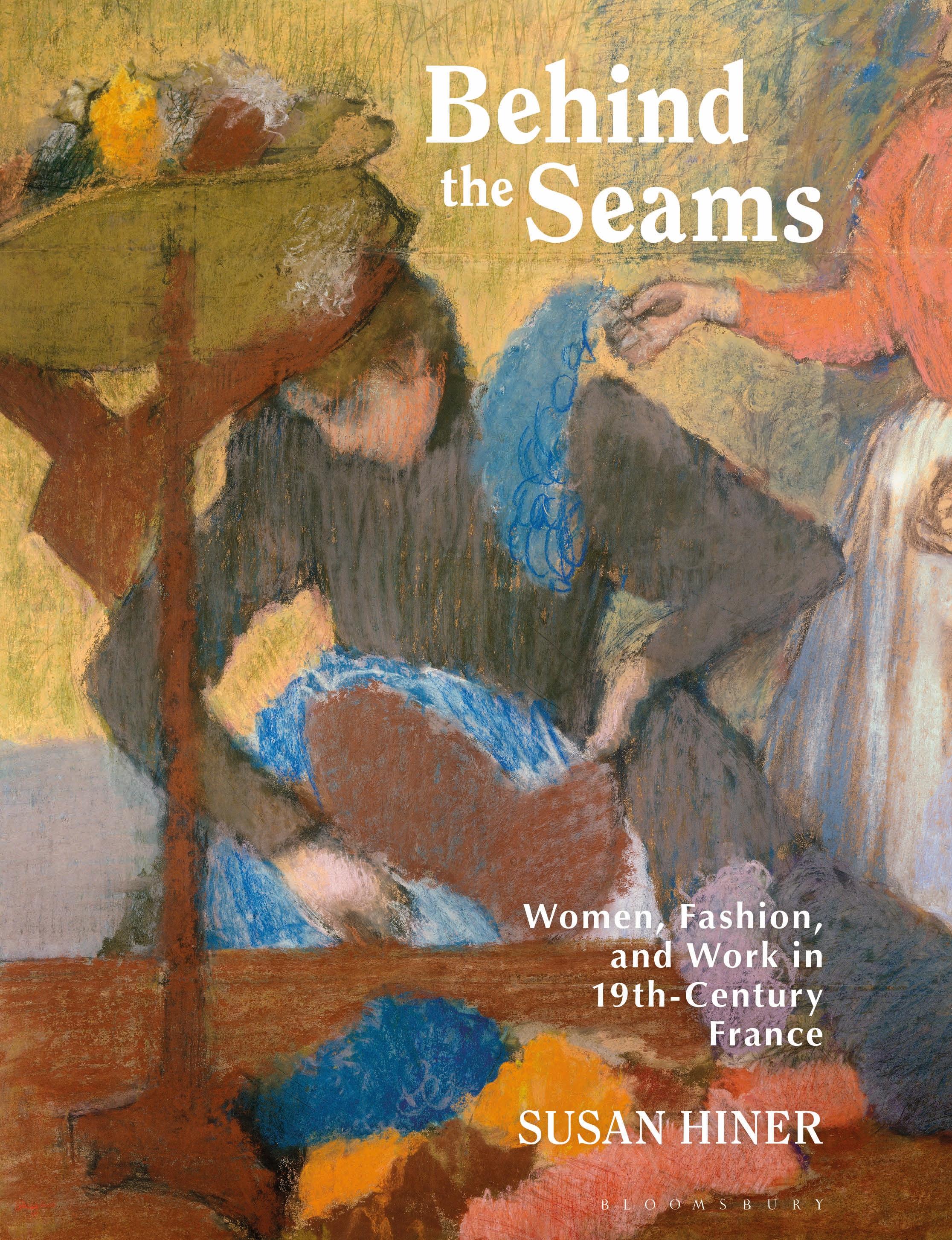
In this highly original book, Susan E. Hiner looks behind fashion's seams and focuses on the women fashion producers – both working- and middle-class – who were key to shaping the French fashion economy. Behind the Seams thus opens up the fields of both fashion and French cultural studies and explores new ways of understanding the 19th century by demonstrating that these women's complex and contradictory roles as producers of luxury items left them exploited by an oppressive fashion system even as they served as influencers within it.
In 19th-century France, fashion was a powerful and lucrative network that depended on women's expert manipulation of its raw materials. The delicate finger work of seamstresses and modistes yielded frothy dresses and ethereal hats; the subtle, persuasive rhetoric of written chronicles resulted in savvy, targeted marketing campaigns of goods and lifestyles; and the stylized visual splendour of the detailed drawing, engraving, and painting of fashion plates fed an aspirational fantasy that ended in consumption.
Yet this fashion system paradoxically effaced many of the women on whom it depended. Rather than repeating the familiar narrative of women as victims of fashion, Behind the Seams tells a more complicated story. Hiner's close examination reveals the productive women workers, writers, and artists who achieved agency, influence, and active careers even as their work and lives were masked by the ways in which they were mythologized in popular culture, rendered anonymous, and marginalized by institutional exclusion.
Beautifully illustrated in colour throughout, Behind the Seams is a rich resource and essential reading for all those interested in fashion history, 19th-century French history and visual culture, and the social history of women.
In 19th-century France, fashion was a powerful and lucrative network that depended on women's expert manipulation of its raw materials. The delicate finger work of seamstresses and modistes yielded frothy dresses and ethereal hats; the subtle, persuasive rhetoric of written chronicles resulted in savvy, targeted marketing campaigns of goods and lifestyles; and the stylized visual splendour of the detailed drawing, engraving, and painting of fashion plates fed an aspirational fantasy that ended in consumption.
Yet this fashion system paradoxically effaced many of the women on whom it depended. Rather than repeating the familiar narrative of women as victims of fashion, Behind the Seams tells a more complicated story. Hiner's close examination reveals the productive women workers, writers, and artists who achieved agency, influence, and active careers even as their work and lives were masked by the ways in which they were mythologized in popular culture, rendered anonymous, and marginalized by institutional exclusion.
Beautifully illustrated in colour throughout, Behind the Seams is a rich resource and essential reading for all those interested in fashion history, 19th-century French history and visual culture, and the social history of women.
Betal nemt med kort, Klarna, Apple Pay eller Google Pay. Ikke tilfreds? Du har altid 14 dages fortrydelsesret. Læs mere i vores vilkår. Har du spørgsmål, så send os en mail på hello@memmo.org.
Memmo gør det nemmere at studere – uanset hvor du er i verden. Hos os samler du dine kursusbøger og smarte studieværktøjer ét sted: resuméer, quizzer, podcasts og flashcards. Og så er der Ted, din studieven, der svarer på alt, du undrer dig over. Over 50 000 studerende studerer allerede her – bygget til at hjælpe dig med at lære hurtigere og stresse mindre.