
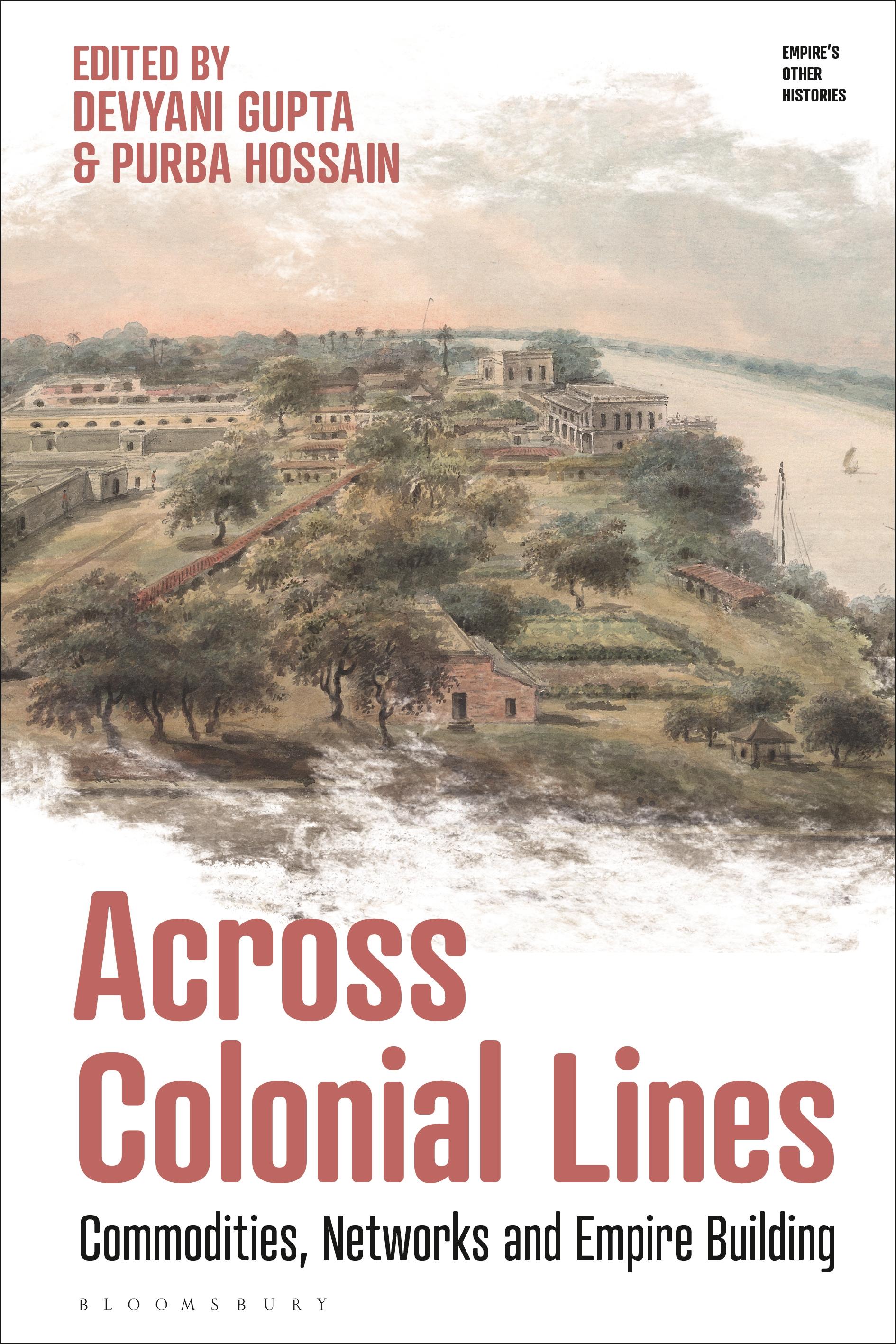
Across Colonial Lines takes a multi-perspective approach to the study of empire and commodities, and encourages readers to look at commodity histories in alternative spatial and temporal contexts. It offers a comparative understanding of commodities in the Venetian, Portuguese, Dutch, French and British Empires.
Highlighting the interwoven character of multiple commodity networks, this book situates commodities like gold, coffee, tea and indigo, to name a few, within pre-existing networks of labour, consumption and knowledge production. It explores the nexus between the local and the global, and highlights the role played by individual producers, petty traders, sailors and even consumers in creating regional circulations within a global political economy. In this volume, commodity networks are not just sites of production and trade, but also of political control, social organisation and consumption choices. They provide the impetus for globalisation from as early as the thirteenth century.
Each chapter takes an individual commodity to illustrate the history of commodity transmission within imperial contexts. From early modern Venetian commerce to the trade networks of the Eurasian world; from the trading ambitions of British sailors to Portuguese global imperial ambitions; from the cross-imperial knowledge networks of indigo to the assertion of indigenous agency in Angola; and from the commodification of labour to the experience of tourism in the Caribbean and Indian Ocean World, Across Colonial Lines uses commodity networks as a lens to study empire building across varied yet connected geographies and chronologies.
Highlighting the interwoven character of multiple commodity networks, this book situates commodities like gold, coffee, tea and indigo, to name a few, within pre-existing networks of labour, consumption and knowledge production. It explores the nexus between the local and the global, and highlights the role played by individual producers, petty traders, sailors and even consumers in creating regional circulations within a global political economy. In this volume, commodity networks are not just sites of production and trade, but also of political control, social organisation and consumption choices. They provide the impetus for globalisation from as early as the thirteenth century.
Each chapter takes an individual commodity to illustrate the history of commodity transmission within imperial contexts. From early modern Venetian commerce to the trade networks of the Eurasian world; from the trading ambitions of British sailors to Portuguese global imperial ambitions; from the cross-imperial knowledge networks of indigo to the assertion of indigenous agency in Angola; and from the commodification of labour to the experience of tourism in the Caribbean and Indian Ocean World, Across Colonial Lines uses commodity networks as a lens to study empire building across varied yet connected geographies and chronologies.
Sider: 256
Kategori: Kultur-, Genus- & Postkoloniala studier
e-ISBN: 9781350327047
Forsendelsesvægt: 1.2 kg
Sendes inden for: 1-2 dage
Betal nemt med kort, Klarna, Apple Pay eller Google Pay. Ikke tilfreds? Du har altid 14 dages fortrydelsesret. Læs mere i vores vilkår. Har du spørgsmål, så send os en mail på hello@memmo.org.
Memmo gør det nemmere at studere – uanset hvor du er i verden. Hos os samler du dine kursusbøger og smarte studieværktøjer ét sted: resuméer, quizzer, podcasts og flashcards. Og så er der Ted, din studieven, der svarer på alt, du undrer dig over. Over 50 000 studerende studerer allerede her – bygget til at hjælpe dig med at lære hurtigere og stresse mindre.