
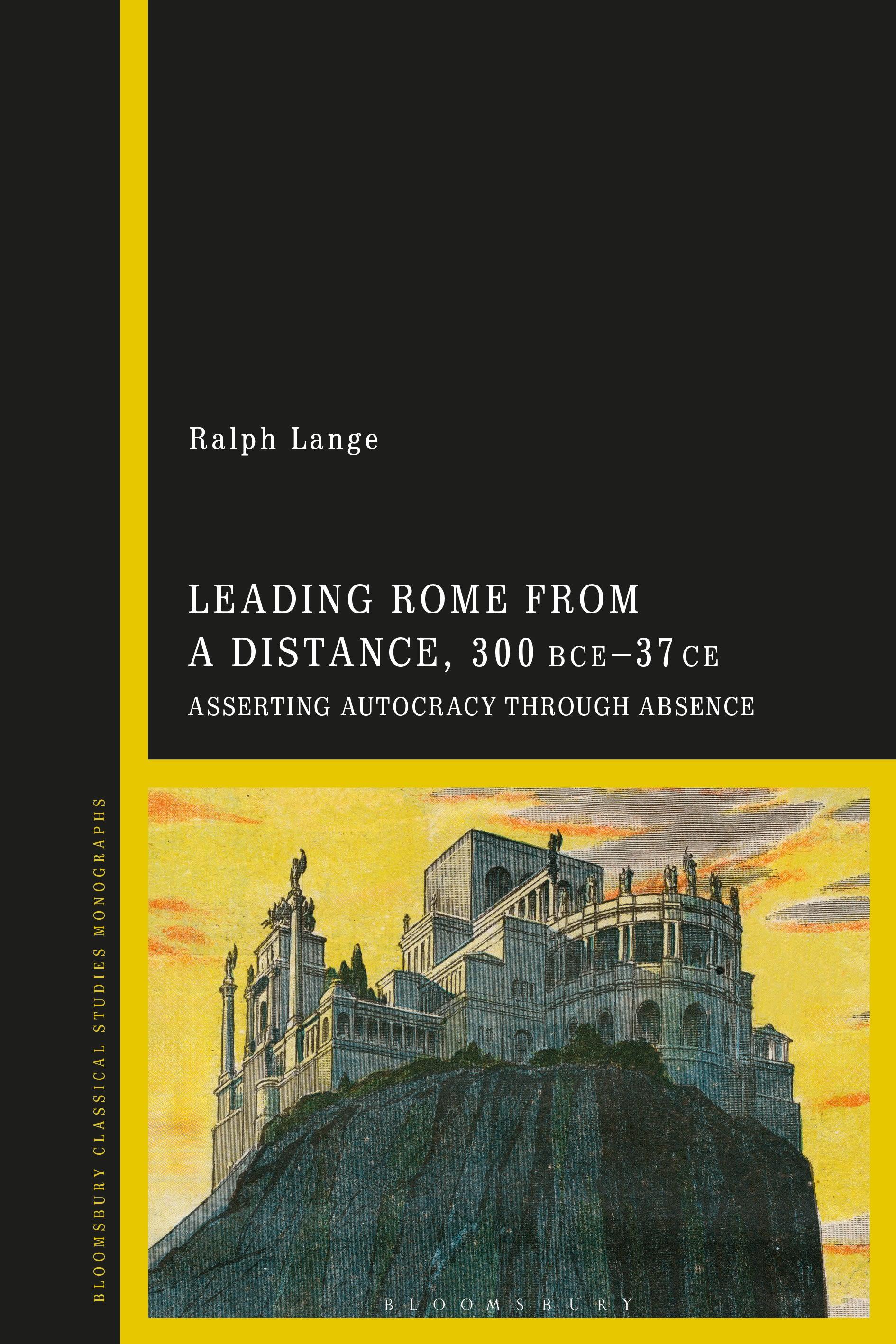
Roman political leaders used distance from Rome as a key political tool to assert pre-eminence.
Through the case studies of Caesar's hegemony, Augustus's autocracy, and Tiberius's reign, this book examines how these figures' experiences and manipulations of absence established a multipolar focus of political life centred less on the city of Rome, and more on the idea of a single leader.
The Roman expansion over Italy and the Mediterranean put the political system under considerable stress, and eventually resulted in a dispersal of leadership and a decentralization of power. Absent generals rivalled their peers in Rome for influence and threatened to surpass them from the provinces. Roman leaders, from Sulla to Tiberius, used absence as a mechanism to act autonomously, but it came at the cost of losing influence and control at the centre. In order to hold influence while being split off from the decision-making powers of the geographical nucleus that was Rome, communication channels to mitigate necessary absences were developed during this period, such as travel, intermediate meetings, letters (propaganda writings) and a complex network of mediators, ultimately forming the circle from which the imperial court emerged. Absent leadership, as it developed throughout the Late Republic, a hitherto neglected issue, eventually became a valuable asset in the institutionalising process of the autocracy of Caesar, Augustus, and Tiberius.
Through the case studies of Caesar's hegemony, Augustus's autocracy, and Tiberius's reign, this book examines how these figures' experiences and manipulations of absence established a multipolar focus of political life centred less on the city of Rome, and more on the idea of a single leader.
The Roman expansion over Italy and the Mediterranean put the political system under considerable stress, and eventually resulted in a dispersal of leadership and a decentralization of power. Absent generals rivalled their peers in Rome for influence and threatened to surpass them from the provinces. Roman leaders, from Sulla to Tiberius, used absence as a mechanism to act autonomously, but it came at the cost of losing influence and control at the centre. In order to hold influence while being split off from the decision-making powers of the geographical nucleus that was Rome, communication channels to mitigate necessary absences were developed during this period, such as travel, intermediate meetings, letters (propaganda writings) and a complex network of mediators, ultimately forming the circle from which the imperial court emerged. Absent leadership, as it developed throughout the Late Republic, a hitherto neglected issue, eventually became a valuable asset in the institutionalising process of the autocracy of Caesar, Augustus, and Tiberius.
Sider: 248
Kategori: Arkeologi & Antikvetenskap
e-ISBN: 9781350325425
Forsendelsesvægt: 1.2 kg
Sendes inden for: 1-2 dage
Betal nemt med kort, Klarna, Apple Pay eller Google Pay. Ikke tilfreds? Du har altid 14 dages fortrydelsesret. Læs mere i vores vilkår. Har du spørgsmål, så send os en mail på hello@memmo.org.
Memmo gør det nemmere at studere – uanset hvor du er i verden. Hos os samler du dine kursusbøger og smarte studieværktøjer ét sted: resuméer, quizzer, podcasts og flashcards. Og så er der Ted, din studieven, der svarer på alt, du undrer dig over. Over 50 000 studerende studerer allerede her – bygget til at hjælpe dig med at lære hurtigere og stresse mindre.