
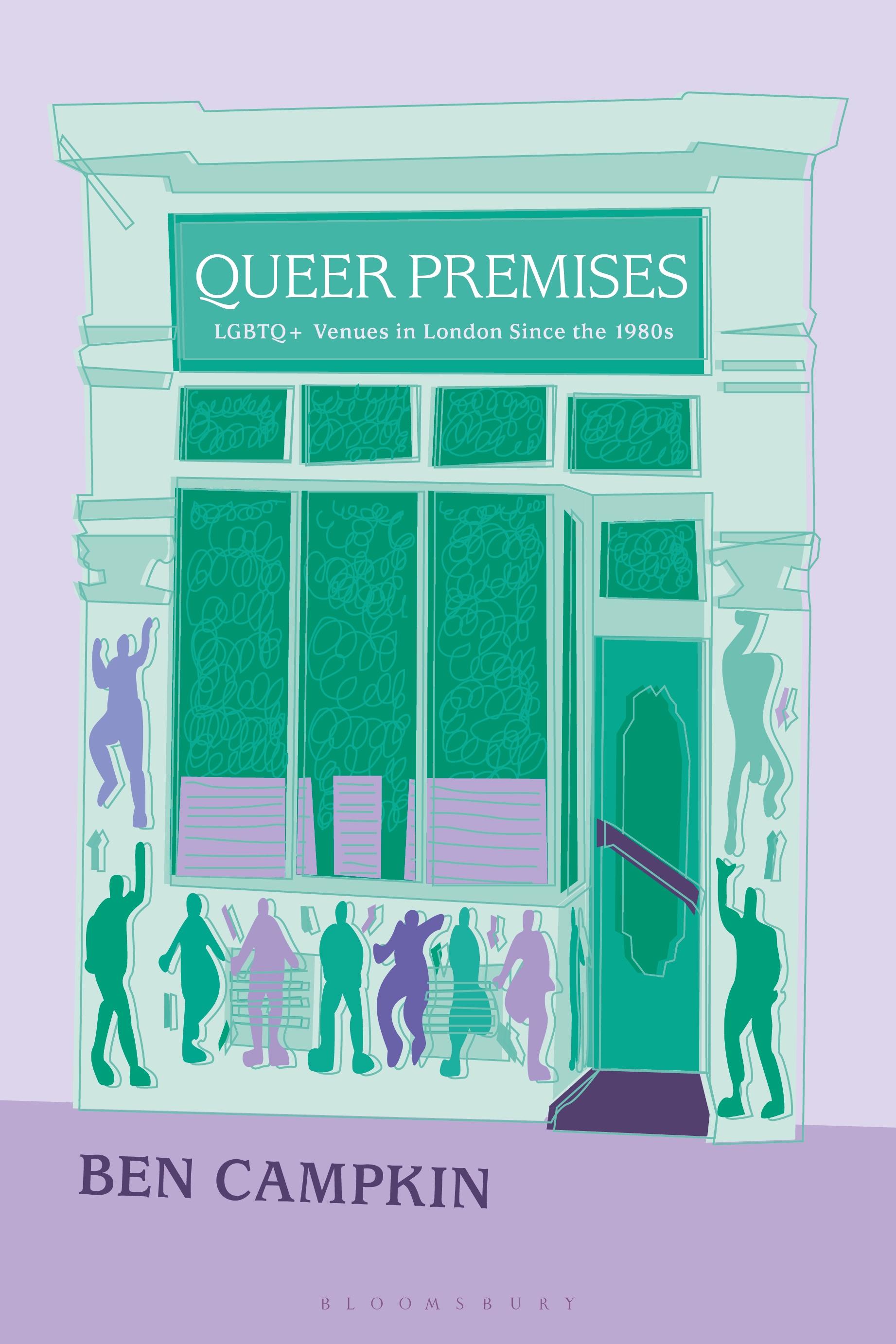
Queer premises provide vital social and cultural infrastructure – a queer infrastructure – connecting different generations and locations, facilitating the movement of resources, across and beyond the city.
Queer Premises offers evidence for how London's diverse LGBTQ+ populations have embedded themselves into urban space, systems and resources. It sets out to understand how, across their different material dimensions, bars, cafés, nightclubs, pubs, community centres, and hybrids of these typologies, have been imagined, created and sustained. From the 1980s to the present, Campkin asks how, where, and why these venues have been established, how they operate and the purposes they serve, what challenges they face and why they close down.
Queer Premises offers evidence for how London's diverse LGBTQ+ populations have embedded themselves into urban space, systems and resources. It sets out to understand how, across their different material dimensions, bars, cafés, nightclubs, pubs, community centres, and hybrids of these typologies, have been imagined, created and sustained. From the 1980s to the present, Campkin asks how, where, and why these venues have been established, how they operate and the purposes they serve, what challenges they face and why they close down.
Betal nemt med kort, Klarna, Apple Pay eller Google Pay. Ikke tilfreds? Du har altid 14 dages fortrydelsesret. Læs mere i vores vilkår. Har du spørgsmål, så send os en mail på hello@memmo.org.
Memmo gør det nemmere at studere – uanset hvor du er i verden. Hos os samler du dine kursusbøger og smarte studieværktøjer ét sted: resuméer, quizzer, podcasts og flashcards. Og så er der Ted, din studieven, der svarer på alt, du undrer dig over. Over 50 000 studerende studerer allerede her – bygget til at hjælpe dig med at lære hurtigere og stresse mindre.