
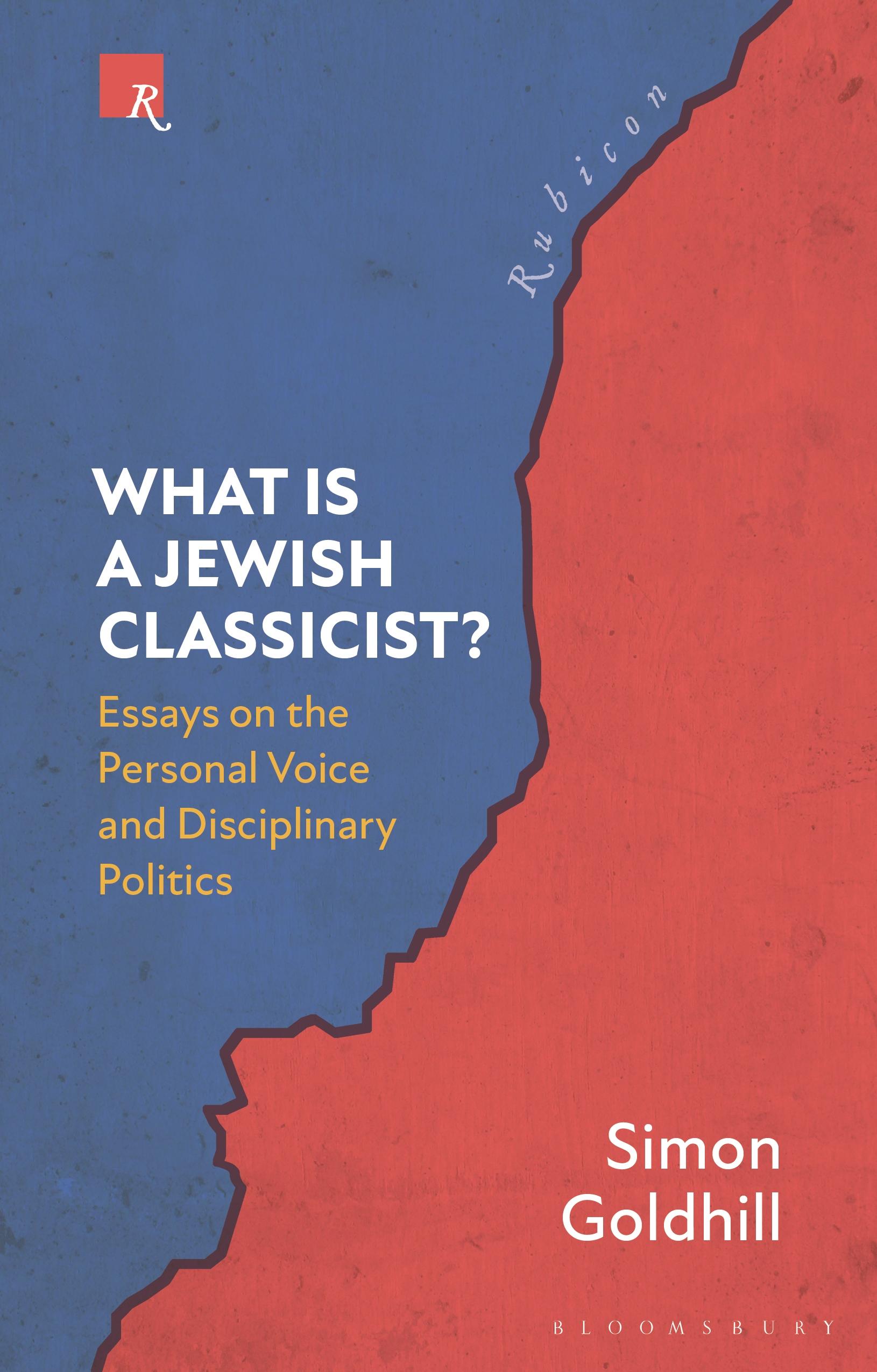
In recent years, there has been no issue that has convulsed academia and its role in society more stridently than the personal politics of its institutions: who has access to education? How does who you are change what you study and how you engage with it? How does scholarship reflect the politics of society – how should it? These new essays from one of the best-known scholars of ancient Greece offer a refreshing and provocative contribution to these discussions.
What Is a Jewish Classicist? analyses how the personal voice of a scholar plays a role in scholarship, how religion and cultural identity are acted out within an academic discipline, and how translation, the heart of any engagement with the literature of antiquity, is a transformational practice. Topical, engaging, revelatory, this book opens a sharp and personal perspective on how and why the study of antiquity has become such a battlefield in contemporary culture.
The first essay looks at how academics can and should talk about themselves, and how such positionality affects a scholar's work – can anyone can tell his or her own story with enough self-consciousness, sophistication and care? The second essay, which gives the book its title, takes a more socio-anthropological approach to the discipline, and asks how its patterns of inclusion and exclusion, its strategies of identification and recognition, have contributed to the shape of the discipline of classics. This initial enquiry opens into a fascinating history of change – how Jews were excluded from the discipline for many years but gradually after the Second World war became more easily assimilated into it. This in turn raises difficult questions for the current focus on race and colour as the defining aspects of personal identification, and about how academia reflects or contributes to the broader politics of society. The third essay takes a different historical approach and looks at the infrastructure or technology of the discipline through one of its integral and time-honoured practices, namely, translation. It discusses how translation, far from being a mere technique, is a transformational activity that helps make each classicist what they are. Indeed, each generation needs its own translations as each era redefines its relation to antiquity.
What Is a Jewish Classicist? analyses how the personal voice of a scholar plays a role in scholarship, how religion and cultural identity are acted out within an academic discipline, and how translation, the heart of any engagement with the literature of antiquity, is a transformational practice. Topical, engaging, revelatory, this book opens a sharp and personal perspective on how and why the study of antiquity has become such a battlefield in contemporary culture.
The first essay looks at how academics can and should talk about themselves, and how such positionality affects a scholar's work – can anyone can tell his or her own story with enough self-consciousness, sophistication and care? The second essay, which gives the book its title, takes a more socio-anthropological approach to the discipline, and asks how its patterns of inclusion and exclusion, its strategies of identification and recognition, have contributed to the shape of the discipline of classics. This initial enquiry opens into a fascinating history of change – how Jews were excluded from the discipline for many years but gradually after the Second World war became more easily assimilated into it. This in turn raises difficult questions for the current focus on race and colour as the defining aspects of personal identification, and about how academia reflects or contributes to the broader politics of society. The third essay takes a different historical approach and looks at the infrastructure or technology of the discipline through one of its integral and time-honoured practices, namely, translation. It discusses how translation, far from being a mere technique, is a transformational activity that helps make each classicist what they are. Indeed, each generation needs its own translations as each era redefines its relation to antiquity.
Betal nemt med kort, Klarna, Apple Pay eller Google Pay. Ikke tilfreds? Du har altid 14 dages fortrydelsesret. Læs mere i vores vilkår. Har du spørgsmål, så send os en mail på hello@memmo.org.
Memmo gør det nemmere at studere – uanset hvor du er i verden. Hos os samler du dine kursusbøger og smarte studieværktøjer ét sted: resuméer, quizzer, podcasts og flashcards. Og så er der Ted, din studieven, der svarer på alt, du undrer dig over. Over 50 000 studerende studerer allerede her – bygget til at hjælpe dig med at lære hurtigere og stresse mindre.