
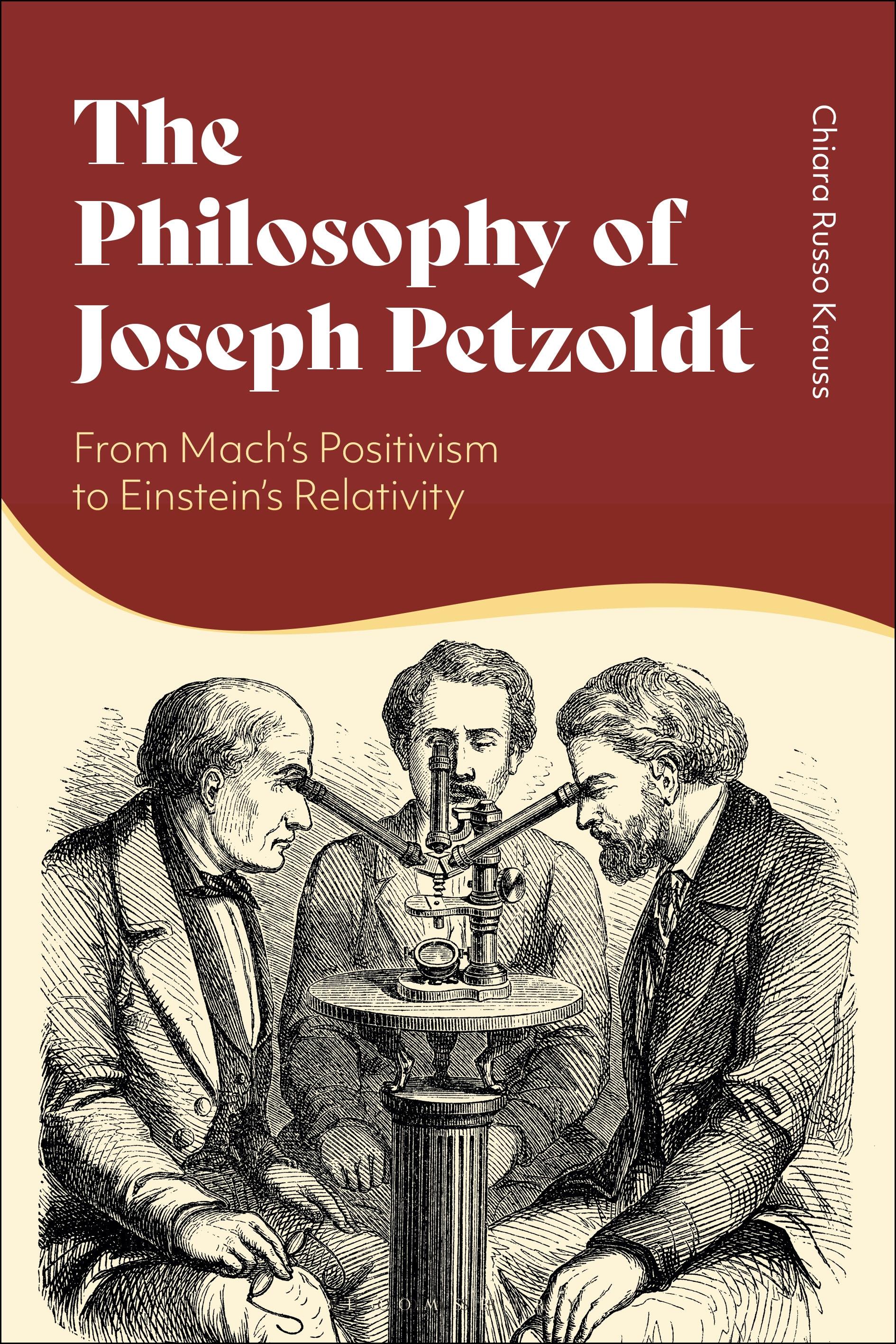
This volume is the first English resource to shed light on the philosophy of Joseph Petzoldt (1862-1929), the main pupil of Ernst Mach and founder of the Gesellschaft für wissenschaftliche Philosophie, later the association of Berlin logical positivists. A central figure in the early debate on the theory of relativity, his work was praised by Einstein himself.
Tracing the development of Petzoldt's ideas, starting from his early acceptance of materialism and Kantian agnosticism, Chiara Russo Krauss presents a comprehensive reconstruction of his philosophy in the context of the German milieu. She examines his attempt to develop a new philosophy following Gustav Fechner and the empiriocriticism of Richard Avenarius and Ernst Mach. In the final chapter, she sets out how Petzoldt proposed relativistic positivism as the official interpretation of Einstein's relativity.
By illuminating key elements of Petzoldt's work, this is a valuable case study for students and scholars of philosophy of science and late 19th-century and early 20th-century philosophy. It reveals the complex interplay of two different tendencies of the time: neo-Kantianism and its struggle to overcome the notion of thing-in-itself, as well as the need for an epistemological foundation for the new advances of science.
Tracing the development of Petzoldt's ideas, starting from his early acceptance of materialism and Kantian agnosticism, Chiara Russo Krauss presents a comprehensive reconstruction of his philosophy in the context of the German milieu. She examines his attempt to develop a new philosophy following Gustav Fechner and the empiriocriticism of Richard Avenarius and Ernst Mach. In the final chapter, she sets out how Petzoldt proposed relativistic positivism as the official interpretation of Einstein's relativity.
By illuminating key elements of Petzoldt's work, this is a valuable case study for students and scholars of philosophy of science and late 19th-century and early 20th-century philosophy. It reveals the complex interplay of two different tendencies of the time: neo-Kantianism and its struggle to overcome the notion of thing-in-itself, as well as the need for an epistemological foundation for the new advances of science.
Betal nemt med kort, Klarna, Apple Pay eller Google Pay. Ikke tilfreds? Du har altid 14 dages fortrydelsesret. Læs mere i vores vilkår. Har du spørgsmål, så send os en mail på hello@memmo.org.
Memmo gør det nemmere at studere – uanset hvor du er i verden. Hos os samler du dine kursusbøger og smarte studieværktøjer ét sted: resuméer, quizzer, podcasts og flashcards. Og så er der Ted, din studieven, der svarer på alt, du undrer dig over. Over 50 000 studerende studerer allerede her – bygget til at hjælpe dig med at lære hurtigere og stresse mindre.