
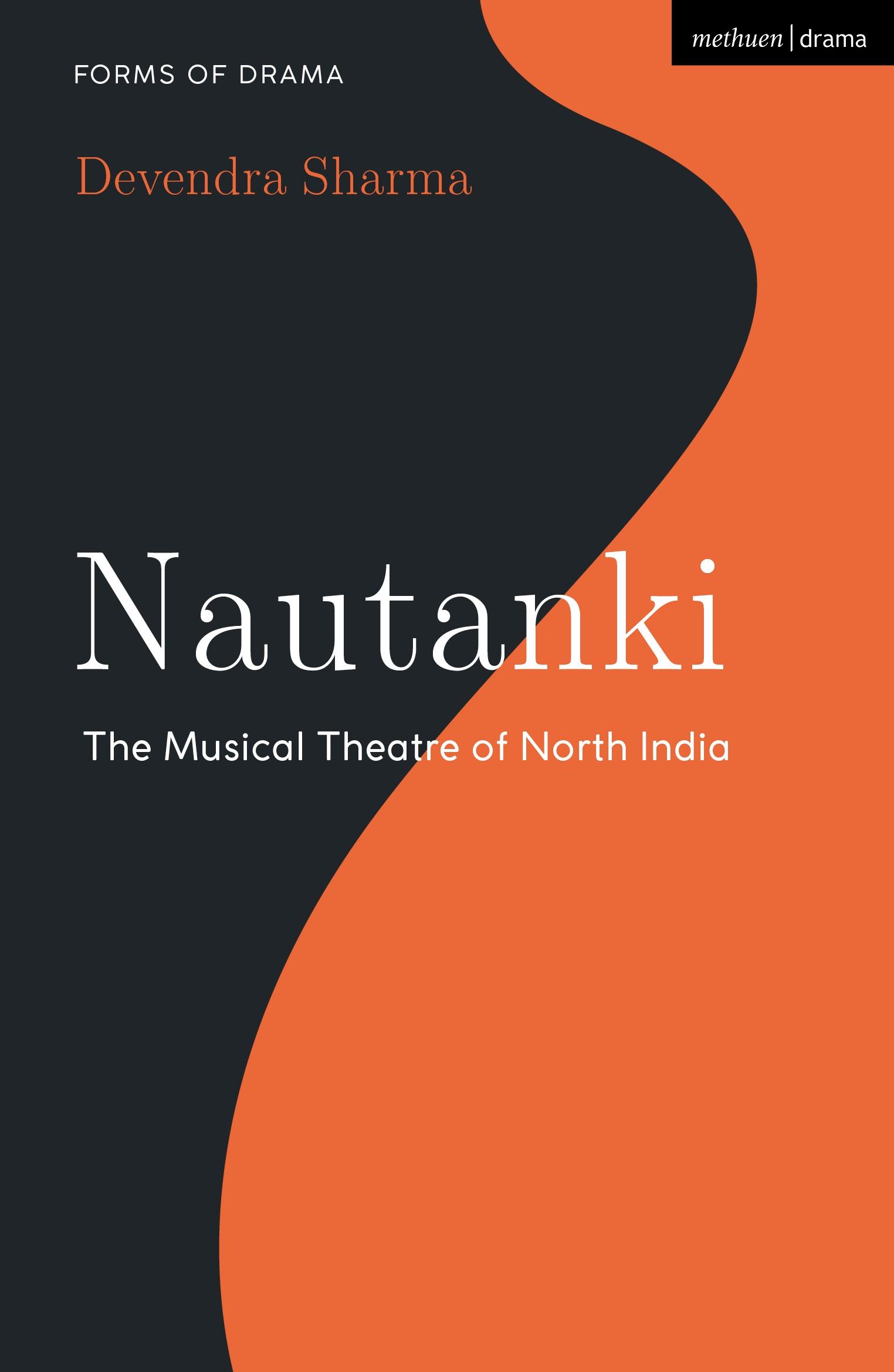
Drawing on more than 4 decades of experience working in Nautanki as a writer, director, singer, and actor, Sharma's book is the first major study to analyse Nautanki not only through its literary bases, but also through live performances, considering it both in a historical vein and as contemporary theatre on the ground.
What entertained India's masses and elites before the arrival of cinema in India? When did “modern” theatre begin in India and how did Nautanki contribute to its rise?
In this book, renowned theatre scholar and 7th-generation Nautanki artist Devendra Sharma examines the theatrical form of Nautanki-its history, organisational structure, narratives, poetics, musical structures, artists, and performance spaces-which flourished in North India in the 19th and the 20th centuries, and is still popular now.
In a concise format, Sharma explores how this socially and politically relevant theatre, full of beautiful music, swashbuckling heroes, magic, romance, and contemporary themes, once charmed audiences throughout India's cities and countryside towns and served as the continuation of elements of ancient Indian theatre. This book unravels a critical shift in the history of Indian theatre, the move from unbounded performance spaces to proscenium stages in big cities, and how this changed the meaning of theatre in India. It examines how forces of globalization and modernization have profoundly changed India's theatrical landscape, arguably side-lining one of its most robust theatre forms of the 19th and 20th centuries. It also discusses the future of Nautanki, and how it is now being performed globally. Nautanki is essential reading for anybody interested in Indian theatre, world theatre, musical theatre, opera, and Bollywood.
What entertained India's masses and elites before the arrival of cinema in India? When did “modern” theatre begin in India and how did Nautanki contribute to its rise?
In this book, renowned theatre scholar and 7th-generation Nautanki artist Devendra Sharma examines the theatrical form of Nautanki-its history, organisational structure, narratives, poetics, musical structures, artists, and performance spaces-which flourished in North India in the 19th and the 20th centuries, and is still popular now.
In a concise format, Sharma explores how this socially and politically relevant theatre, full of beautiful music, swashbuckling heroes, magic, romance, and contemporary themes, once charmed audiences throughout India's cities and countryside towns and served as the continuation of elements of ancient Indian theatre. This book unravels a critical shift in the history of Indian theatre, the move from unbounded performance spaces to proscenium stages in big cities, and how this changed the meaning of theatre in India. It examines how forces of globalization and modernization have profoundly changed India's theatrical landscape, arguably side-lining one of its most robust theatre forms of the 19th and 20th centuries. It also discusses the future of Nautanki, and how it is now being performed globally. Nautanki is essential reading for anybody interested in Indian theatre, world theatre, musical theatre, opera, and Bollywood.
Sider: 224
Kategori: Drama, Teater & Scenkonst
e-ISBN: 9781350296732
Forsendelsesvægt: 1.2 kg
Sendes inden for: 1-2 dage
Betal nemt med kort, Klarna, Apple Pay eller Google Pay. Ikke tilfreds? Du har altid 14 dages fortrydelsesret. Læs mere i vores vilkår. Har du spørgsmål, så send os en mail på hello@memmo.org.
Memmo gør det nemmere at studere – uanset hvor du er i verden. Hos os samler du dine kursusbøger og smarte studieværktøjer ét sted: resuméer, quizzer, podcasts og flashcards. Og så er der Ted, din studieven, der svarer på alt, du undrer dig over. Over 50 000 studerende studerer allerede her – bygget til at hjælpe dig med at lære hurtigere og stresse mindre.