
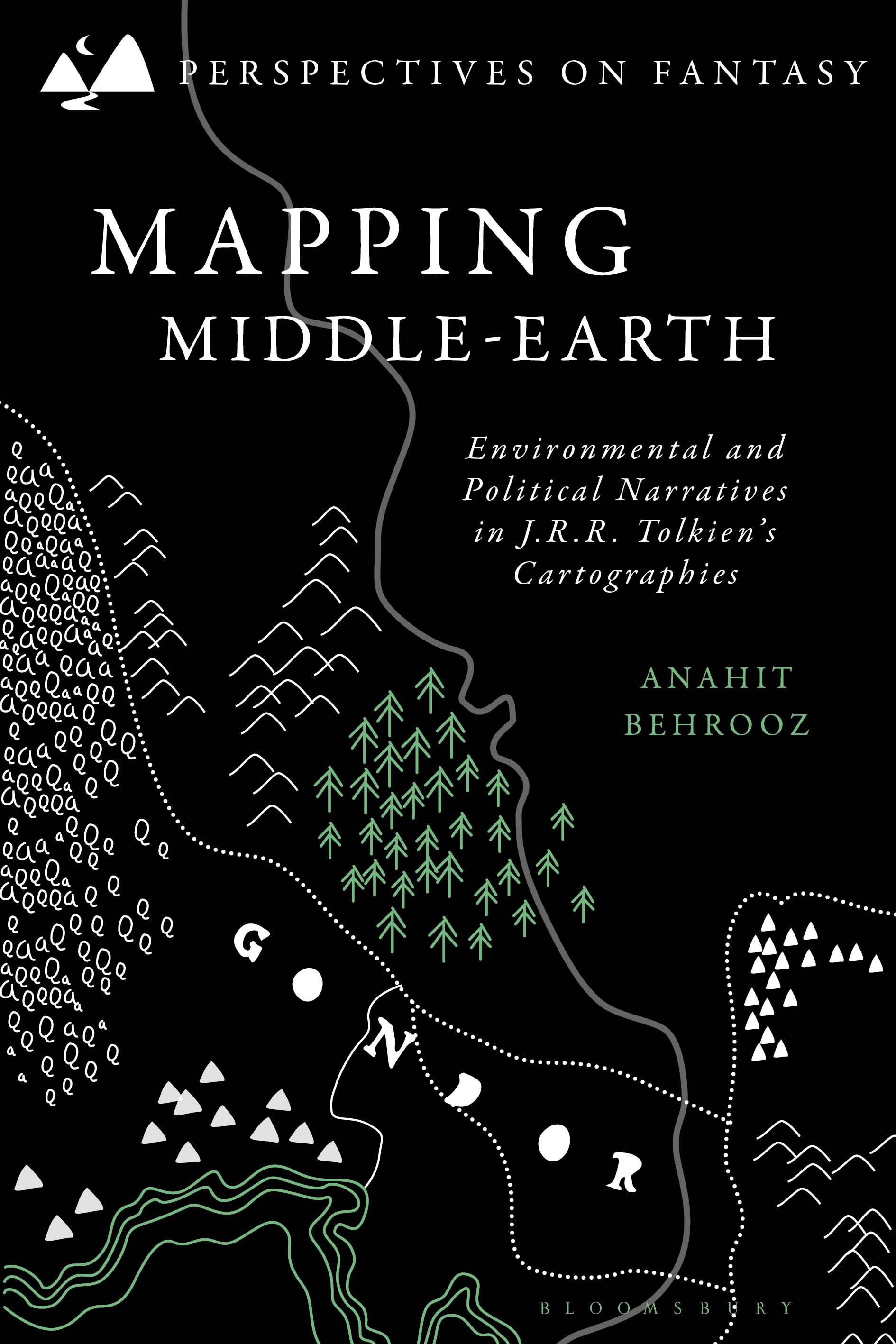
In this cutting-edge study of Tolkien's most critically neglected maps, Anahit Behrooz examines how cartography has traditionally been bound up in facilitating power.
Far more than just illustrations to aid understanding of the story, Tolkien's corpus of maps are crucial to understanding the broader narratives between humans and their political and environmental landscapes within his legendarium. Undertaking a diegetic literary analysis of the maps as examples of Middle-earth's own cultural output, Behrooz reveals a sub-created tradition of cartography that articulates specific power dynamics between mapmaker, map reader, and what is being mapped, as well as the human/nonhuman binary that represents human's control over the natural world.
Mapping Middle-earth surveys how Tolkien frames cartography as an inherently political act that embodies a desire for control of that which it maps. In turn, it analyses harmful contemporary engagements with land that intersect with, but also move beyond, cartography such as environmental damage; human-induced geological change; and the natural and bodily costs of political violence and imperialism. Using historical, eco-critical, and postcolonial frameworks, and such theorists as Michel Foucault, Donna Haraway and Edward Said, this book explores Tolkien's employment of particular generic tropes including medievalism, fantasy, and the interplay between image and text to highlight, and at times correct, his contemporary socio-political epoch and its destructive relationship with the wider world.
Far more than just illustrations to aid understanding of the story, Tolkien's corpus of maps are crucial to understanding the broader narratives between humans and their political and environmental landscapes within his legendarium. Undertaking a diegetic literary analysis of the maps as examples of Middle-earth's own cultural output, Behrooz reveals a sub-created tradition of cartography that articulates specific power dynamics between mapmaker, map reader, and what is being mapped, as well as the human/nonhuman binary that represents human's control over the natural world.
Mapping Middle-earth surveys how Tolkien frames cartography as an inherently political act that embodies a desire for control of that which it maps. In turn, it analyses harmful contemporary engagements with land that intersect with, but also move beyond, cartography such as environmental damage; human-induced geological change; and the natural and bodily costs of political violence and imperialism. Using historical, eco-critical, and postcolonial frameworks, and such theorists as Michel Foucault, Donna Haraway and Edward Said, this book explores Tolkien's employment of particular generic tropes including medievalism, fantasy, and the interplay between image and text to highlight, and at times correct, his contemporary socio-political epoch and its destructive relationship with the wider world.
Sider: 200
Kategori: Litteraturvetenskap & Teori
e-ISBN: 9781350290785
Forsendelsesvægt: 1.2 kg
Sendes inden for: 1-2 dage
Betal nemt med kort, Klarna, Apple Pay eller Google Pay. Ikke tilfreds? Du har altid 14 dages fortrydelsesret. Læs mere i vores vilkår. Har du spørgsmål, så send os en mail på hello@memmo.org.
Memmo gør det nemmere at studere – uanset hvor du er i verden. Hos os samler du dine kursusbøger og smarte studieværktøjer ét sted: resuméer, quizzer, podcasts og flashcards. Og så er der Ted, din studieven, der svarer på alt, du undrer dig over. Over 50 000 studerende studerer allerede her – bygget til at hjælpe dig med at lære hurtigere og stresse mindre.