
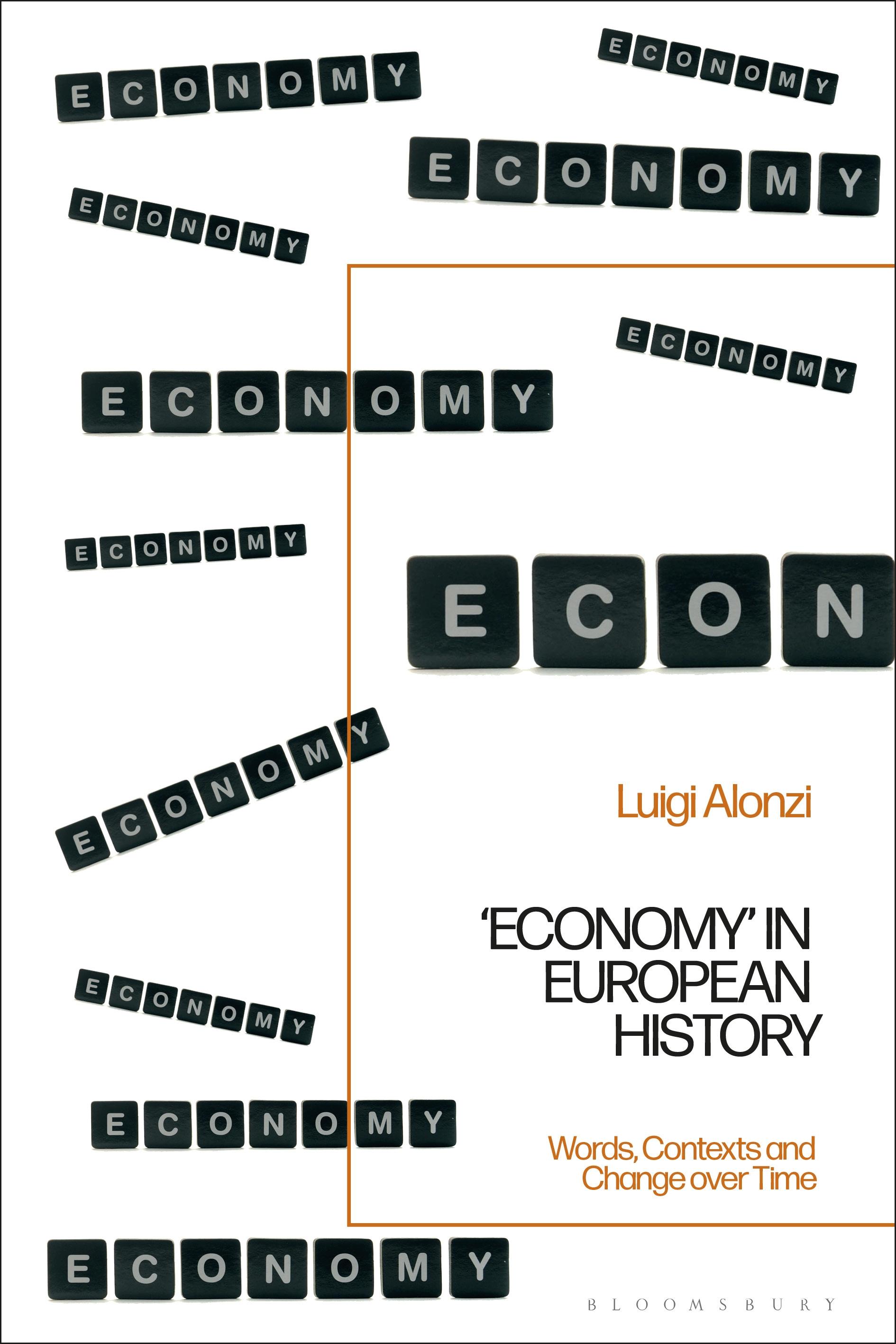
Prompted by the 'linguistic turn' of the late 20th century, intellectual and conceptual historians continue to devote a great deal of attention to the study of concepts in history. This innovative and interdisciplinary volume builds on such scholarship by providing a new history of the term 'economy'.
Starting from the Greek idea of the law of the household, Luigi Alonzi traces the different meanings assumed by the word 'economy' during the middle ages and early modern era, highlighting the semantic richness of the word and its uses in various political and cultural contexts. Notably, there is a particular focus on the so-called Oeconomica literature, tracking the reception of works by Plato, Aristotle, the 'pseudo' Aristotle and Xenophon in the Italian and France Renaissance. This tradition was incredibly influential in civic humanism and in texts devoted to power and command and thus affected later debates on Natural Law and the development of new scientific disciplines in the 17th and 18th centuries. In exploring this, the analysis of the function of translations in the transmission and transformation of meanings becomes central.
'Economy' in European History shines much-needed light on an important challenge that many historians repeatedly face: the fact that words can, and do, change over time. It will thus be a vital resource for all scholars of early modern and European economic history.
Starting from the Greek idea of the law of the household, Luigi Alonzi traces the different meanings assumed by the word 'economy' during the middle ages and early modern era, highlighting the semantic richness of the word and its uses in various political and cultural contexts. Notably, there is a particular focus on the so-called Oeconomica literature, tracking the reception of works by Plato, Aristotle, the 'pseudo' Aristotle and Xenophon in the Italian and France Renaissance. This tradition was incredibly influential in civic humanism and in texts devoted to power and command and thus affected later debates on Natural Law and the development of new scientific disciplines in the 17th and 18th centuries. In exploring this, the analysis of the function of translations in the transmission and transformation of meanings becomes central.
'Economy' in European History shines much-needed light on an important challenge that many historians repeatedly face: the fact that words can, and do, change over time. It will thus be a vital resource for all scholars of early modern and European economic history.
Betal nemt med kort, Klarna, Apple Pay eller Google Pay. Ikke tilfreds? Du har altid 14 dages fortrydelsesret. Læs mere i vores vilkår. Har du spørgsmål, så send os en mail på hello@memmo.org.
Memmo gør det nemmere at studere – uanset hvor du er i verden. Hos os samler du dine kursusbøger og smarte studieværktøjer ét sted: resuméer, quizzer, podcasts og flashcards. Og så er der Ted, din studieven, der svarer på alt, du undrer dig over. Over 50 000 studerende studerer allerede her – bygget til at hjælpe dig med at lære hurtigere og stresse mindre.