
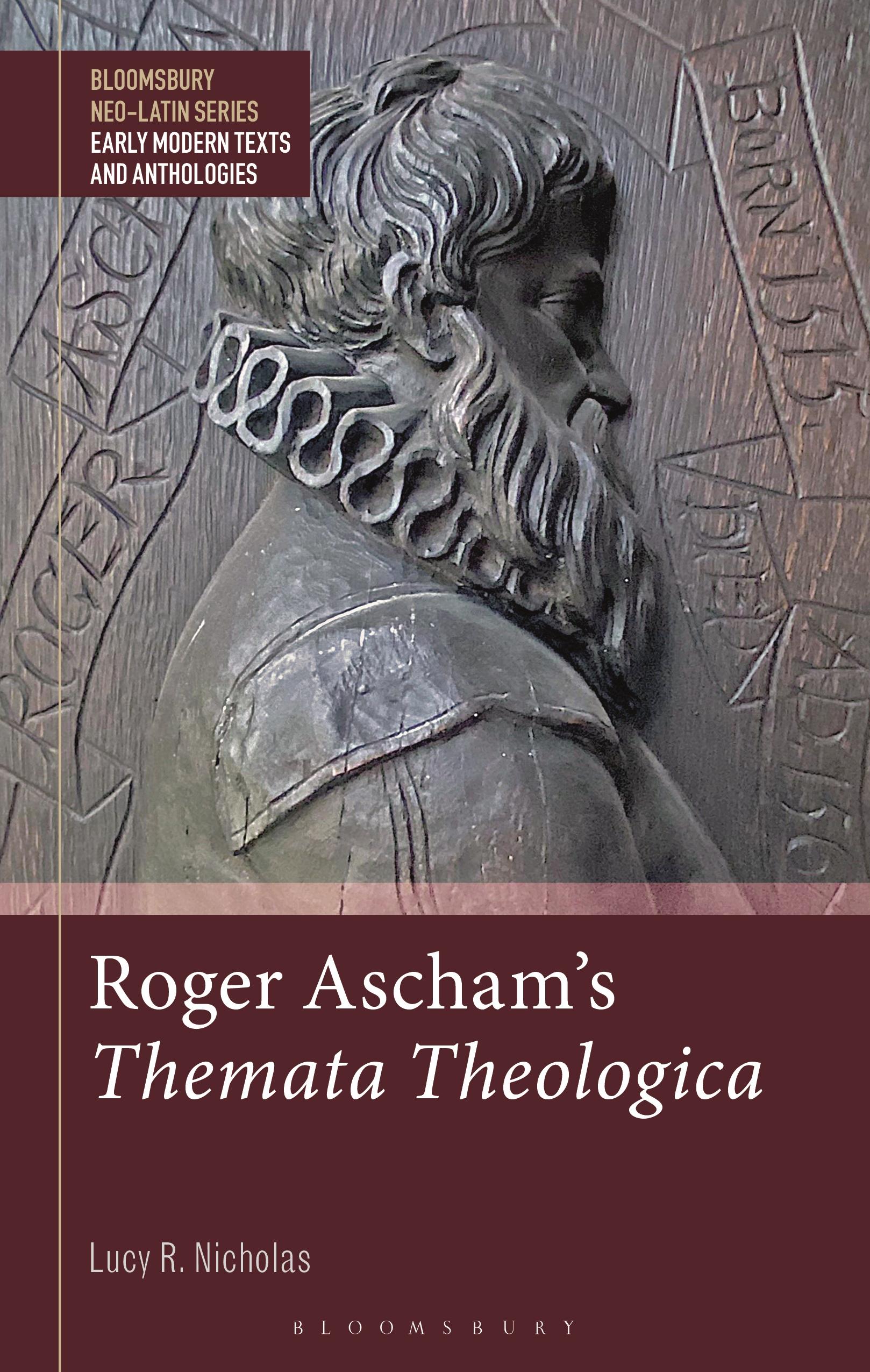
Roger Ascham is often classified as 'a great mid-Tudor humanist' and he is perhaps best known for his role as tutor to Elizabeth I. His most famous works, The Scholemaster and Toxophilus, have been extensively quarried and anthologised in studies on prose style and English humanism. By contrast, his Neo-Latin works that engaged with theology and key Reformation concerns have languished in the shadows of modern scholarship. Ascham's Themata Theologica ('Theological Topics') is one of these, and its content has the potential to open up many an investigative avenue into the intellectual and religious culture of the sixteenth century. This is the first volume to offer a corresponding English translation.
The Themata can be dated to the early to mid- 1540s, and was composed by Ascham while still at Cambridge University and serving as a senior fellow at St John's College. The work mainly comprises a compendium of relatively short commentaries on Scriptural verses (both Old and New Testament), many of which developed into expositions on difficult philosophical concepts, such as the notion of felix culpa (literally, 'happy fault') and some of the most intractable theological questions of the day, including the nature of sin, adiaphora ('matters of indifference'), justification and free will. This little-known text offers a rare opportunity to trace the course of Ascham's own religious maturation, but also offers fresh insights into the confessional climate at Cambridge University during one of the most turbulent periods of the Reformation in England.
The Themata can be dated to the early to mid- 1540s, and was composed by Ascham while still at Cambridge University and serving as a senior fellow at St John's College. The work mainly comprises a compendium of relatively short commentaries on Scriptural verses (both Old and New Testament), many of which developed into expositions on difficult philosophical concepts, such as the notion of felix culpa (literally, 'happy fault') and some of the most intractable theological questions of the day, including the nature of sin, adiaphora ('matters of indifference'), justification and free will. This little-known text offers a rare opportunity to trace the course of Ascham's own religious maturation, but also offers fresh insights into the confessional climate at Cambridge University during one of the most turbulent periods of the Reformation in England.
Betal nemt med kort, Klarna, Apple Pay eller Google Pay. Ikke tilfreds? Du har altid 14 dages fortrydelsesret. Læs mere i vores vilkår. Har du spørgsmål, så send os en mail på hello@memmo.org.
Memmo gør det nemmere at studere – uanset hvor du er i verden. Hos os samler du dine kursusbøger og smarte studieværktøjer ét sted: resuméer, quizzer, podcasts og flashcards. Og så er der Ted, din studieven, der svarer på alt, du undrer dig over. Over 50 000 studerende studerer allerede her – bygget til at hjælpe dig med at lære hurtigere og stresse mindre.