
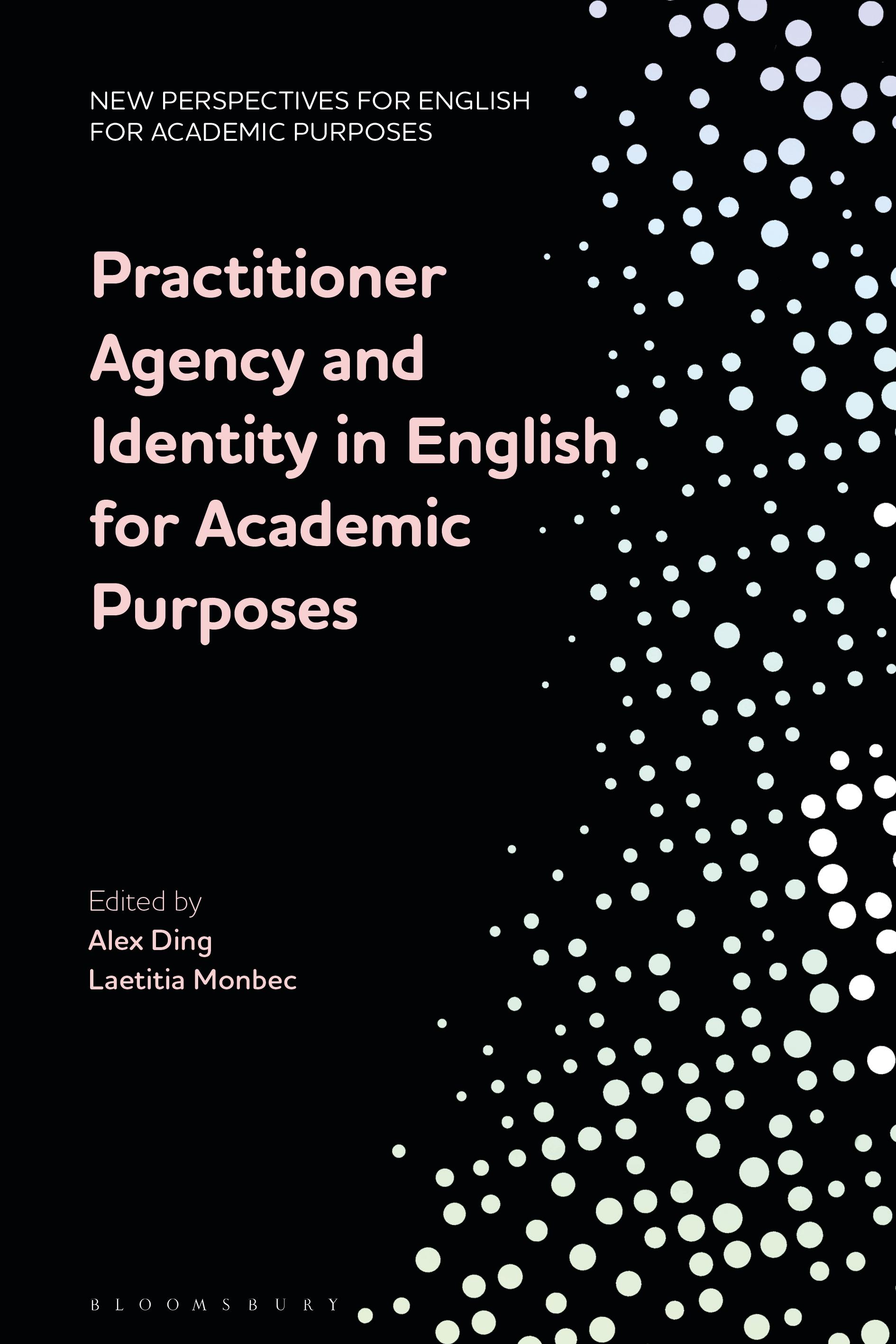
This volume provides insights into EAP practitioners' identity and agency in varied contexts and field positions.
Each chapter delves into a theoretical perspective (Bourdieu's field theory, Post-humanism, Legitimation Code Theory, Symbolic Interactionism..), and a variety of methodologies, enabling different questions to be explored. Each chapter is also a window into the everyday life of practitioners as they navigate their professional lives, and the specificities of their EAP contexts, the politics and struggles over power, domination, legitimacy, status, ambition and recognition. The authors' concerns and strategies vary and show that the weight of powerful structures and collective habitus is difficult - but not impossible- to resist.
From a socio-analysis of EAP and its narratives of origins, to a discussion on Ethics in EAP and a critique of the Global South label, the reader will explore contributions from Canada, Hong Kong, Malaysia, Pakistan, Singapore, South Africa, the UK, and Zimbabwe.
The chapters reveal a field which is made up of a constellation of worlds, each with its own logic but importantly, a field with no centre. The studies in the chapters are likely to intrigue, inspire, but also disrupt some readers' expectations and challenge their assumptions about the field and its practitioners.
Each chapter delves into a theoretical perspective (Bourdieu's field theory, Post-humanism, Legitimation Code Theory, Symbolic Interactionism..), and a variety of methodologies, enabling different questions to be explored. Each chapter is also a window into the everyday life of practitioners as they navigate their professional lives, and the specificities of their EAP contexts, the politics and struggles over power, domination, legitimacy, status, ambition and recognition. The authors' concerns and strategies vary and show that the weight of powerful structures and collective habitus is difficult - but not impossible- to resist.
From a socio-analysis of EAP and its narratives of origins, to a discussion on Ethics in EAP and a critique of the Global South label, the reader will explore contributions from Canada, Hong Kong, Malaysia, Pakistan, Singapore, South Africa, the UK, and Zimbabwe.
The chapters reveal a field which is made up of a constellation of worlds, each with its own logic but importantly, a field with no centre. The studies in the chapters are likely to intrigue, inspire, but also disrupt some readers' expectations and challenge their assumptions about the field and its practitioners.
Betal nemt med kort, Klarna, Apple Pay eller Google Pay. Ikke tilfreds? Du har altid 14 dages fortrydelsesret. Læs mere i vores vilkår. Har du spørgsmål, så send os en mail på hello@memmo.org.
Memmo gør det nemmere at studere – uanset hvor du er i verden. Hos os samler du dine kursusbøger og smarte studieværktøjer ét sted: resuméer, quizzer, podcasts og flashcards. Og så er der Ted, din studieven, der svarer på alt, du undrer dig over. Over 50 000 studerende studerer allerede her – bygget til at hjælpe dig med at lære hurtigere og stresse mindre.