
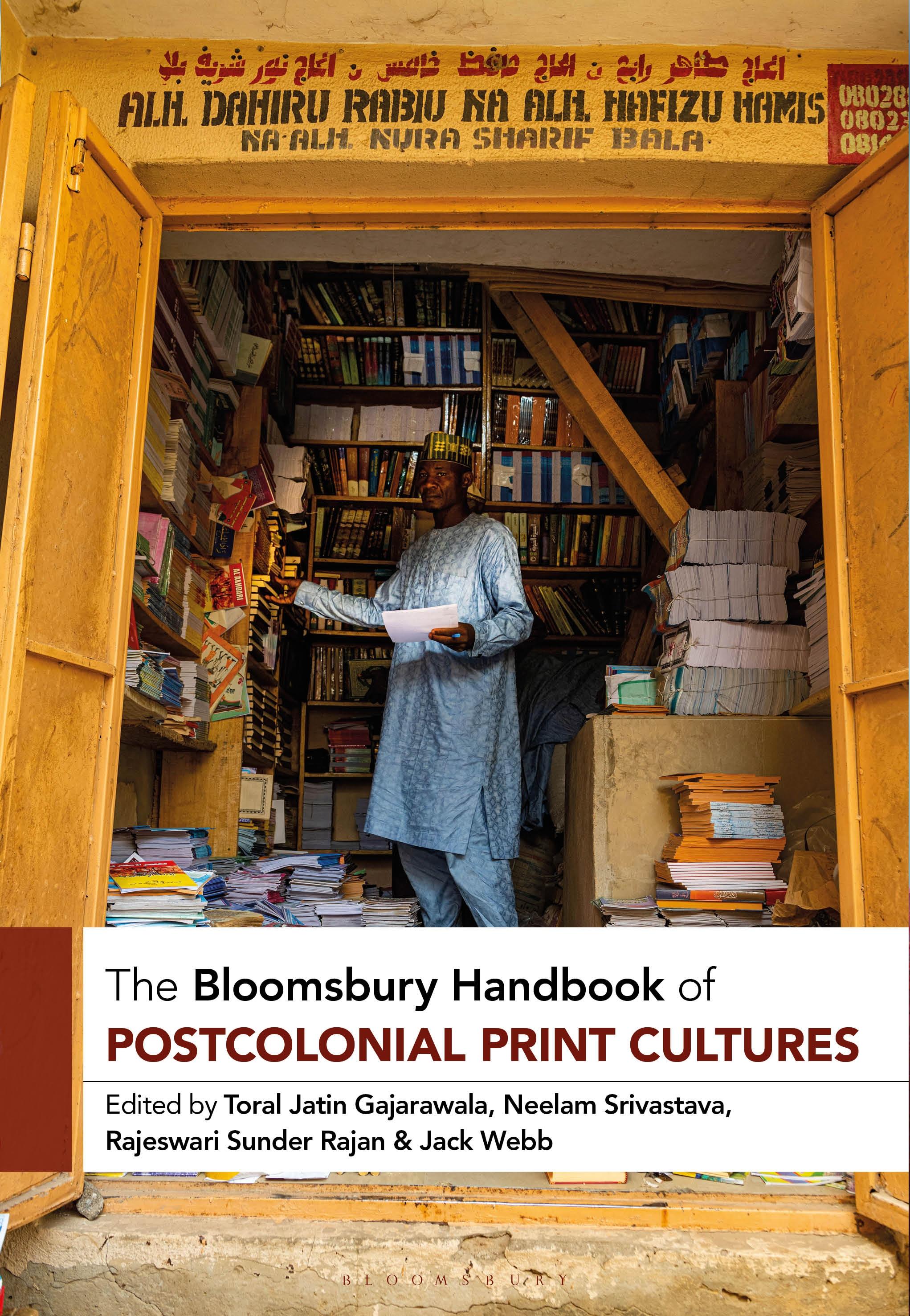
The texts that make up postcolonial print cultures are often found outside the archival catalogue, and in lesser-examined repositories such as personal collections, the streets, or appendages to established collections. This volume examines the published and unpublished writing, magazines, pamphlets, paratexts, advertisements, cartoons, radio, and street art that serve as the intellectual forces behind opposition to colonial orders, as meditations on the futures of embryonic nation states, and as visions of new forms of equality.
The print cultures examined here are necessarily anti-institutional; they serve as a counterpoint to the colonial archive and, relatedly, to more traditional genres and text formats coming out of large-scale publishers. This means that much of the primary material analyzed in this book has not been scrutinized before. Many of these print productions articulate collective liberation projects with origins in the grassroots. They include debates around the shape of the postcolonial nation and the new state formation that necessarily draw on a diverse and contentious public sphere of opinion. Their rhetoric ranges from the reformist to the revolutionary.
Reflecting the diversity, indeed the disorderliness, of postcolonial print cultures this book covers local, national, and transnational cultures from Asia, Africa, Europe and the Americas. Its wide-ranging essays offer a nuanced and, taken together, a definitive (though that is not to say comprehensive or systematic) study of a global phenomenon: postcolonial print cultures as a distinct literary field. The chapters recover the efforts of writers, readers and publishers to produce a postcolonialism 'from below', and thereby offer a range of fresh perspectives on the meaning and history of postcolonialism.
The print cultures examined here are necessarily anti-institutional; they serve as a counterpoint to the colonial archive and, relatedly, to more traditional genres and text formats coming out of large-scale publishers. This means that much of the primary material analyzed in this book has not been scrutinized before. Many of these print productions articulate collective liberation projects with origins in the grassroots. They include debates around the shape of the postcolonial nation and the new state formation that necessarily draw on a diverse and contentious public sphere of opinion. Their rhetoric ranges from the reformist to the revolutionary.
Reflecting the diversity, indeed the disorderliness, of postcolonial print cultures this book covers local, national, and transnational cultures from Asia, Africa, Europe and the Americas. Its wide-ranging essays offer a nuanced and, taken together, a definitive (though that is not to say comprehensive or systematic) study of a global phenomenon: postcolonial print cultures as a distinct literary field. The chapters recover the efforts of writers, readers and publishers to produce a postcolonialism 'from below', and thereby offer a range of fresh perspectives on the meaning and history of postcolonialism.
Betal nemt med kort, Klarna, Apple Pay eller Google Pay. Ikke tilfreds? Du har altid 14 dages fortrydelsesret. Læs mere i vores vilkår. Har du spørgsmål, så send os en mail på hello@memmo.org.
Memmo gør det nemmere at studere – uanset hvor du er i verden. Hos os samler du dine kursusbøger og smarte studieværktøjer ét sted: resuméer, quizzer, podcasts og flashcards. Og så er der Ted, din studieven, der svarer på alt, du undrer dig over. Over 50 000 studerende studerer allerede her – bygget til at hjælpe dig med at lære hurtigere og stresse mindre.