
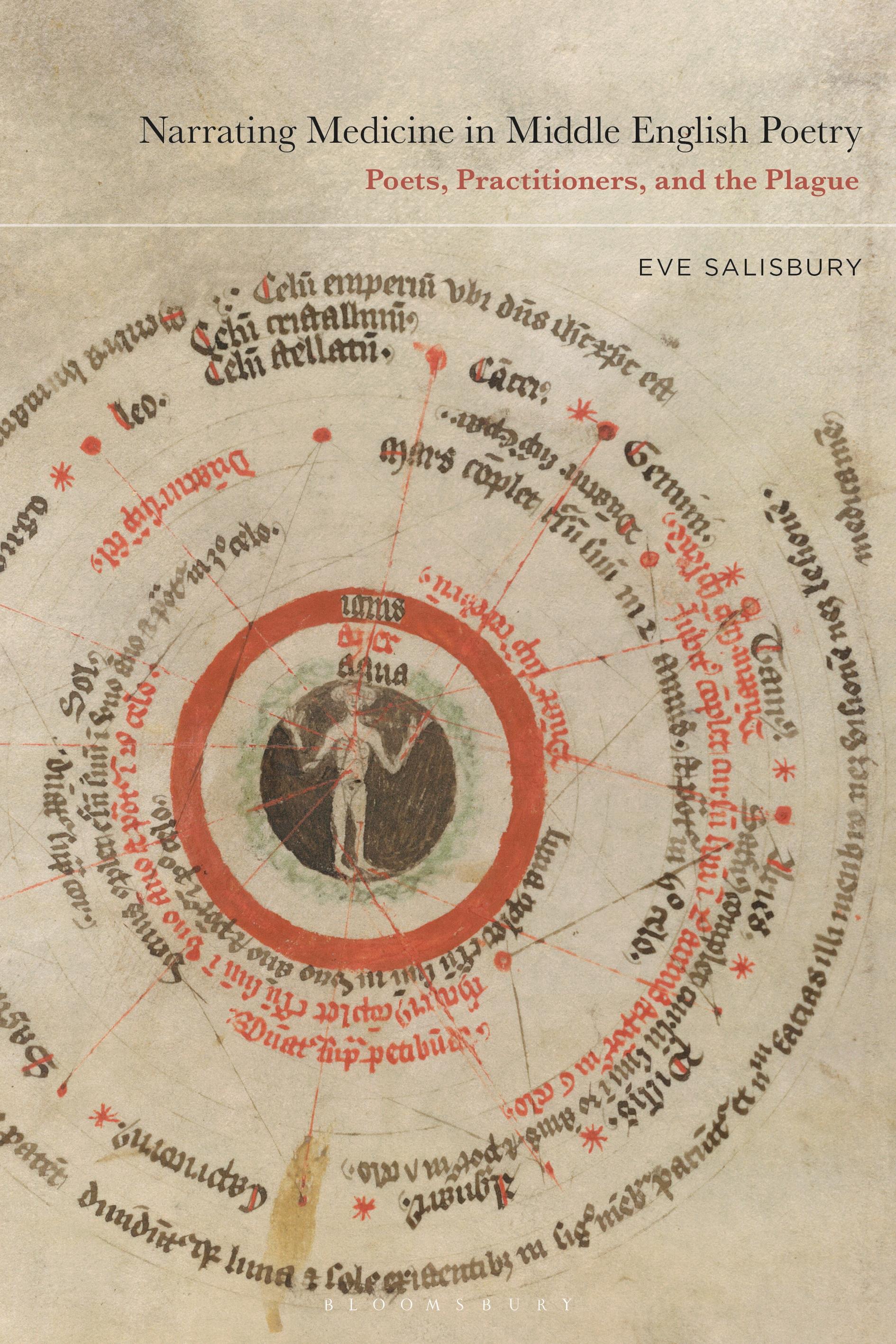
Exploring medical writing in England in the 100+ years after the advent of the “Great Mortality”, this book examines the storytelling practices of poets, patients, and physicians in the midst of a medieval public health crisis and demonstrates how literary narratives enable us to see a kinship between poetry and the healing arts.
Looking at how we can learn to diagnose a text as if we were diagnosing a body, Salisbury provides new insights into how we can recuperate the voices of those afflicted by illness in medieval texts when we have no direct testimony.
She considers how we interpret stories told by patients in narratives mediated by others, ways that women factor into the shaping of a medical canon, how medical writing intersects with religious belief and memorial practices governed by the Church, and ways that regimens of health benefit a population in the throes of an epidemic.
Looking at how we can learn to diagnose a text as if we were diagnosing a body, Salisbury provides new insights into how we can recuperate the voices of those afflicted by illness in medieval texts when we have no direct testimony.
She considers how we interpret stories told by patients in narratives mediated by others, ways that women factor into the shaping of a medical canon, how medical writing intersects with religious belief and memorial practices governed by the Church, and ways that regimens of health benefit a population in the throes of an epidemic.
Betal nemt med kort, Klarna, Apple Pay eller Google Pay. Ikke tilfreds? Du har altid 14 dages fortrydelsesret. Læs mere i vores vilkår. Har du spørgsmål, så send os en mail på hello@memmo.org.
Memmo gør det nemmere at studere – uanset hvor du er i verden. Hos os samler du dine kursusbøger og smarte studieværktøjer ét sted: resuméer, quizzer, podcasts og flashcards. Og så er der Ted, din studieven, der svarer på alt, du undrer dig over. Over 50 000 studerende studerer allerede her – bygget til at hjælpe dig med at lære hurtigere og stresse mindre.