
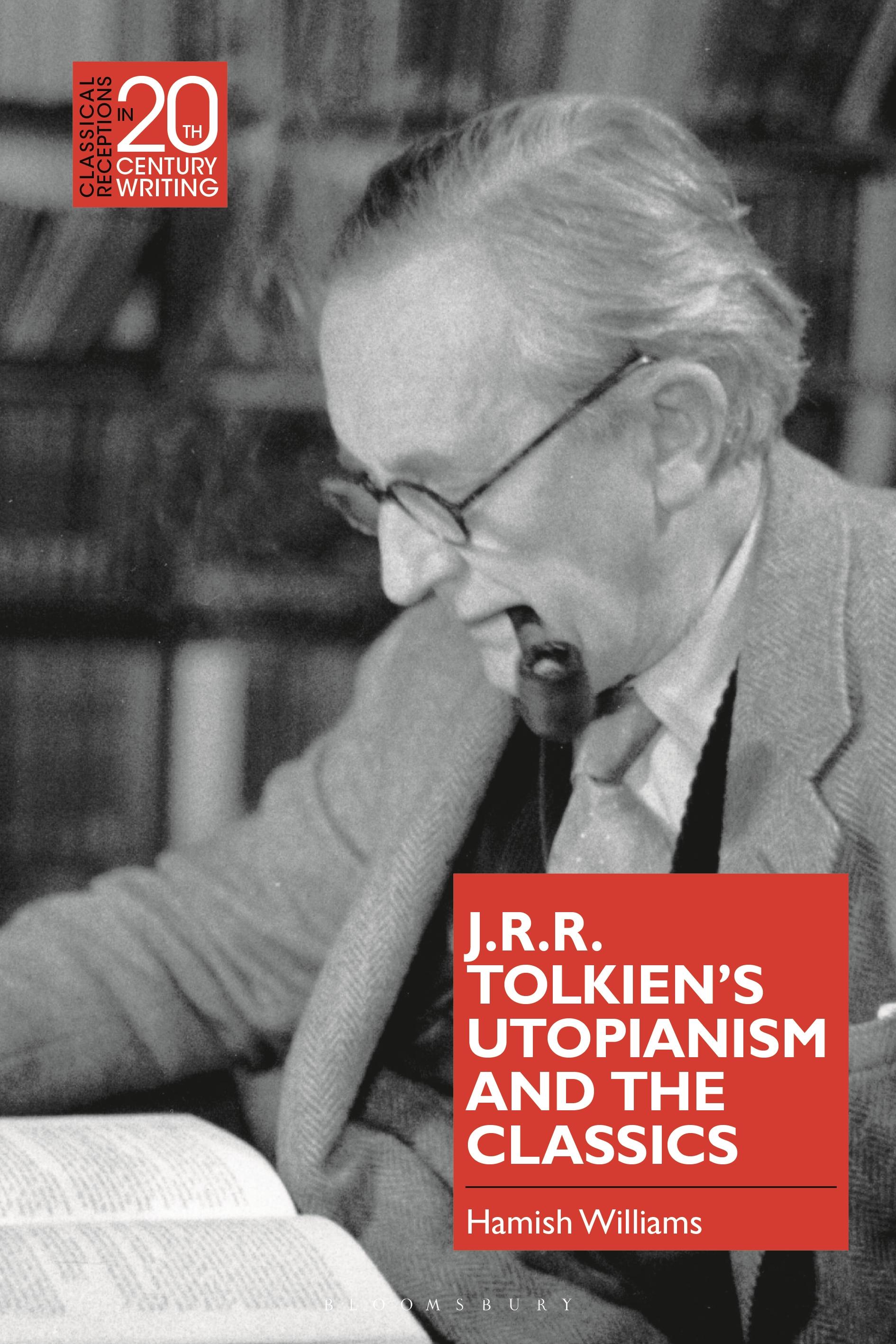
This book opens up new perspectives on the English fantasy writer J.R.R. Tolkien, arguing that he was an influential thinker of utopianism in 20th-century fiction and that his scrutiny of utopias can be assessed through his dialogue with antiquity. Tolkien's engagement with the ancient world often reflects an interest in retrotopianism: his fictional places – cities, forests, homes – draw on a rich (post-)classical narrative imagination of similar spaces.
Importantly for Tolkien, such narratives entail 'eutopian' thought experiments: the decline and fall of distinctly 'classical' communities provide an utopian blueprint for future political restorations; the home as oikos becomes a space where an ideal ethical reciprocity between host and guest can be sought; the 'ancient forest' is an ambiguous, unsettling site where characters can experience necessary forms of awakening. From these perspectives, tokens of Platonic moderation, Augustan restoration, Homeric xenophilia, and the Ovidian material sublime are evident in Tolkien's writing. Likewise, his retrotopianism also always entails a rewriting of ancient narratives in post-classical and modern terms. This study then explores how Tolkien's use of the classical past can help us to align classical and utopian studies, and thus to reflect on the ranges and limits of utopianism in classical literature and thought.
Importantly for Tolkien, such narratives entail 'eutopian' thought experiments: the decline and fall of distinctly 'classical' communities provide an utopian blueprint for future political restorations; the home as oikos becomes a space where an ideal ethical reciprocity between host and guest can be sought; the 'ancient forest' is an ambiguous, unsettling site where characters can experience necessary forms of awakening. From these perspectives, tokens of Platonic moderation, Augustan restoration, Homeric xenophilia, and the Ovidian material sublime are evident in Tolkien's writing. Likewise, his retrotopianism also always entails a rewriting of ancient narratives in post-classical and modern terms. This study then explores how Tolkien's use of the classical past can help us to align classical and utopian studies, and thus to reflect on the ranges and limits of utopianism in classical literature and thought.
Sider: 224
Kategori: Litteraturvetenskap & Teori
e-ISBN: 9781350241480
Forsendelsesvægt: 1.2 kg
Sendes inden for: 1-2 dage
Betal nemt med kort, Klarna, Apple Pay eller Google Pay. Ikke tilfreds? Du har altid 14 dages fortrydelsesret. Læs mere i vores vilkår. Har du spørgsmål, så send os en mail på hello@memmo.org.
Memmo gør det nemmere at studere – uanset hvor du er i verden. Hos os samler du dine kursusbøger og smarte studieværktøjer ét sted: resuméer, quizzer, podcasts og flashcards. Og så er der Ted, din studieven, der svarer på alt, du undrer dig over. Over 50 000 studerende studerer allerede her – bygget til at hjælpe dig med at lære hurtigere og stresse mindre.