
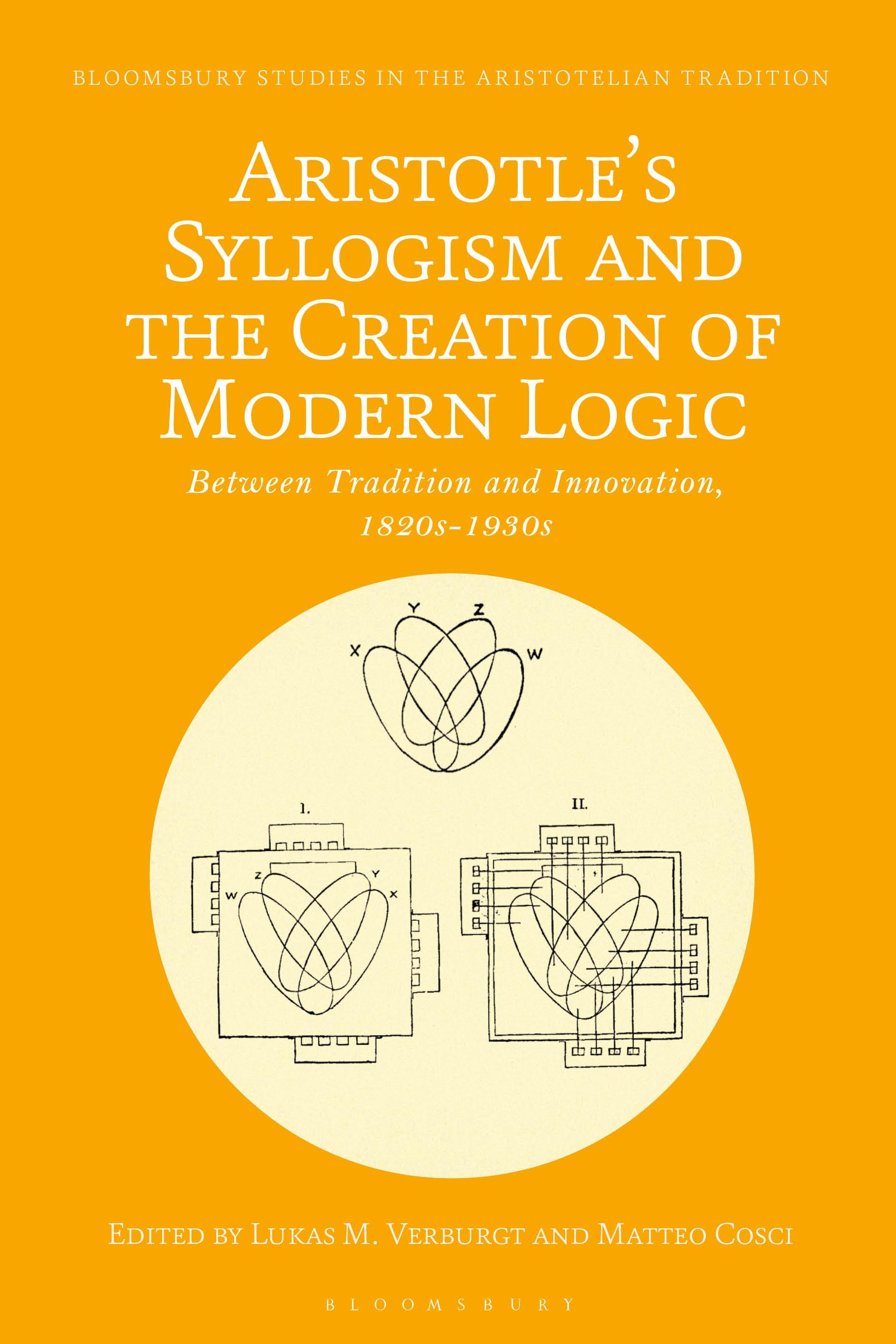
Offering a bold new vision on the history of modern logic, Lukas M. Verburgt and Matteo Cosci focus on the lasting impact of Aristotle's syllogism between the 1820s and 1930s.
For over two millennia, deductive logic was the syllogism and syllogism was the yardstick of sound human reasoning. During the 19th century, this hegemony fell apart and logicians, including Boole, Frege and Peirce, took deductive logic far beyond its Aristotelian borders. However, contrary to common wisdom, reflections on syllogism were also instrumental to the creation of new logical developments, such as first-order logic and early set theory. This volume presents the period under discussion as one of both tradition and innovation, both continuity and discontinuity. Modern logic broke away from the syllogistic tradition, but without Aristotle's syllogism, modern logic would not have been born.
A vital follow up to The Aftermath of Syllogism, this book traces the longue durée history of syllogism from Richard Whately's revival of formal logic in the 1820s through the work of David Hilbert and the Göttingen school up to the 1930s. Bringing together a group of major international experts, it sheds crucial new light on the emergence of modern logic and the roots of analytic philosophy in the 19th and early 20th centuries.
For over two millennia, deductive logic was the syllogism and syllogism was the yardstick of sound human reasoning. During the 19th century, this hegemony fell apart and logicians, including Boole, Frege and Peirce, took deductive logic far beyond its Aristotelian borders. However, contrary to common wisdom, reflections on syllogism were also instrumental to the creation of new logical developments, such as first-order logic and early set theory. This volume presents the period under discussion as one of both tradition and innovation, both continuity and discontinuity. Modern logic broke away from the syllogistic tradition, but without Aristotle's syllogism, modern logic would not have been born.
A vital follow up to The Aftermath of Syllogism, this book traces the longue durée history of syllogism from Richard Whately's revival of formal logic in the 1820s through the work of David Hilbert and the Göttingen school up to the 1930s. Bringing together a group of major international experts, it sheds crucial new light on the emergence of modern logic and the roots of analytic philosophy in the 19th and early 20th centuries.
Betal nemt med kort, Klarna, Apple Pay eller Google Pay. Ikke tilfreds? Du har altid 14 dages fortrydelsesret. Læs mere i vores vilkår. Har du spørgsmål, så send os en mail på hello@memmo.org.
Memmo gør det nemmere at studere – uanset hvor du er i verden. Hos os samler du dine kursusbøger og smarte studieværktøjer ét sted: resuméer, quizzer, podcasts og flashcards. Og så er der Ted, din studieven, der svarer på alt, du undrer dig over. Over 50 000 studerende studerer allerede her – bygget til at hjælpe dig med at lære hurtigere og stresse mindre.