
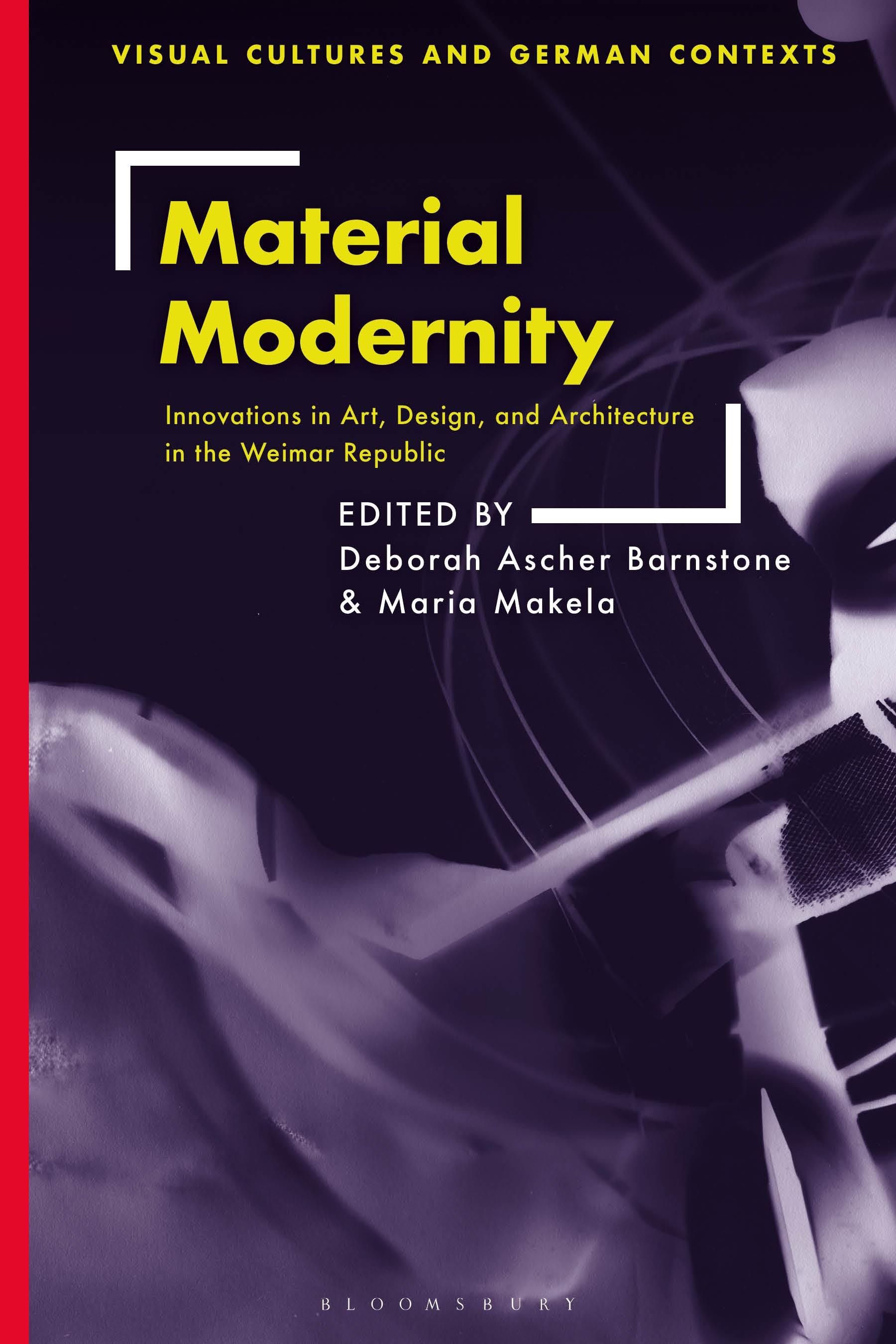
Material Modernity explores creative innovation in German art, design, and architecture during the Weimar Republic, charting both the rise of new media and the re-fashioning of old media. Weimar became famous for the explosion of creative ingenuity across the arts in Germany, due to experiments with new techniques (including the move towards abstraction in painting and sculpture) and inventive work in such new media as paper and plastic, which utilized both new and old methods of art production. Individual chapters in this book consider inventions such as the camera and materials like celluloid, examine the role of new materials including concrete composites in opening up fresh avenues in the plastic arts, and relate advances in the understanding of color perception and psychology to an increased interest in visual perception and the latent potential of color as both architectural ornament and carrier of emotional force in space.
While art historians usually argue that experimentation in the Weimar Republic was the result of an intentional rejection of traditional modes of expression in the conscious attempt to invent a modern art and architecture unshackled from historic media and methods, this volume shows that the drivers for innovation were often far more complex and nuanced. It first of all describes how the material shortages precipitated by the First World War, along with the devastation to industrial infrastructure and disruption of historic trade routes, affected art, as did a spirit of experimentation that permeated interwar German culture. It then analyzes new challenges in the 1920s to artistic conventions in traditional art modes like painting, sculpture, drawing, architecture, textiles, and print-making and simultaneously probes the likely causes of innovative new methods of artistic production that appeared, such as photomontage, assemblage, mechanical art, and multi-media art. In doing so, Material Modernity fills a significant gap in Weimar scholarship and art history literature.
While art historians usually argue that experimentation in the Weimar Republic was the result of an intentional rejection of traditional modes of expression in the conscious attempt to invent a modern art and architecture unshackled from historic media and methods, this volume shows that the drivers for innovation were often far more complex and nuanced. It first of all describes how the material shortages precipitated by the First World War, along with the devastation to industrial infrastructure and disruption of historic trade routes, affected art, as did a spirit of experimentation that permeated interwar German culture. It then analyzes new challenges in the 1920s to artistic conventions in traditional art modes like painting, sculpture, drawing, architecture, textiles, and print-making and simultaneously probes the likely causes of innovative new methods of artistic production that appeared, such as photomontage, assemblage, mechanical art, and multi-media art. In doing so, Material Modernity fills a significant gap in Weimar scholarship and art history literature.
Betal nemt med kort, Klarna, Apple Pay eller Google Pay. Ikke tilfreds? Du har altid 14 dages fortrydelsesret. Læs mere i vores vilkår. Har du spørgsmål, så send os en mail på hello@memmo.org.
Memmo gør det nemmere at studere – uanset hvor du er i verden. Hos os samler du dine kursusbøger og smarte studieværktøjer ét sted: resuméer, quizzer, podcasts og flashcards. Og så er der Ted, din studieven, der svarer på alt, du undrer dig over. Over 50 000 studerende studerer allerede her – bygget til at hjælpe dig med at lære hurtigere og stresse mindre.