
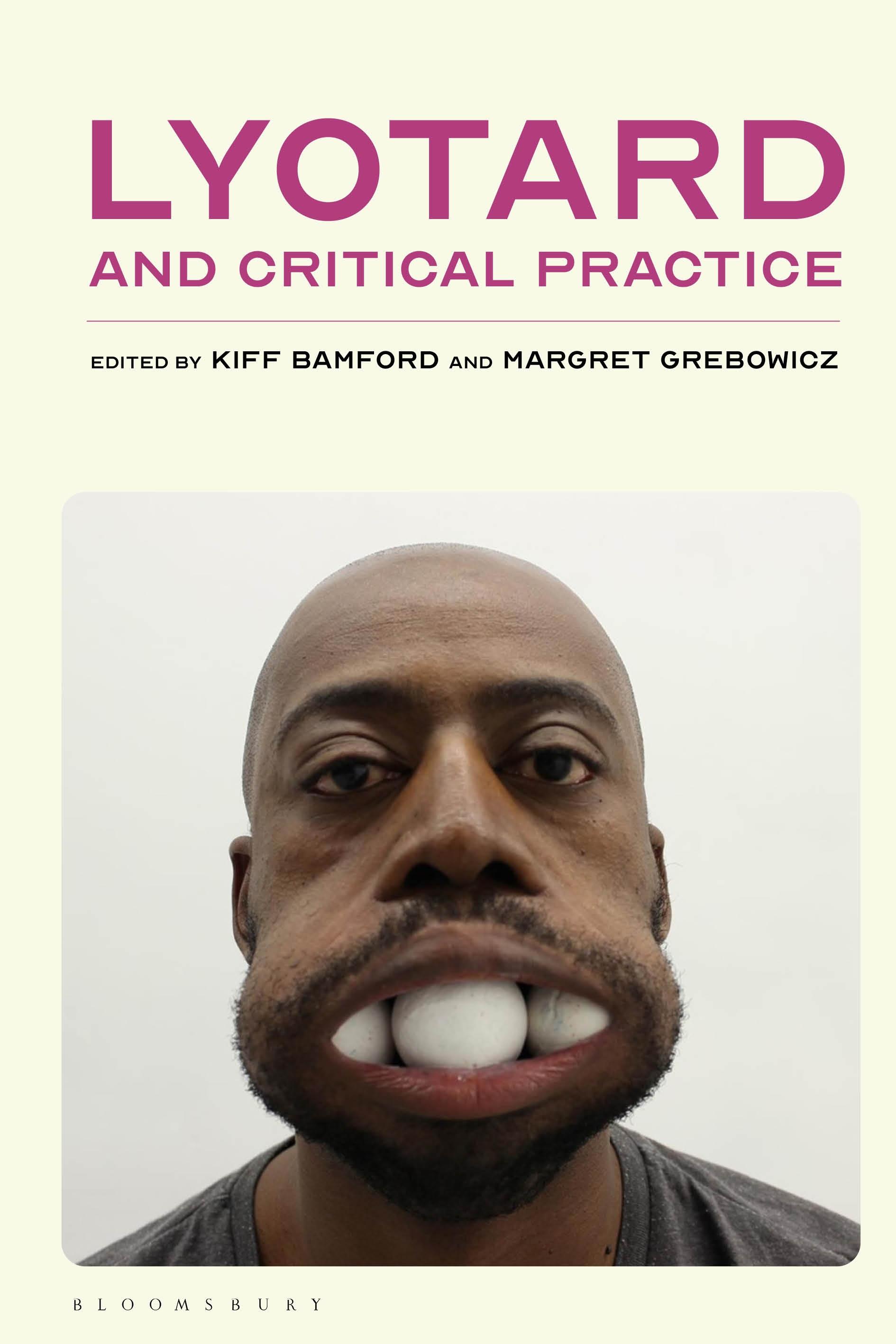
Jean-François Lyotard (1924-1998) was one of the previous century's most provocative thinkers. Can his work help us address the crisis currently facing the humanities?
The dominant economic discourse sees the humanities as “low-value,” an irritation at best. Lyotard helps us to think against this pervasive dismissal of creative activity, not by defending the honor of the humanities, but by inviting critical practices which aggravate this irritation. Critical practices trouble what counts as critique, embrace incertitude, and listen for silenced voices.
Twelve essays by artists and researchers take up Lyotard's invitation and begin to develop the idea of critical practice in the contemporary context. Three sections titled “What resists thinking;” “Long views and distances” and “Why art practice?” address contemporary concerns like affectivity, aesthetics, economic imperatives, militarism, pedagogy, posthumanism, and the closure of what in Lyotard's time was called "the West."
Four short pieces by Lyotard intervene in and buttress the discussion: “Apathy in Theory” and “Interview with Art Présent,” here published in English for the first time, and “Affect-phrase” and “The Other's Rights” republished here to highlight his prescient concern for that which cannot be articulated.
The dominant economic discourse sees the humanities as “low-value,” an irritation at best. Lyotard helps us to think against this pervasive dismissal of creative activity, not by defending the honor of the humanities, but by inviting critical practices which aggravate this irritation. Critical practices trouble what counts as critique, embrace incertitude, and listen for silenced voices.
Twelve essays by artists and researchers take up Lyotard's invitation and begin to develop the idea of critical practice in the contemporary context. Three sections titled “What resists thinking;” “Long views and distances” and “Why art practice?” address contemporary concerns like affectivity, aesthetics, economic imperatives, militarism, pedagogy, posthumanism, and the closure of what in Lyotard's time was called "the West."
Four short pieces by Lyotard intervene in and buttress the discussion: “Apathy in Theory” and “Interview with Art Présent,” here published in English for the first time, and “Affect-phrase” and “The Other's Rights” republished here to highlight his prescient concern for that which cannot be articulated.
Betal nemt med kort, Klarna, Apple Pay eller Google Pay. Ikke tilfreds? Du har altid 14 dages fortrydelsesret. Læs mere i vores vilkår. Har du spørgsmål, så send os en mail på hello@memmo.org.
Memmo gør det nemmere at studere – uanset hvor du er i verden. Hos os samler du dine kursusbøger og smarte studieværktøjer ét sted: resuméer, quizzer, podcasts og flashcards. Og så er der Ted, din studieven, der svarer på alt, du undrer dig over. Over 50 000 studerende studerer allerede her – bygget til at hjælpe dig med at lære hurtigere og stresse mindre.