
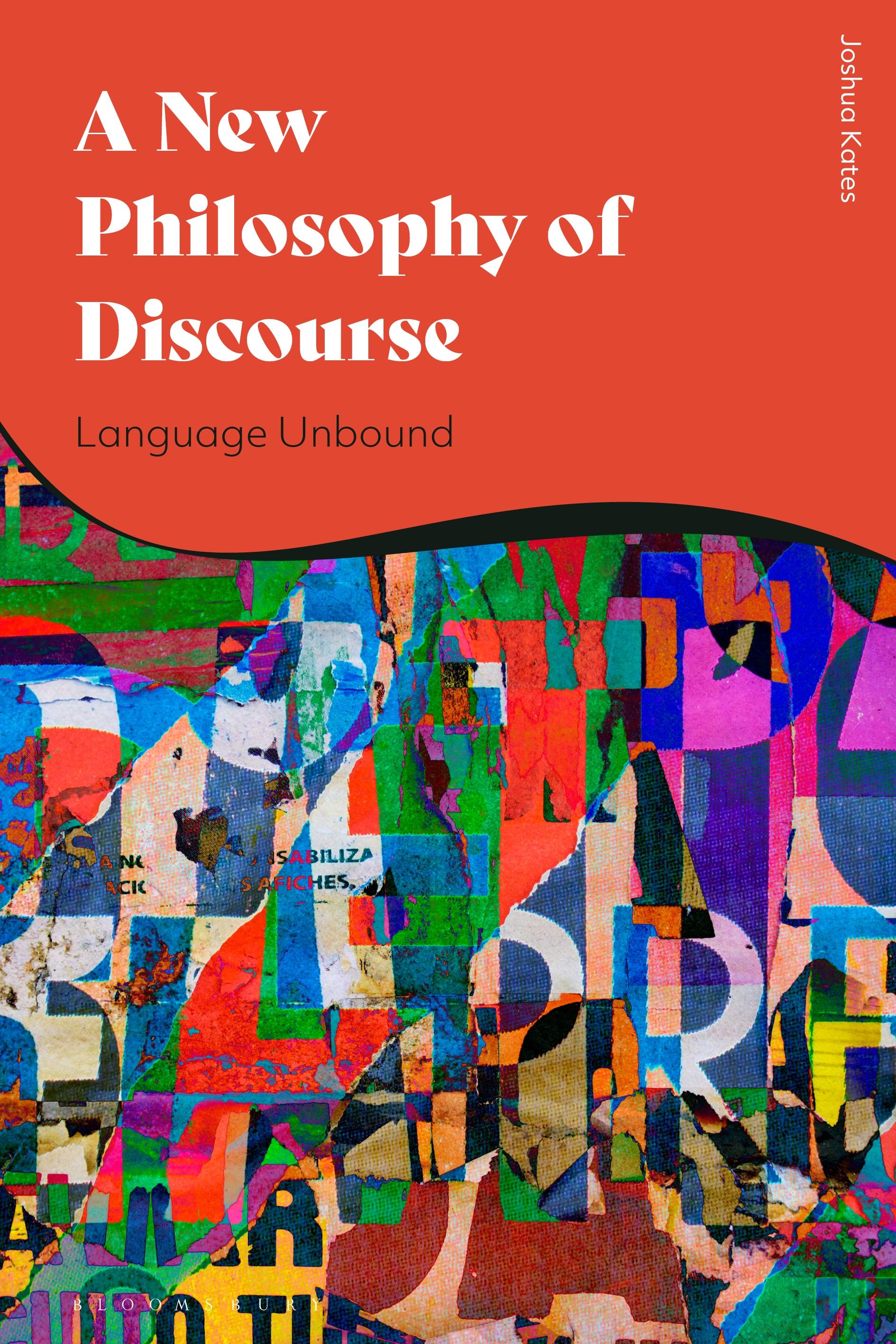
What would happen if structures, forms, and other stand-alone entities thought to comprise our intellectual toolkit-words, meanings, signs-were jettisoned? How would a work written in a purportedly dead language, like The Iliad, or penned in a foreign tongue be approached if deemed legible without structures such as meaning-bearing signs or grammatical rules?
A New Philosophy of Discourse charts a novel course in response to these questions, coining an original concept of discourse, or talk!, that Joshua Kates presents as more fundamental than language. In Kates' conception of discourse, writing and speech take shape entirely as events, situated within histories, contexts, and traditions themselves always in the making. Combining literary theory, literary criticism, and philosophy, to reveal a new perspective on discourse, Kates focuses on literary criticism, literary texts by Charles Bernstein and Stanley Elkin, and the philosophical writings of Stanley Cavell, Hans-Georg Gadamer, Donald Davidson and Martin Heidegger.
This ground-breaking study bridges the analytical/continental divide, by working through concrete problems using novel and extended interpretations with wide-ranging implications for the humanities.
A New Philosophy of Discourse charts a novel course in response to these questions, coining an original concept of discourse, or talk!, that Joshua Kates presents as more fundamental than language. In Kates' conception of discourse, writing and speech take shape entirely as events, situated within histories, contexts, and traditions themselves always in the making. Combining literary theory, literary criticism, and philosophy, to reveal a new perspective on discourse, Kates focuses on literary criticism, literary texts by Charles Bernstein and Stanley Elkin, and the philosophical writings of Stanley Cavell, Hans-Georg Gadamer, Donald Davidson and Martin Heidegger.
This ground-breaking study bridges the analytical/continental divide, by working through concrete problems using novel and extended interpretations with wide-ranging implications for the humanities.
Betal nemt med kort, Klarna, Apple Pay eller Google Pay. Ikke tilfreds? Du har altid 14 dages fortrydelsesret. Læs mere i vores vilkår. Har du spørgsmål, så send os en mail på hello@memmo.org.
Memmo gør det nemmere at studere – uanset hvor du er i verden. Hos os samler du dine kursusbøger og smarte studieværktøjer ét sted: resuméer, quizzer, podcasts og flashcards. Og så er der Ted, din studieven, der svarer på alt, du undrer dig over. Over 50 000 studerende studerer allerede her – bygget til at hjælpe dig med at lære hurtigere og stresse mindre.