
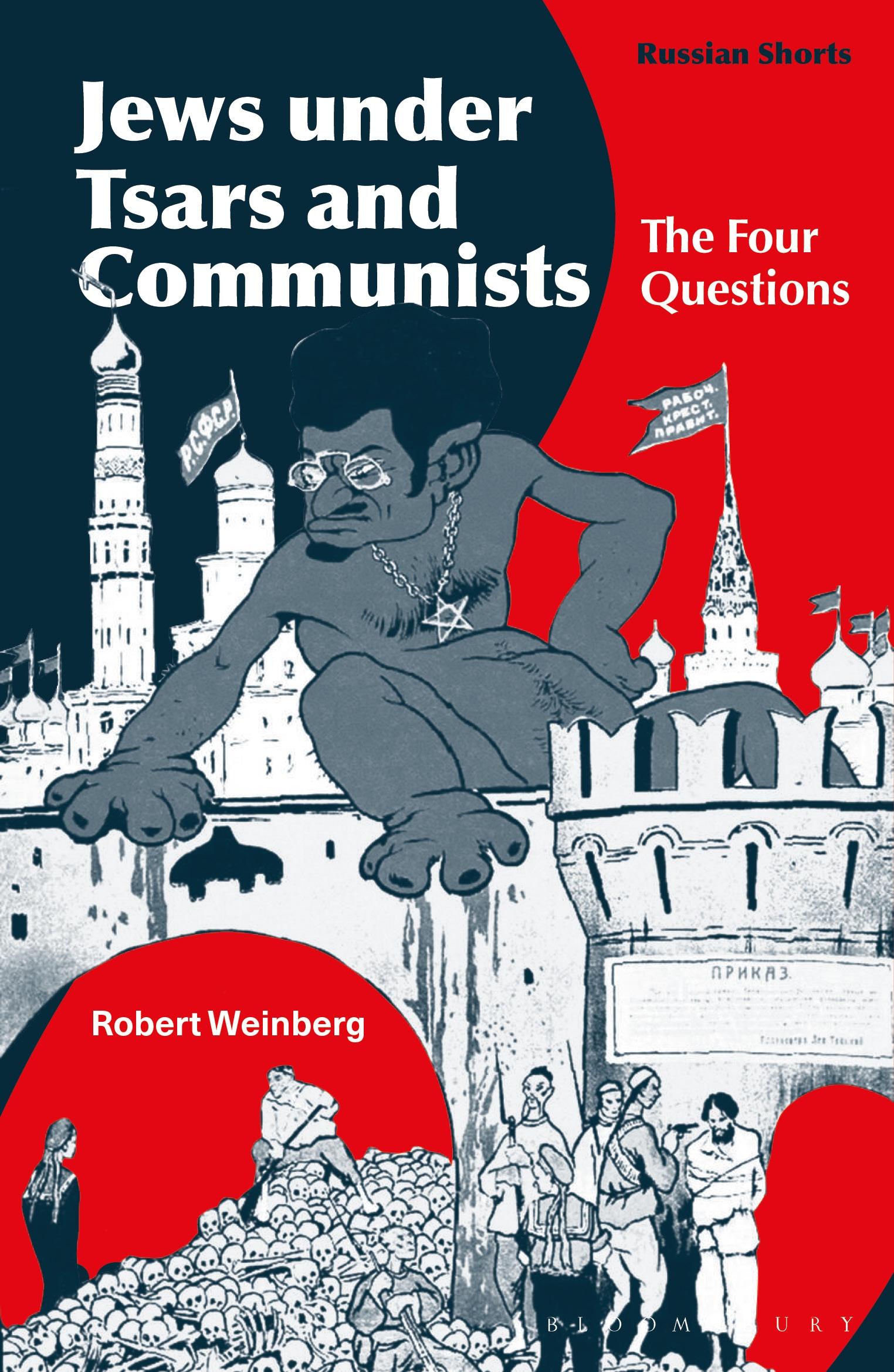
Tracing the evolving nature of popular and official beliefs about the purported nature of the Jews from the 18th century onwards, Russia and the Jewish Question explores how perceptions of Jews in late Imperial Russia and the Soviet Union shaped the regimes' policies toward them. In so doing Robert Weinberg provides a fruitful lens through which to investigate the social, economic, political, and cultural developments of modern Russia.
Here, Weinberg reveals that the 'Jewish Question' – and, by extension anti-Semitism – emerged at the end of the 18th century when the partitions of Poland made hundreds of thousands of Jews subjects of the Russian crown. He skillfully argues the phrase itself implies the singular nature of Jews as a group of people whose religion, culture, and occupational make-up prevent them from fitting into predominantly Christian societies. The book then expounds how other characteristics were associated with the group over time: in particular, debates about rights of citizenship, the impact of industrialization, the emergence of the nation-state, and the proliferation of new political ideologies and movements contributed to the changing nature of the 'Jewish Question'. Its content may have not remained static, but its purpose consistently questions whether or not Jews pose a threat to the stability and well-being of the societies in which they live and this, in a specifically Russian context, is what Weinberg examines so expertly.
Betal nemt med kort, Klarna, Apple Pay eller Google Pay. Ikke tilfreds? Du har altid 14 dages fortrydelsesret. Læs mere i vores vilkår. Har du spørgsmål, så send os en mail på hello@memmo.org.
Memmo gør det nemmere at studere – uanset hvor du er i verden. Hos os samler du dine kursusbøger og smarte studieværktøjer ét sted: resuméer, quizzer, podcasts og flashcards. Og så er der Ted, din studieven, der svarer på alt, du undrer dig over. Over 50 000 studerende studerer allerede her – bygget til at hjælpe dig med at lære hurtigere og stresse mindre.