
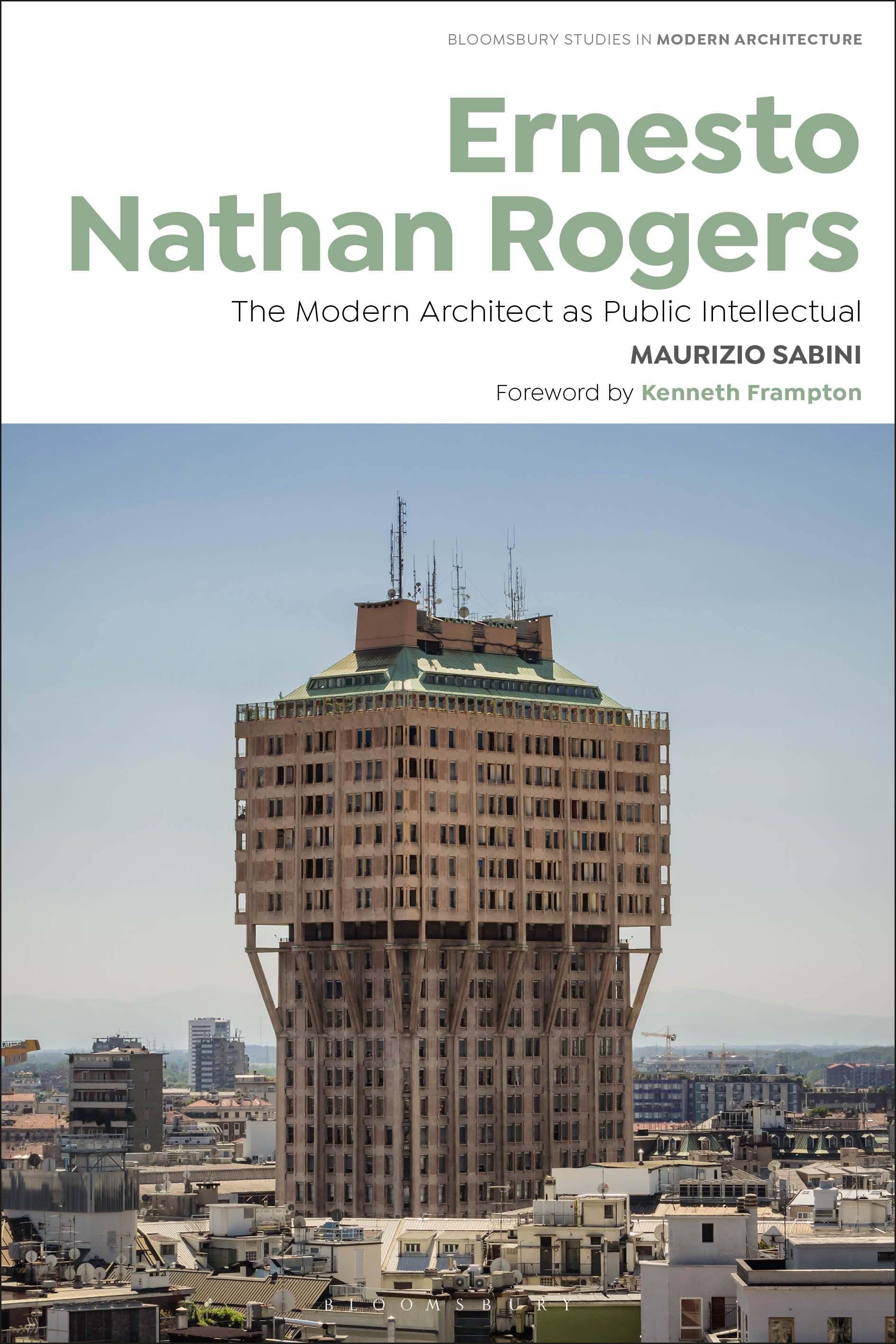
Architect Ernesto Nathan Rogers (1909-1969) was a towering figure in 20th-century Italian architecture, with a significant impact at the international level. Through the work of his collaborative firm (Banfi Belgiojoso Peressutti Rogers, or BBPR), the editorship of publications such as Domus and Casabella, and his teaching at the Politecnico in Milan, Rogers ensured a lasting influence on the field as a practitioner, theorist and educator. However his contributions have been largely neglected by scholarship outside of Italy.
Published as part of the Bloomsbury Studies in Modern Architecture series, which brings to light the work of significant yet overlooked modernist architects, this book re-assesses Ernesto Nathan Rogers' cultural legacy. It is the first comprehensive, critical work on Rogers in English, and emphasizes Rogers' vision for the role of the architect as a public intellectual, as well as his commitment to pursue a renewed path of professional and cultural research within the “Modern Project.”
The book also discusses Roger's willingness to challenge academic classicized monumentality as well as modernist stereotypes, to emerge as a leader of Italian design in the aftermath of World War II; his interest in all scales of design and planning, with a cross-disciplinary mentality; tradition in modernity; and criticality as a mode of practice, to bring a detailed account of the work and thought of Ernesto Nathan Rogers to an English-speaking audience for the first time.
With a foreword by Kenneth Frampton.
Published as part of the Bloomsbury Studies in Modern Architecture series, which brings to light the work of significant yet overlooked modernist architects, this book re-assesses Ernesto Nathan Rogers' cultural legacy. It is the first comprehensive, critical work on Rogers in English, and emphasizes Rogers' vision for the role of the architect as a public intellectual, as well as his commitment to pursue a renewed path of professional and cultural research within the “Modern Project.”
The book also discusses Roger's willingness to challenge academic classicized monumentality as well as modernist stereotypes, to emerge as a leader of Italian design in the aftermath of World War II; his interest in all scales of design and planning, with a cross-disciplinary mentality; tradition in modernity; and criticality as a mode of practice, to bring a detailed account of the work and thought of Ernesto Nathan Rogers to an English-speaking audience for the first time.
With a foreword by Kenneth Frampton.
Betal nemt med kort, Klarna, Apple Pay eller Google Pay. Ikke tilfreds? Du har altid 14 dages fortrydelsesret. Læs mere i vores vilkår. Har du spørgsmål, så send os en mail på hello@memmo.org.
Memmo gør det nemmere at studere – uanset hvor du er i verden. Hos os samler du dine kursusbøger og smarte studieværktøjer ét sted: resuméer, quizzer, podcasts og flashcards. Og så er der Ted, din studieven, der svarer på alt, du undrer dig over. Over 50 000 studerende studerer allerede her – bygget til at hjælpe dig med at lære hurtigere og stresse mindre.