
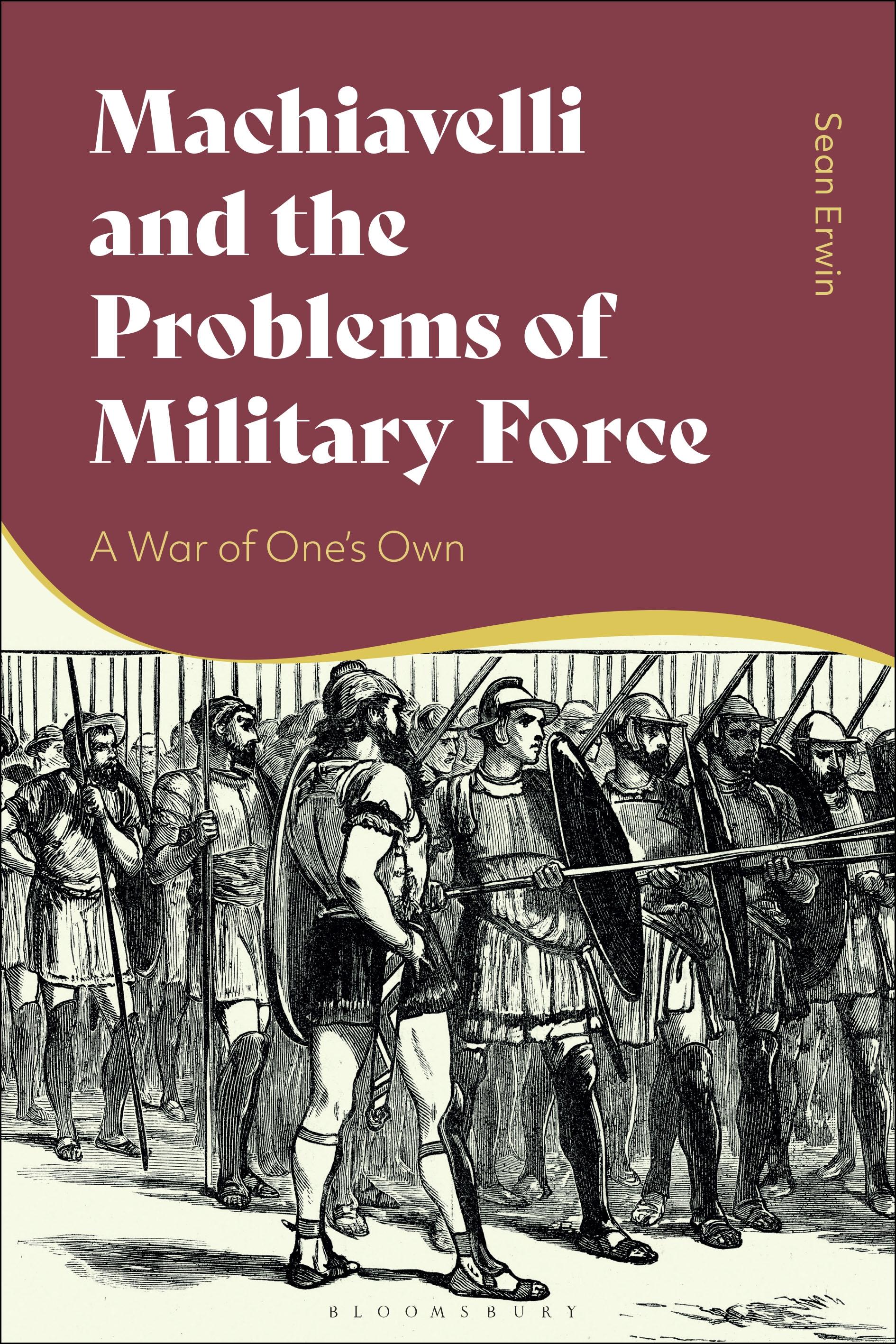
Central to Niccolò Machiavelli's writing is the argument that a successful state is one that prefers to lose with its own arms (arma propriis) than to win with the arms of others (arma alienis). This book sheds light on Machiavelli's critiques of military force and provides an important reinterpretation of his military theory.
Sean Erwin argues that the distinction between arma propriis and arma alienis poses a central problem to Machiavelli's case for why modern political institutions offer modes of political existence that ancient ones did not. Starting from the influence of Lucretius and Aelianus Tacticus on the Dell'arte della guerra, Erwin examines Machiavelli's criticism of mercenary, auxiliary, and mixed forces.
Giving due consideration to an overlooked conceptual distinction in Machiavelli studies, this book is a valuable and original contribution to the field.
Sean Erwin argues that the distinction between arma propriis and arma alienis poses a central problem to Machiavelli's case for why modern political institutions offer modes of political existence that ancient ones did not. Starting from the influence of Lucretius and Aelianus Tacticus on the Dell'arte della guerra, Erwin examines Machiavelli's criticism of mercenary, auxiliary, and mixed forces.
Giving due consideration to an overlooked conceptual distinction in Machiavelli studies, this book is a valuable and original contribution to the field.
Betal nemt med kort, Klarna, Apple Pay eller Google Pay. Ikke tilfreds? Du har altid 14 dages fortrydelsesret. Læs mere i vores vilkår. Har du spørgsmål, så send os en mail på hello@memmo.org.
Memmo gør det nemmere at studere – uanset hvor du er i verden. Hos os samler du dine kursusbøger og smarte studieværktøjer ét sted: resuméer, quizzer, podcasts og flashcards. Og så er der Ted, din studieven, der svarer på alt, du undrer dig over. Over 50 000 studerende studerer allerede her – bygget til at hjælpe dig med at lære hurtigere og stresse mindre.