
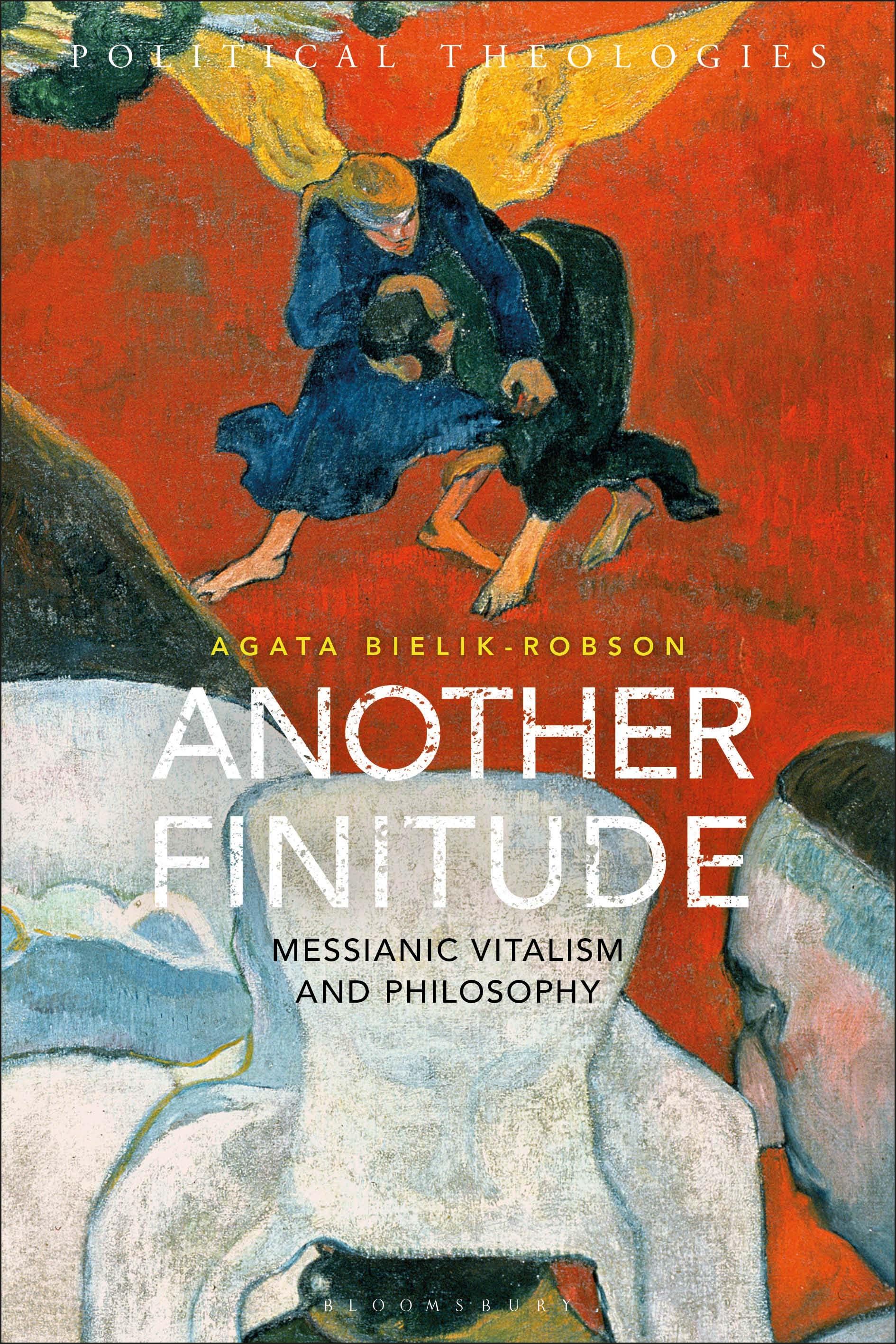
Beginning from the notion of finite life, Another Finitude takes this staple subject from post-Heideggerian philosophy and opposes it to the onto-theological concept of infinity, represented by an eternal absolute. Although critical of Heidegger and his definition of finitude as 'being-towards-death', this book does not revert to the ontological idea of infinity secured in the sacred image of immortality. But it also does not want to give up on infinity altogether; the infinite is transposed, so it can become a necessary moment of the finite life.
A theological framework for the new elaboration of the concept of finitude is crucial; but instead of following the Lutheran formula, Agata Bielik-Robson turns to the sources of Judaism. Taking inspiration from the Jewish idea of torat hayim, the principle of finite life, which found the best expression in the biblical sentence: love strong as death; love emerges as the alternative marker of finitude, allowing to us redefine it in an affirmative way. By tracing the avatars of love in the group of 20th-century thinkers, or 'messianic vitalists'–Benjamin, Rosenzweig, Arendt, Derrida, and (deeply revised) Freud–the book attempts to demonstrate the possibility of such affirmation. Love becomes the new 'infinite-in-the-finite'; love in all its forms, from the original libidinal endowment of the human psyche to the last metamorphoses of agape, the Greco-Christian divine love.
A theological framework for the new elaboration of the concept of finitude is crucial; but instead of following the Lutheran formula, Agata Bielik-Robson turns to the sources of Judaism. Taking inspiration from the Jewish idea of torat hayim, the principle of finite life, which found the best expression in the biblical sentence: love strong as death; love emerges as the alternative marker of finitude, allowing to us redefine it in an affirmative way. By tracing the avatars of love in the group of 20th-century thinkers, or 'messianic vitalists'–Benjamin, Rosenzweig, Arendt, Derrida, and (deeply revised) Freud–the book attempts to demonstrate the possibility of such affirmation. Love becomes the new 'infinite-in-the-finite'; love in all its forms, from the original libidinal endowment of the human psyche to the last metamorphoses of agape, the Greco-Christian divine love.
Betal nemt med kort, Klarna, Apple Pay eller Google Pay. Ikke tilfreds? Du har altid 14 dages fortrydelsesret. Læs mere i vores vilkår. Har du spørgsmål, så send os en mail på hello@memmo.org.
Memmo gør det nemmere at studere – uanset hvor du er i verden. Hos os samler du dine kursusbøger og smarte studieværktøjer ét sted: resuméer, quizzer, podcasts og flashcards. Og så er der Ted, din studieven, der svarer på alt, du undrer dig over. Over 50 000 studerende studerer allerede her – bygget til at hjælpe dig med at lære hurtigere og stresse mindre.