
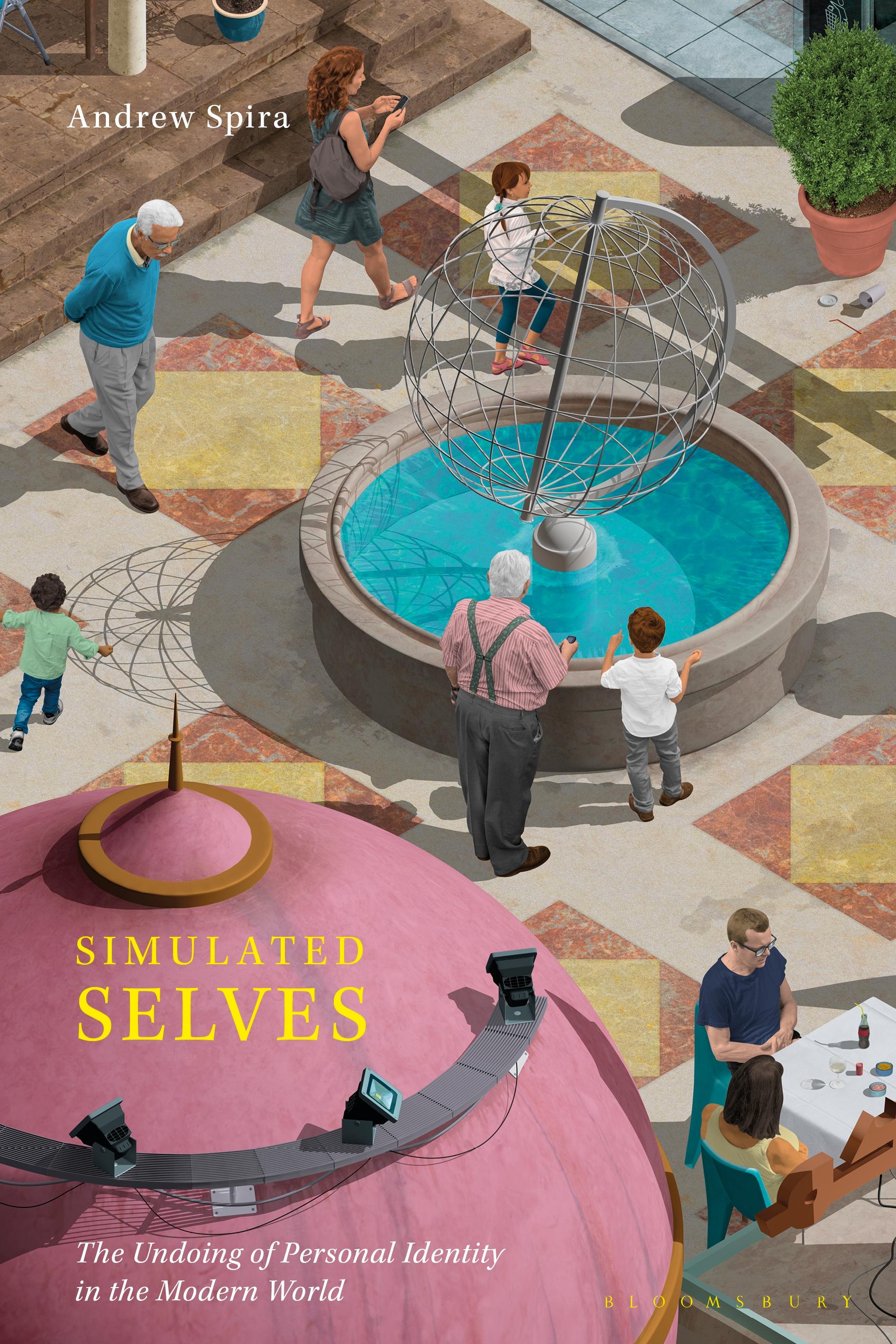
The notion of a personal self took centuries to evolve, reaching the pinnacle of autonomy with Descartes' 'I think, therefore I am' in the 17th century. This 'personalisation' of identity thrived for another hundred years before it began to be questioned, subject to the emergence of broader, more inclusive forms of agency. Simulated Selves: The Undoing Personal Identity in the Modern World addresses the 'constructed' notion of personal identity in the West and how it has been eclipsed by the development of new technological, social, art historical and psychological infrastructures over the last two centuries.
While the provisional nature of the self-sense has been increasingly accepted in recent years, Simulated Selves addresses it in a new way - not by challenging it directly, but by observing changes to the environments and cultural conventions that have traditionally supported it. By narrating both its dismantling and its incapacitation in this way, it records its undoing.
Like The Invention of the Self: Personal Identity in the Age of Art (to which it forms a companion volume), Simulated Selves straddles cultural history and philosophy. Firstly, it identifies hitherto neglected forces that inform the course of cultural history. Secondly, it highlights how the self is not the self-authenticating abstraction, only accessible to introspection, that it seems to be; it is also a cultural and historical phenomenon. Arguing that it is by engaging in cultural conventions that we subscribe to the process of identity-formation, the book also suggests that it is in these conventions that we see our self-sense - and its transience - best reflected.
By examining the traces that the trajectory of the self-sense has left in its environment, Simulated Selves offers a radically new approach to the question of personal identity, asking not only 'how and why is it under threat?' but also 'given that we understand the self-sense to be a constructed phenomenon, why do we cling to it?'.
While the provisional nature of the self-sense has been increasingly accepted in recent years, Simulated Selves addresses it in a new way - not by challenging it directly, but by observing changes to the environments and cultural conventions that have traditionally supported it. By narrating both its dismantling and its incapacitation in this way, it records its undoing.
Like The Invention of the Self: Personal Identity in the Age of Art (to which it forms a companion volume), Simulated Selves straddles cultural history and philosophy. Firstly, it identifies hitherto neglected forces that inform the course of cultural history. Secondly, it highlights how the self is not the self-authenticating abstraction, only accessible to introspection, that it seems to be; it is also a cultural and historical phenomenon. Arguing that it is by engaging in cultural conventions that we subscribe to the process of identity-formation, the book also suggests that it is in these conventions that we see our self-sense - and its transience - best reflected.
By examining the traces that the trajectory of the self-sense has left in its environment, Simulated Selves offers a radically new approach to the question of personal identity, asking not only 'how and why is it under threat?' but also 'given that we understand the self-sense to be a constructed phenomenon, why do we cling to it?'.
Betal nemt med kort, Klarna, Apple Pay eller Google Pay. Ikke tilfreds? Du har altid 14 dages fortrydelsesret. Læs mere i vores vilkår. Har du spørgsmål, så send os en mail på hello@memmo.org.
Memmo gør det nemmere at studere – uanset hvor du er i verden. Hos os samler du dine kursusbøger og smarte studieværktøjer ét sted: resuméer, quizzer, podcasts og flashcards. Og så er der Ted, din studieven, der svarer på alt, du undrer dig over. Over 50 000 studerende studerer allerede her – bygget til at hjælpe dig med at lære hurtigere og stresse mindre.