
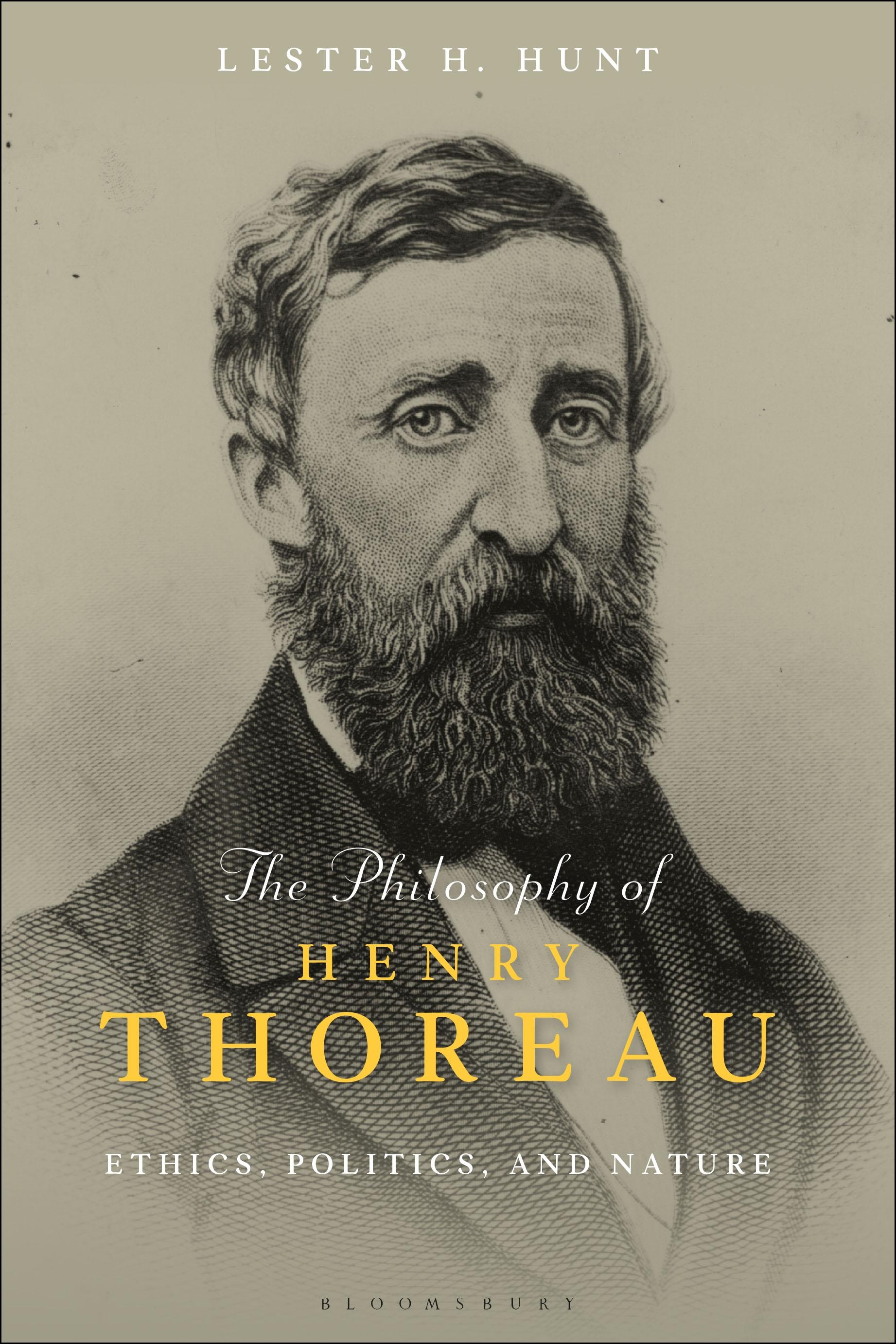
Henry Thoreau is widely considered to be one of the greatest nature writers, among whose best-known works are Walden and Walking. In this book, Lester Hunt shows that his writings have a compelling philosophical dimension as well.
Thoreau seldom argues for his ideas the way other philosophers do. Rather than setting up proofs designed to trap the reader into agreeing with him, he challenges the reader – by means of narratives, jokes, questions, and paradoxes -- to recognize possibilities previously unknown and unexplored.
Thoreau's own explorations led him to several distinctively philosophical theories: an intuitionist metaethics, an ethics based on virtue and self-realization, a politics that is fundamentally individualist and anarchist, and a secular religion in which nature is pre-eminent.
Thoreau seldom argues for his ideas the way other philosophers do. Rather than setting up proofs designed to trap the reader into agreeing with him, he challenges the reader – by means of narratives, jokes, questions, and paradoxes -- to recognize possibilities previously unknown and unexplored.
Thoreau's own explorations led him to several distinctively philosophical theories: an intuitionist metaethics, an ethics based on virtue and self-realization, a politics that is fundamentally individualist and anarchist, and a secular religion in which nature is pre-eminent.
Betal nemt med kort, Klarna, Apple Pay eller Google Pay. Ikke tilfreds? Du har altid 14 dages fortrydelsesret. Læs mere i vores vilkår. Har du spørgsmål, så send os en mail på hello@memmo.org.
Memmo gør det nemmere at studere – uanset hvor du er i verden. Hos os samler du dine kursusbøger og smarte studieværktøjer ét sted: resuméer, quizzer, podcasts og flashcards. Og så er der Ted, din studieven, der svarer på alt, du undrer dig over. Over 50 000 studerende studerer allerede her – bygget til at hjælpe dig med at lære hurtigere og stresse mindre.