
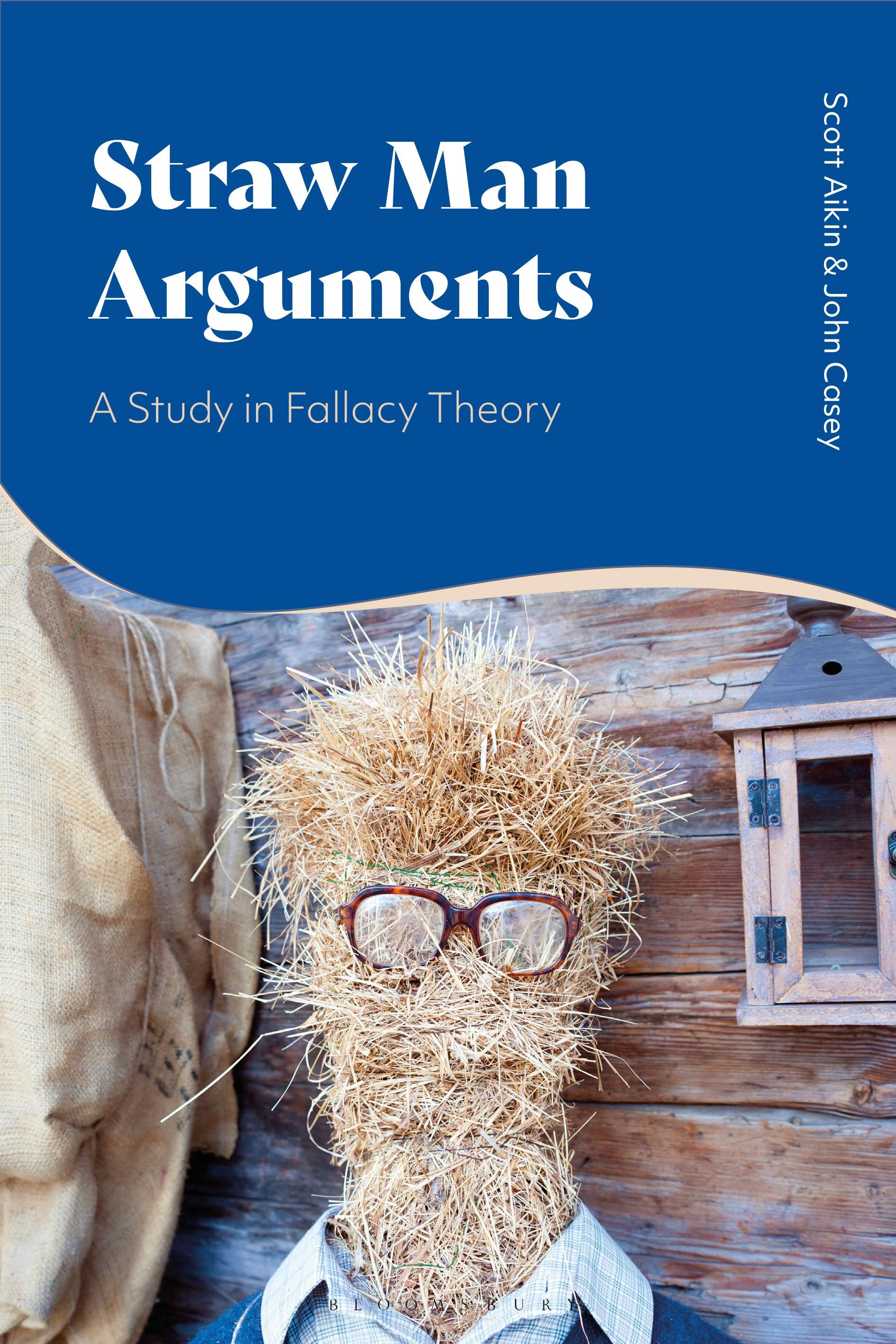
This book analyses the straw man fallacy and its deployment in philosophical reasoning. While commonly invoked in both academic dialogue and public discourse, it has not until now received the attention it deserves as a rhetorical device.
Scott Aikin and John Casey propose that straw manning essentially consists in expressing distorted representations of one's critical interlocutor. To this end, the straw man comprises three dialectical forms, and not only the one that is usually suggested: the straw man, the weak man and the hollow man. Moreover, they demonstrate that straw manning is unique among fallacies as it has no particular logical form in itself, because it is an instance of inappropriate meta-argument, or argument about arguments. They discuss the importance of the onlooking audience to the successful deployment of the straw man, reasoning that the existence of an audience complicates the dialectical boundaries of argument.
Providing a lively, provocative and thorough analysis of the straw man fallacy, this book will appeal to postgraduates and researchers alike, working in a range of fields including fallacies, rhetoric, argumentation theory and informal logic.
Scott Aikin and John Casey propose that straw manning essentially consists in expressing distorted representations of one's critical interlocutor. To this end, the straw man comprises three dialectical forms, and not only the one that is usually suggested: the straw man, the weak man and the hollow man. Moreover, they demonstrate that straw manning is unique among fallacies as it has no particular logical form in itself, because it is an instance of inappropriate meta-argument, or argument about arguments. They discuss the importance of the onlooking audience to the successful deployment of the straw man, reasoning that the existence of an audience complicates the dialectical boundaries of argument.
Providing a lively, provocative and thorough analysis of the straw man fallacy, this book will appeal to postgraduates and researchers alike, working in a range of fields including fallacies, rhetoric, argumentation theory and informal logic.
Betal nemt med kort, Klarna, Apple Pay eller Google Pay. Ikke tilfreds? Du har altid 14 dages fortrydelsesret. Læs mere i vores vilkår. Har du spørgsmål, så send os en mail på hello@memmo.org.
Memmo gør det nemmere at studere – uanset hvor du er i verden. Hos os samler du dine kursusbøger og smarte studieværktøjer ét sted: resuméer, quizzer, podcasts og flashcards. Og så er der Ted, din studieven, der svarer på alt, du undrer dig over. Over 50 000 studerende studerer allerede her – bygget til at hjælpe dig med at lære hurtigere og stresse mindre.