
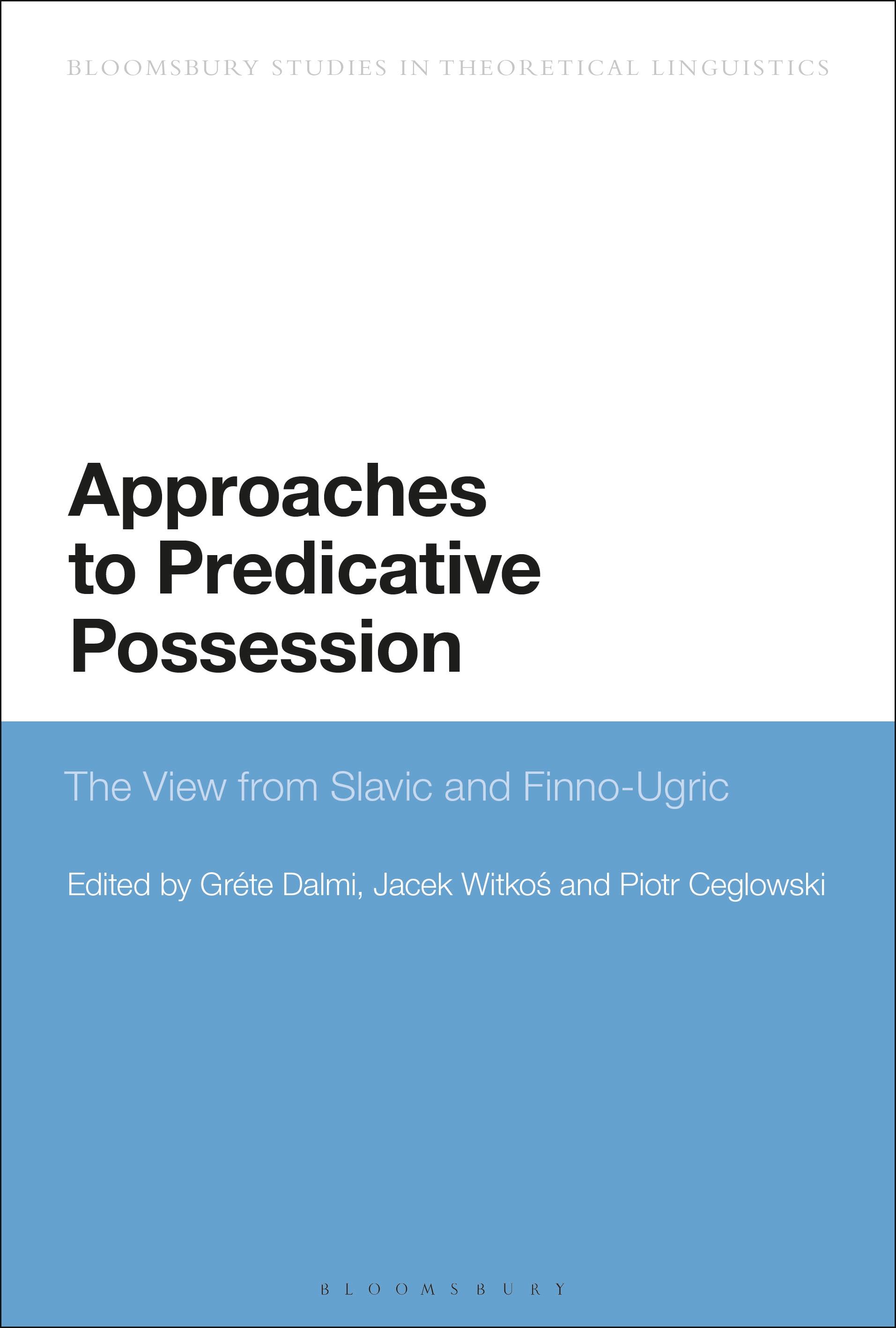
This book discusses existential and possessive constructions in two important, yet under-studied, language families, Slavic and Finno-Ugric. Using data from the Slavic languages of Polish, Belarusian and Russian, and the Finno-Ugric languages of Finnish, Hungarian, Meadow Mari, Komi-Permiyak and Udmurt, as well as the closely related Selkup of the Samoyedic family, the chapters in this volume analyse predicative possession in current syntactic terms.
Seeking an answer to the theoretical question of whether BE-possessives and HAVE-possessives are just accidental values of the 'Possessive Parameter' or are intrinsically related, this book takes a comparative approach to a whole range of syntactic and semantic phenomena that appear in these constructions, including the definiteness restriction, genitive of negation, person/number agreement, argument structure and extractability. The individual case studies can be easily integrated into the Principles & Parameters framework in terms of parametric variation. Approaches to Predicative Possession is an important contribution to our understanding of predicative possession across languages, with findings that can be fruitfully extended to other language families. It is an equally useful source of information for theoretical linguists, typologists, and graduate students of linguistics.
Seeking an answer to the theoretical question of whether BE-possessives and HAVE-possessives are just accidental values of the 'Possessive Parameter' or are intrinsically related, this book takes a comparative approach to a whole range of syntactic and semantic phenomena that appear in these constructions, including the definiteness restriction, genitive of negation, person/number agreement, argument structure and extractability. The individual case studies can be easily integrated into the Principles & Parameters framework in terms of parametric variation. Approaches to Predicative Possession is an important contribution to our understanding of predicative possession across languages, with findings that can be fruitfully extended to other language families. It is an equally useful source of information for theoretical linguists, typologists, and graduate students of linguistics.
Betal nemt med kort, Klarna, Apple Pay eller Google Pay. Ikke tilfreds? Du har altid 14 dages fortrydelsesret. Læs mere i vores vilkår. Har du spørgsmål, så send os en mail på hello@memmo.org.
Memmo gør det nemmere at studere – uanset hvor du er i verden. Hos os samler du dine kursusbøger og smarte studieværktøjer ét sted: resuméer, quizzer, podcasts og flashcards. Og så er der Ted, din studieven, der svarer på alt, du undrer dig over. Over 50 000 studerende studerer allerede her – bygget til at hjælpe dig med at lære hurtigere og stresse mindre.