
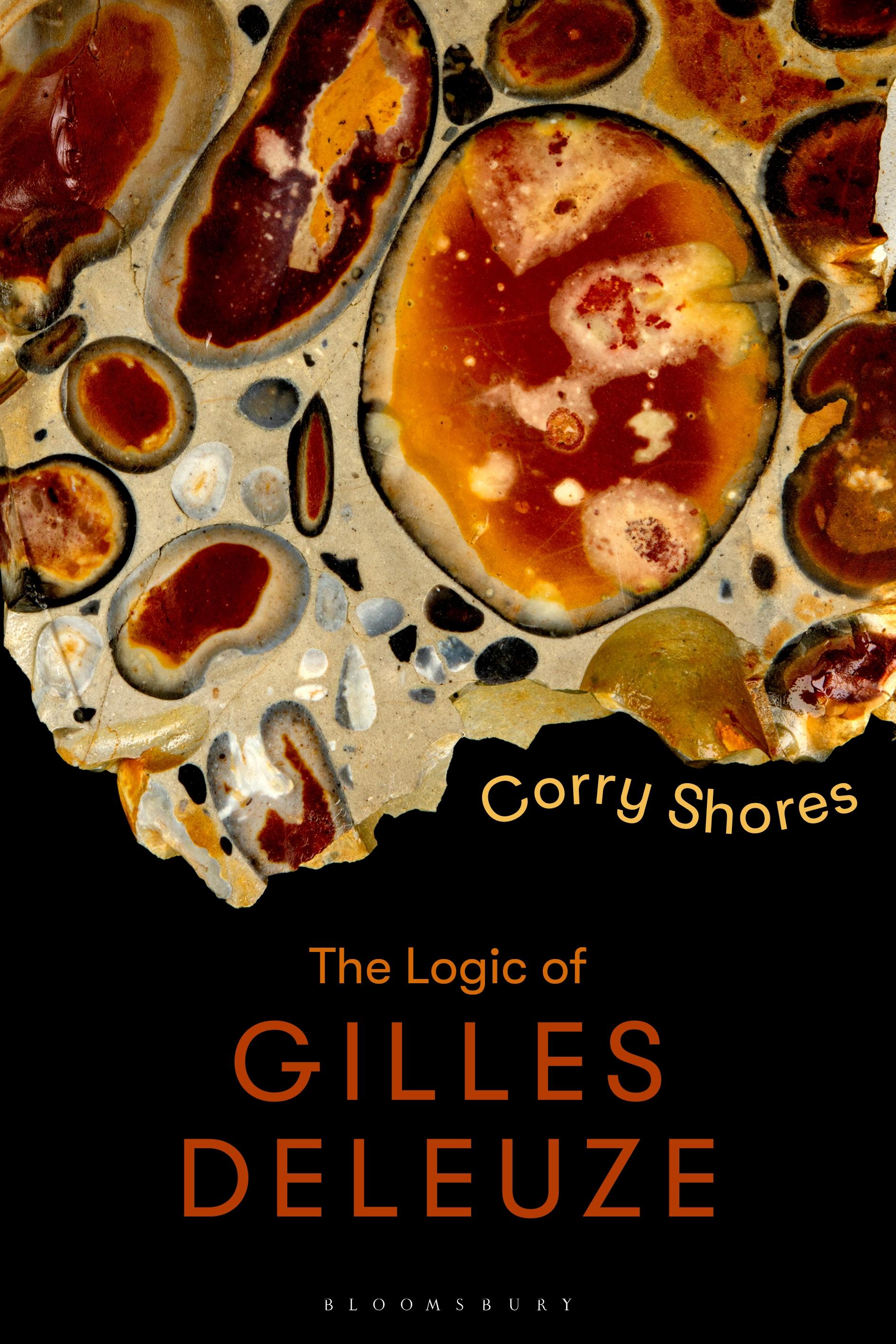
French philosopher Gilles Deleuze wrote two 'logic' books: Francis Bacon: The Logic of Sensation and The Logic of Sense. However, in neither of these books nor in any other works does Deleuze articulate in a formal way the features of the logic he employs. He certainly does not use classical logic. And the best options for the non-classical logic that he may be implementing are: fuzzy, intuitionist, and many-valued. These are applicable to his concepts of heterogeneous composition and becoming, affirmative synthetic disjunction, and powers of the false.
In The Logic of Gilles Deleuze: Basic Principles, Corry Shores examines the applicability of three non-classical logics to Deleuze's philosophy, by building from the philosophical and logical writings of Graham Priest, the world's leading proponent of dialetheism. Through so doing, Shores argues that Deleuze's logic is best understood as a dialetheic, paraconsistent, many-valued logic.
In The Logic of Gilles Deleuze: Basic Principles, Corry Shores examines the applicability of three non-classical logics to Deleuze's philosophy, by building from the philosophical and logical writings of Graham Priest, the world's leading proponent of dialetheism. Through so doing, Shores argues that Deleuze's logic is best understood as a dialetheic, paraconsistent, many-valued logic.
Betal nemt med kort, Klarna, Apple Pay eller Google Pay. Ikke tilfreds? Du har altid 14 dages fortrydelsesret. Læs mere i vores vilkår. Har du spørgsmål, så send os en mail på hello@memmo.org.
Memmo gør det nemmere at studere – uanset hvor du er i verden. Hos os samler du dine kursusbøger og smarte studieværktøjer ét sted: resuméer, quizzer, podcasts og flashcards. Og så er der Ted, din studieven, der svarer på alt, du undrer dig over. Over 50 000 studerende studerer allerede her – bygget til at hjælpe dig med at lære hurtigere og stresse mindre.