
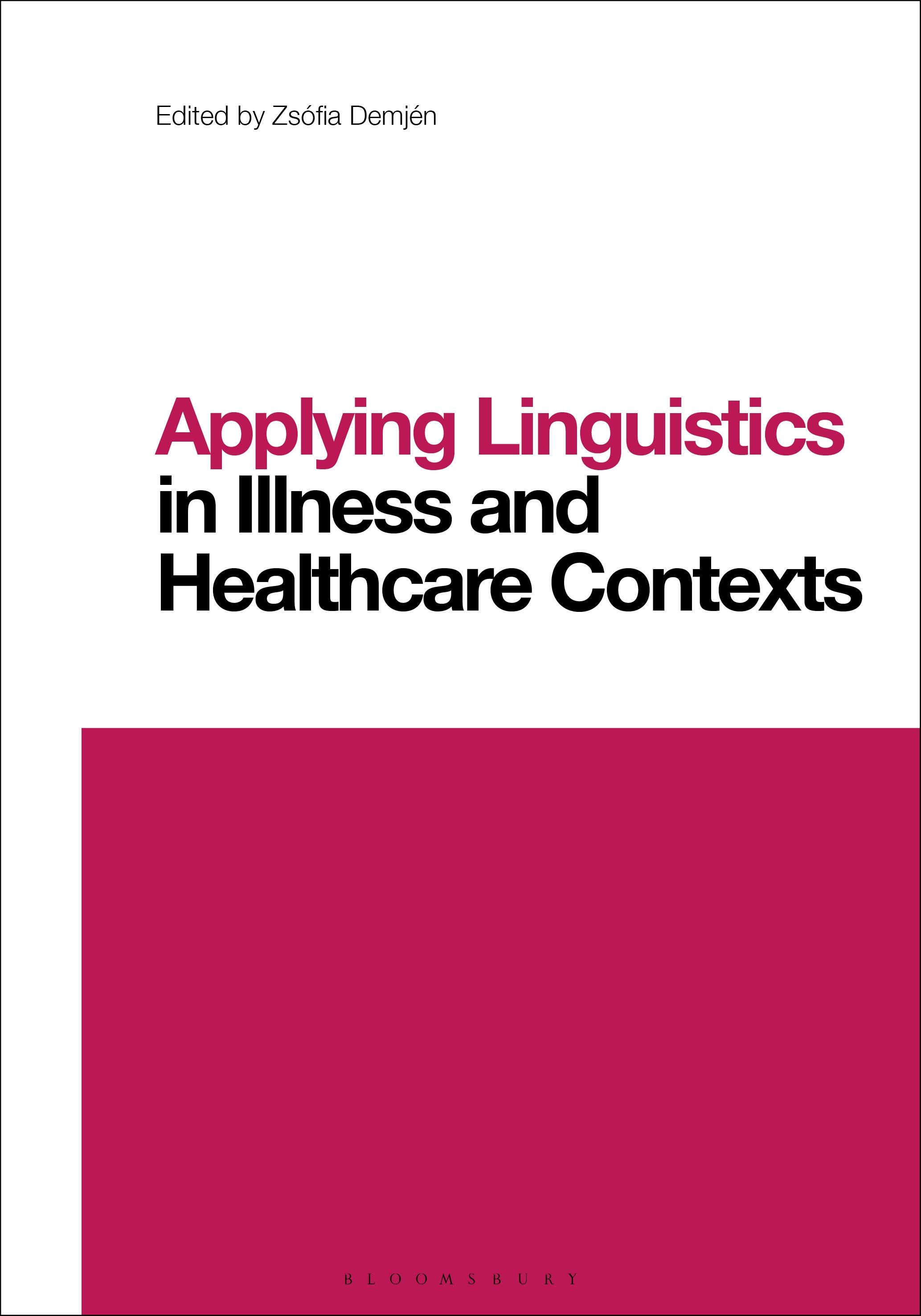
All aspects of illness and healthcare are mediated by language: experiences of illness, death and healthcare provision are talked and written about (face-to-face or online), while medical consultations, research interviews, public health communications and even some diagnostic instruments are all inherently linguistic in nature. How we talk to, about and for each other in such a sensitive context has consequences for our relationships, our sense of self, how we understand and reason about our health, as well as for the quality care we receive. Yet, linguistic analysis has been conspicuously absent from the mainstream of medical education, health communication training and even the medical or health humanities.
The chapters in this volume bring together applied linguistic work using discourse analysis, corpus methods, conversation analysis, metaphor analysis, cognitive linguistics, multiculturalism research, interactional sociolinguistics, narrative analysis, and (im)politeness to make sense of a variety of international healthcare contexts and situations. These include:
-clinician-patient interactions
-receptionist-patient interactions
-online support forums
-online counselling
-public health communication
-media representations
-medical accounts
-diagnostic tools and definitions
-research interviews with doctors and patients
The volume demonstrates how linguistic analysis can not only improve understandings of the lived-experience of different illnesses, but also has implications for communications training, disease prevention, treatment and self-management, the effectiveness of public health messaging, access to appropriate care, professional mobility and professional terminology, among others.
The chapters in this volume bring together applied linguistic work using discourse analysis, corpus methods, conversation analysis, metaphor analysis, cognitive linguistics, multiculturalism research, interactional sociolinguistics, narrative analysis, and (im)politeness to make sense of a variety of international healthcare contexts and situations. These include:
-clinician-patient interactions
-receptionist-patient interactions
-online support forums
-online counselling
-public health communication
-media representations
-medical accounts
-diagnostic tools and definitions
-research interviews with doctors and patients
The volume demonstrates how linguistic analysis can not only improve understandings of the lived-experience of different illnesses, but also has implications for communications training, disease prevention, treatment and self-management, the effectiveness of public health messaging, access to appropriate care, professional mobility and professional terminology, among others.
Betal nemt med kort, Klarna, Apple Pay eller Google Pay. Ikke tilfreds? Du har altid 14 dages fortrydelsesret. Læs mere i vores vilkår. Har du spørgsmål, så send os en mail på hello@memmo.org.
Memmo gør det nemmere at studere – uanset hvor du er i verden. Hos os samler du dine kursusbøger og smarte studieværktøjer ét sted: resuméer, quizzer, podcasts og flashcards. Og så er der Ted, din studieven, der svarer på alt, du undrer dig over. Over 50 000 studerende studerer allerede her – bygget til at hjælpe dig med at lære hurtigere og stresse mindre.