
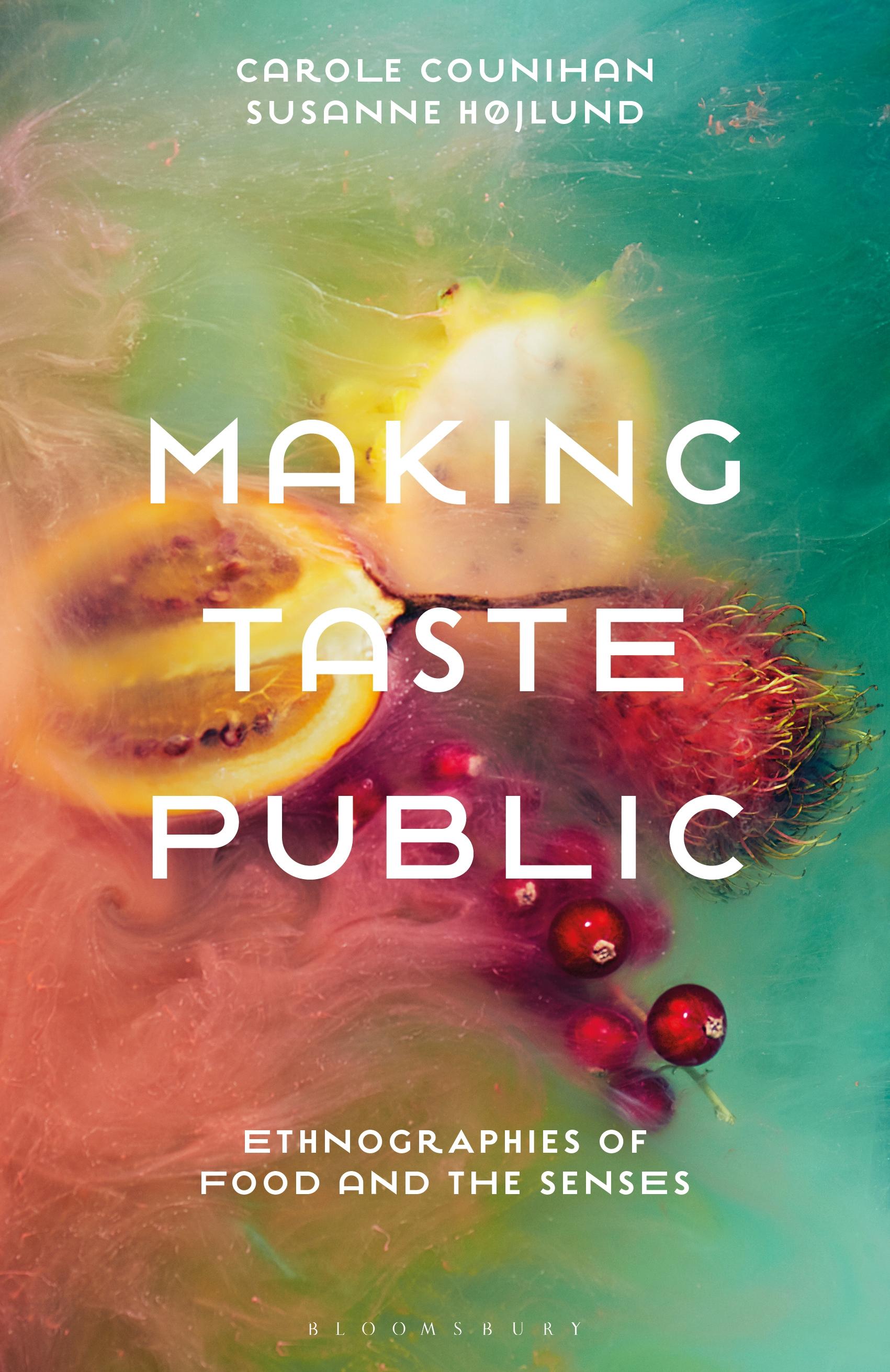
Making Taste Public takes an ethnographic approach to show how social relations shape - and are shaped by - the taste of food. Recognizing that different cultures have different taste preferences and flavour principles embedded in cuisine, editors Carole Counihan and Susanne Højlund ask how these differences are generated. The editors have compiled 14 chapters to show how specific influences become a part of our sensorial apparatus and identity through shared experiences of making, eating, and talking about food.
Using case studies from Asia, Europe and America, the book presents a theory of how taste is made public through everyday practices. The authors are exploring how place, production methods and cooking techniques create tastes. They discuss the criteria determining good and bad tastes, and how tastes and memories evolve over time. Subjects such as how values can be embedded in taste, and the role of taste education in food movements, homes, and schools are explored. The different chapters examine definitions and mobilizations of taste in different institutions, public places, and regions around the world to reveal ethnographic understandings of how people learn, experience, and share taste.
With contributions spanning the Solomon Islands, Denmark, Japan, Canada, France, the USA, and Italy, Making Taste Public is a fascinating account of how our sense of taste is continuously shaped and re-shaped in relation to social and cultural context, societal and environmental premises. The book will interest anyone studying anthropology, sociology, food studies, sensory studies and human geography.
Using case studies from Asia, Europe and America, the book presents a theory of how taste is made public through everyday practices. The authors are exploring how place, production methods and cooking techniques create tastes. They discuss the criteria determining good and bad tastes, and how tastes and memories evolve over time. Subjects such as how values can be embedded in taste, and the role of taste education in food movements, homes, and schools are explored. The different chapters examine definitions and mobilizations of taste in different institutions, public places, and regions around the world to reveal ethnographic understandings of how people learn, experience, and share taste.
With contributions spanning the Solomon Islands, Denmark, Japan, Canada, France, the USA, and Italy, Making Taste Public is a fascinating account of how our sense of taste is continuously shaped and re-shaped in relation to social and cultural context, societal and environmental premises. The book will interest anyone studying anthropology, sociology, food studies, sensory studies and human geography.
Betal nemt med kort, Klarna, Apple Pay eller Google Pay. Ikke tilfreds? Du har altid 14 dages fortrydelsesret. Læs mere i vores vilkår. Har du spørgsmål, så send os en mail på hello@memmo.org.
Memmo gør det nemmere at studere – uanset hvor du er i verden. Hos os samler du dine kursusbøger og smarte studieværktøjer ét sted: resuméer, quizzer, podcasts og flashcards. Og så er der Ted, din studieven, der svarer på alt, du undrer dig over. Over 50 000 studerende studerer allerede her – bygget til at hjælpe dig med at lære hurtigere og stresse mindre.