
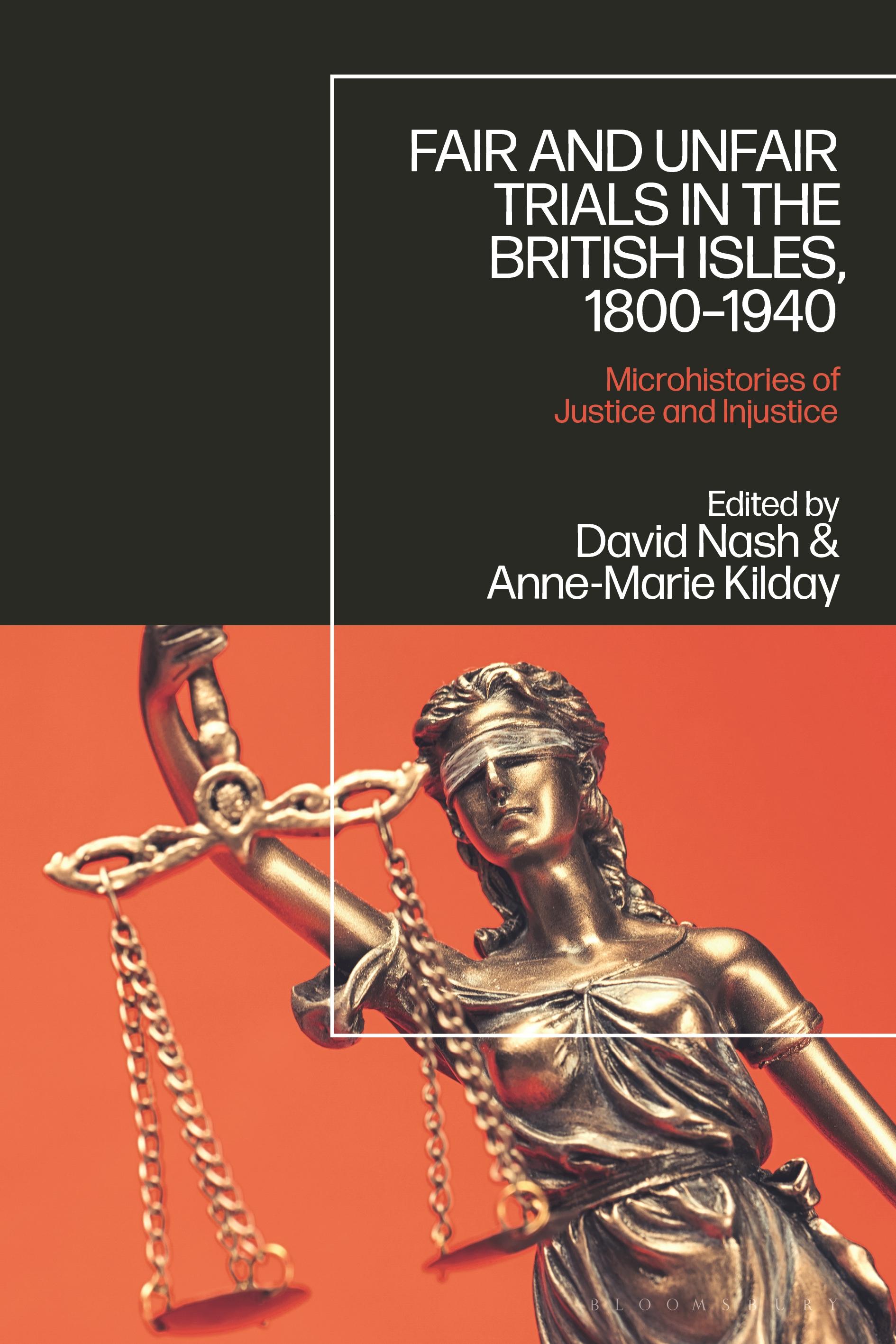
Adopting a microhistory approach, Fair and Unfair Trials in the British Isles, 1800-1940 provides an in-depth examination of the evolution of the modern justice system. Drawing upon criminal cases and trials from England, Scotland, and Ireland, the book examines the errors, procedural systems, and the ways in which adverse influences of social and cultural forces impacted upon individual instances of justice.
The book investigates several case studies of both justice and injustice which prompted the development of forensic toxicology, the implementation of state propaganda and an increased interest in press sensationalism. One such case study considers the trial of William Sheen, who was prosecuted and later acquitted of the murder of his infant child at the Old Baily in 1827, an extraordinary miscarriage of justice that prompted outrage amongst the general public. Other case studies include trials for treason, theft, obscenity and blasphemy. Nash and Kilday root each of these cases within their relevant historical, cultural, and political contexts, highlighting changing attitudes to popular culture, public criticism, protest and activism as significant factors in the transformation of the criminal trial and the British judicial system as a whole.
Drawing upon a wealth of primary sources, including legal records, newspaper articles and photographs, this book provides a unique insight into the evolution of modern criminal justice in Britain.
The book investigates several case studies of both justice and injustice which prompted the development of forensic toxicology, the implementation of state propaganda and an increased interest in press sensationalism. One such case study considers the trial of William Sheen, who was prosecuted and later acquitted of the murder of his infant child at the Old Baily in 1827, an extraordinary miscarriage of justice that prompted outrage amongst the general public. Other case studies include trials for treason, theft, obscenity and blasphemy. Nash and Kilday root each of these cases within their relevant historical, cultural, and political contexts, highlighting changing attitudes to popular culture, public criticism, protest and activism as significant factors in the transformation of the criminal trial and the British judicial system as a whole.
Drawing upon a wealth of primary sources, including legal records, newspaper articles and photographs, this book provides a unique insight into the evolution of modern criminal justice in Britain.
Betal nemt med kort, Klarna, Apple Pay eller Google Pay. Ikke tilfreds? Du har altid 14 dages fortrydelsesret. Læs mere i vores vilkår. Har du spørgsmål, så send os en mail på hello@memmo.org.
Memmo gør det nemmere at studere – uanset hvor du er i verden. Hos os samler du dine kursusbøger og smarte studieværktøjer ét sted: resuméer, quizzer, podcasts og flashcards. Og så er der Ted, din studieven, der svarer på alt, du undrer dig over. Over 50 000 studerende studerer allerede her – bygget til at hjælpe dig med at lære hurtigere og stresse mindre.