
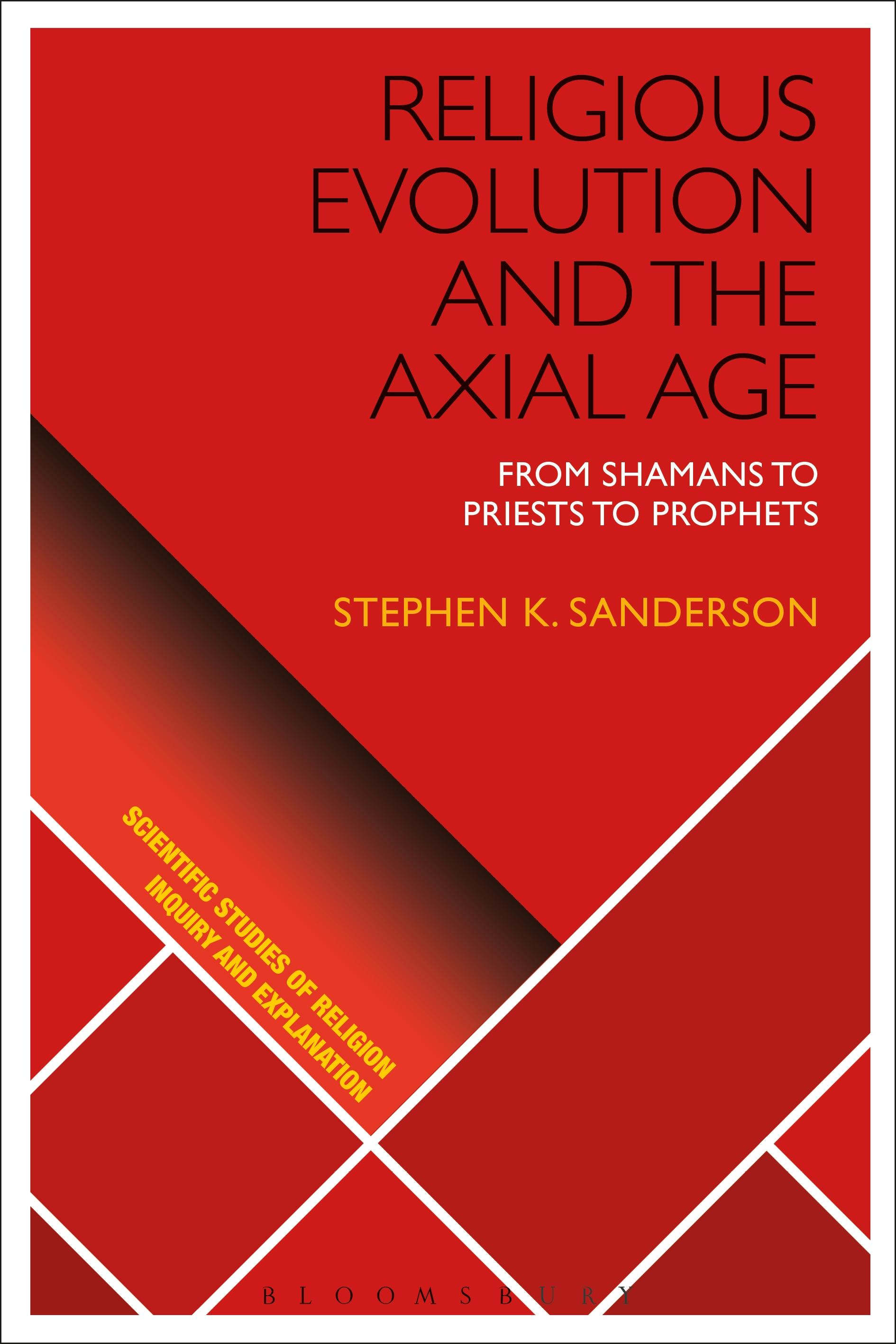
Religious Evolution and the Axial Age describes and explains the evolution of religion over the past ten millennia. It shows that an overall evolutionary sequence can be observed, running from the spirit and shaman dominated religions of small-scale societies, to the archaic religions of the ancient civilizations, and then to the salvation religions of the Axial Age.
Stephen K. Sanderson draws on ideas from new cognitive and evolutionary psychological theories, as well as comparative religion, anthropology, history, and sociology. He argues that religion is a biological adaptation that evolved in order to solve a number of human problems, especially those concerned with existential anxiety and ontological insecurity.
Much of the focus of the book is on the Axial Age, the period in the second half of the first millennium BCE that marked the greatest religious transformation in world history. The book demonstrates that, as a result of massive increases in the scale and scope of war and large-scale urbanization, the problems of existential anxiety and ontological insecurity became particularly acute. These changes evoked new religious needs, especially for salvation and release from suffering. As a result entirely new religions-Zoroastrianism, Judaism, Christianity, Hinduism, Buddhism, Confucianism, and Daoism-arose to help people cope with the demands of the new historical era.
Sider: 320
Kategori: Religion & Teologi
e-ISBN: 9781350047440
Forsendelsesvægt: 1.2 kg
Sendes inden for: 1-2 dage
Betal nemt med kort, Klarna, Apple Pay eller Google Pay. Ikke tilfreds? Du har altid 14 dages fortrydelsesret. Læs mere i vores vilkår. Har du spørgsmål, så send os en mail på hello@memmo.org.
Memmo gør det nemmere at studere – uanset hvor du er i verden. Hos os samler du dine kursusbøger og smarte studieværktøjer ét sted: resuméer, quizzer, podcasts og flashcards. Og så er der Ted, din studieven, der svarer på alt, du undrer dig over. Over 50 000 studerende studerer allerede her – bygget til at hjælpe dig med at lære hurtigere og stresse mindre.