
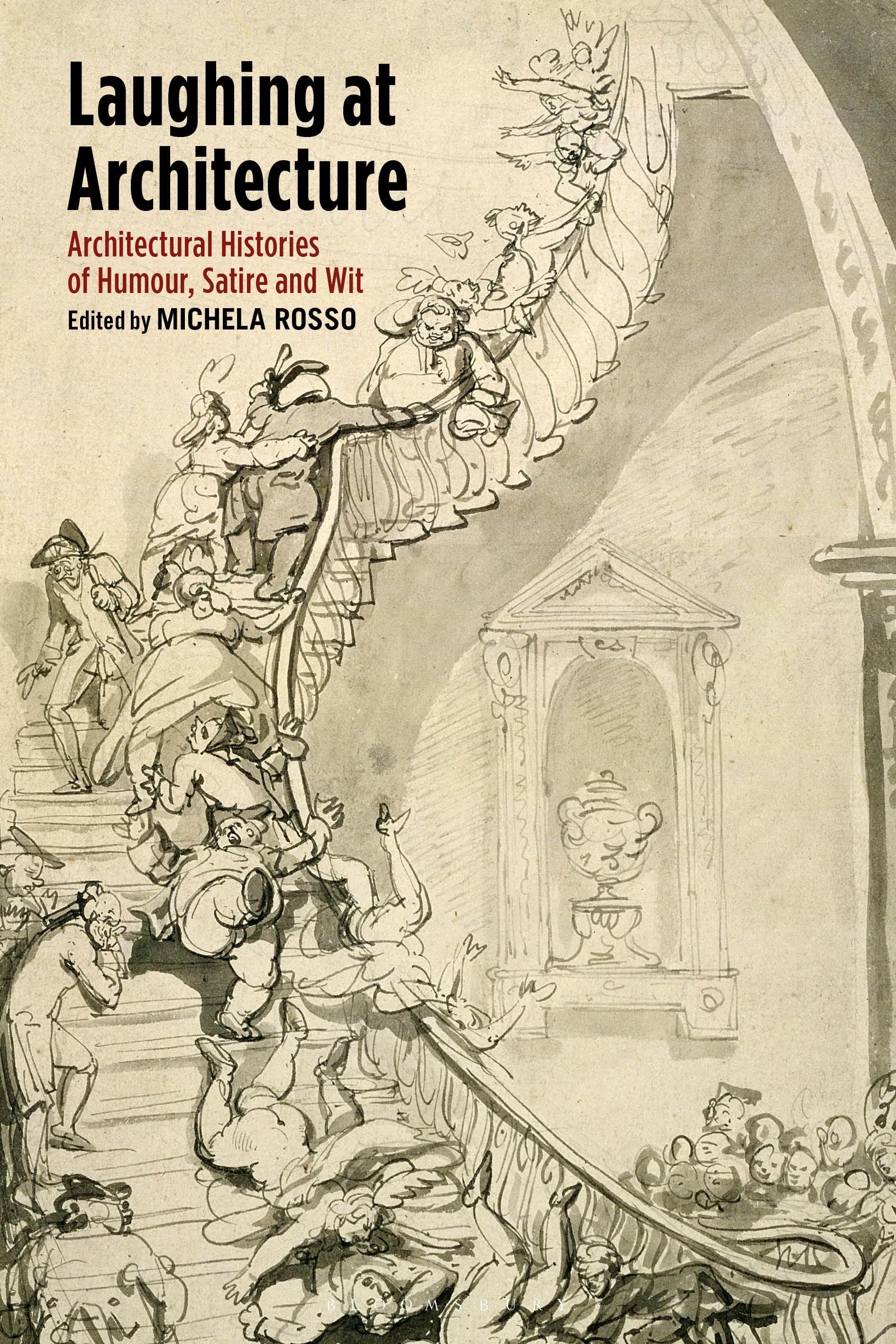
In a media-saturated world, humour stands out as a form of social communication that is especially effective in re-appropriating and questioning architectural and urban culture. Whether illuminating the ambivalences of metropolitan life or exposing the shock of modernisation, cartoons, caricature, and parody have long been potent agents of architectural criticism, protest and opposition.
In a novel contribution to the field of architectural history, this book outlines a survey of visual and textual humour as applied to architecture, its artefacts and leading professionals. Employing a wide variety of visual and literary sources (prints, the illustrated press, advertisements, theatrical representations, cinema and TV), thirteen essays explore an array of historical subjects concerning the critical reception of projects, buildings and cities through the means of caricature and parody. Subjects range from 1750 to the present, and from Europe and the USA to contemporary China. From William Hogarth and George Cruikshank to Osbert Lancaster, Adolf Loos' satire, and Saul Steinberg's celebrated cartoons of New York City, graphic and descriptive humour is shown to be an enormously fruitful, yet largely unexplored terrain of investigation for the architectural and urban historian.
In a novel contribution to the field of architectural history, this book outlines a survey of visual and textual humour as applied to architecture, its artefacts and leading professionals. Employing a wide variety of visual and literary sources (prints, the illustrated press, advertisements, theatrical representations, cinema and TV), thirteen essays explore an array of historical subjects concerning the critical reception of projects, buildings and cities through the means of caricature and parody. Subjects range from 1750 to the present, and from Europe and the USA to contemporary China. From William Hogarth and George Cruikshank to Osbert Lancaster, Adolf Loos' satire, and Saul Steinberg's celebrated cartoons of New York City, graphic and descriptive humour is shown to be an enormously fruitful, yet largely unexplored terrain of investigation for the architectural and urban historian.
Betal nemt med kort, Klarna, Apple Pay eller Google Pay. Ikke tilfreds? Du har altid 14 dages fortrydelsesret. Læs mere i vores vilkår. Har du spørgsmål, så send os en mail på hello@memmo.org.
Memmo gør det nemmere at studere – uanset hvor du er i verden. Hos os samler du dine kursusbøger og smarte studieværktøjer ét sted: resuméer, quizzer, podcasts og flashcards. Og så er der Ted, din studieven, der svarer på alt, du undrer dig over. Over 50 000 studerende studerer allerede her – bygget til at hjælpe dig med at lære hurtigere og stresse mindre.