
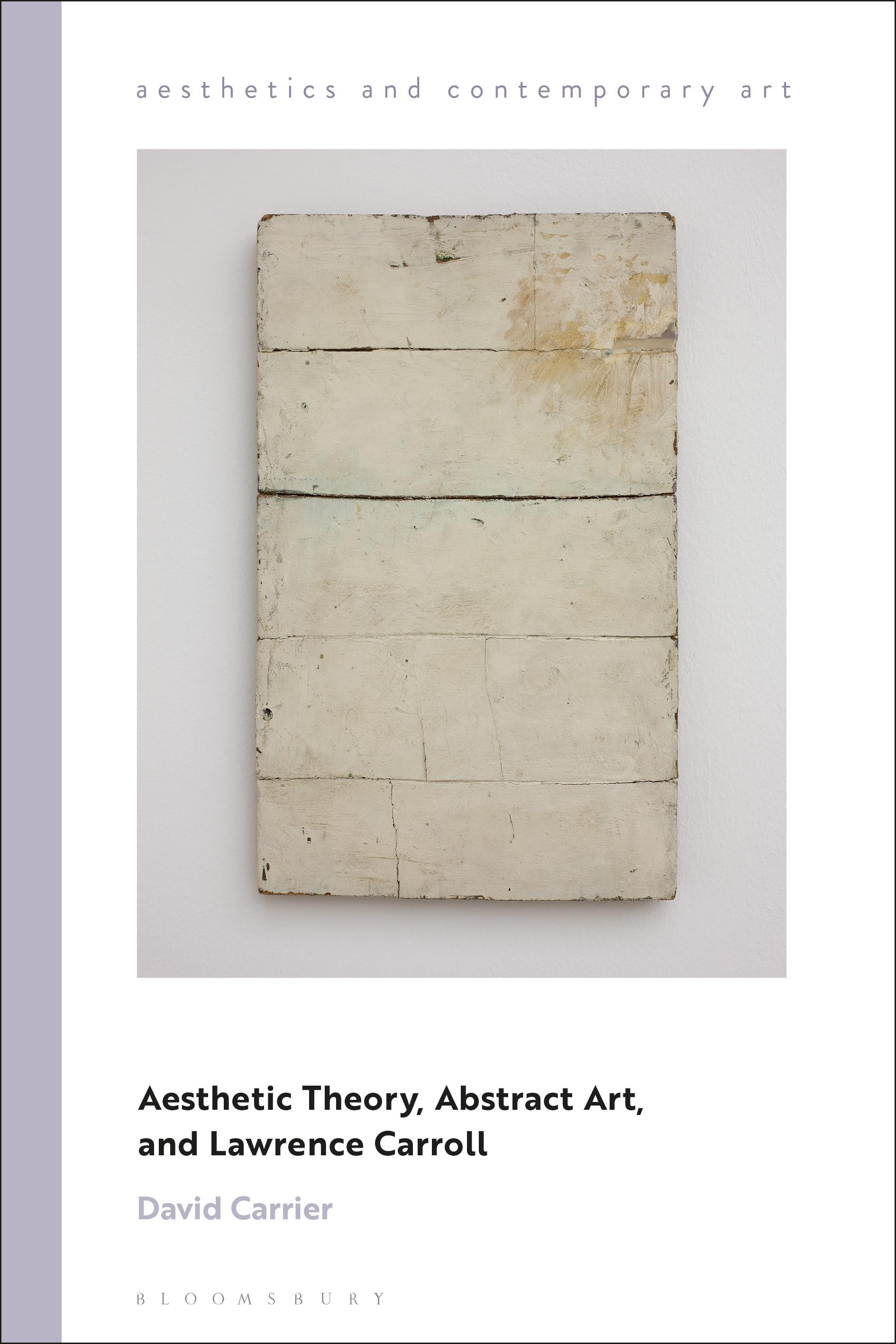
Boldly developing the central traditions of American modernist abstraction, Lawrence Carroll's paintings engage with a fundamental issue of aesthetic theory, the nature of the medium of painting, in highly original, frequently extraordinarily successful ways. Aesthetic Theory, Abstract Art, and Lawrence Carroll explains how he understands the medium of painting; shows what his art says about the identity of painting as an art; discusses the place of his paintings in the development of abstraction; and, finally, offers an interpretation of his art. The first monograph devoted to him, this philosophical commentary employs the resources of analytic aesthetics. Art historians trace the development of art, explaining how what came earlier yields to what comes later. Taking for granted that the artifacts they describe are artworks, art historians place them within the history of art. Philosophical art writers define art, explain why it has a history and identify its meaning. Pursuing that goal, Aesthetic Theory, Abstract Art, and Lawrence Carroll roams freely across art history, focused at some points on the story of old master painting and sometimes on the history of modernism, but looking also to contemporary art, in order to provide the fullest possible philosophical perspective on Carroll's work.
Betal nemt med kort, Klarna, Apple Pay eller Google Pay. Ikke tilfreds? Du har altid 14 dages fortrydelsesret. Læs mere i vores vilkår. Har du spørgsmål, så send os en mail på hello@memmo.org.
Memmo gør det nemmere at studere – uanset hvor du er i verden. Hos os samler du dine kursusbøger og smarte studieværktøjer ét sted: resuméer, quizzer, podcasts og flashcards. Og så er der Ted, din studieven, der svarer på alt, du undrer dig over. Over 50 000 studerende studerer allerede her – bygget til at hjælpe dig med at lære hurtigere og stresse mindre.