
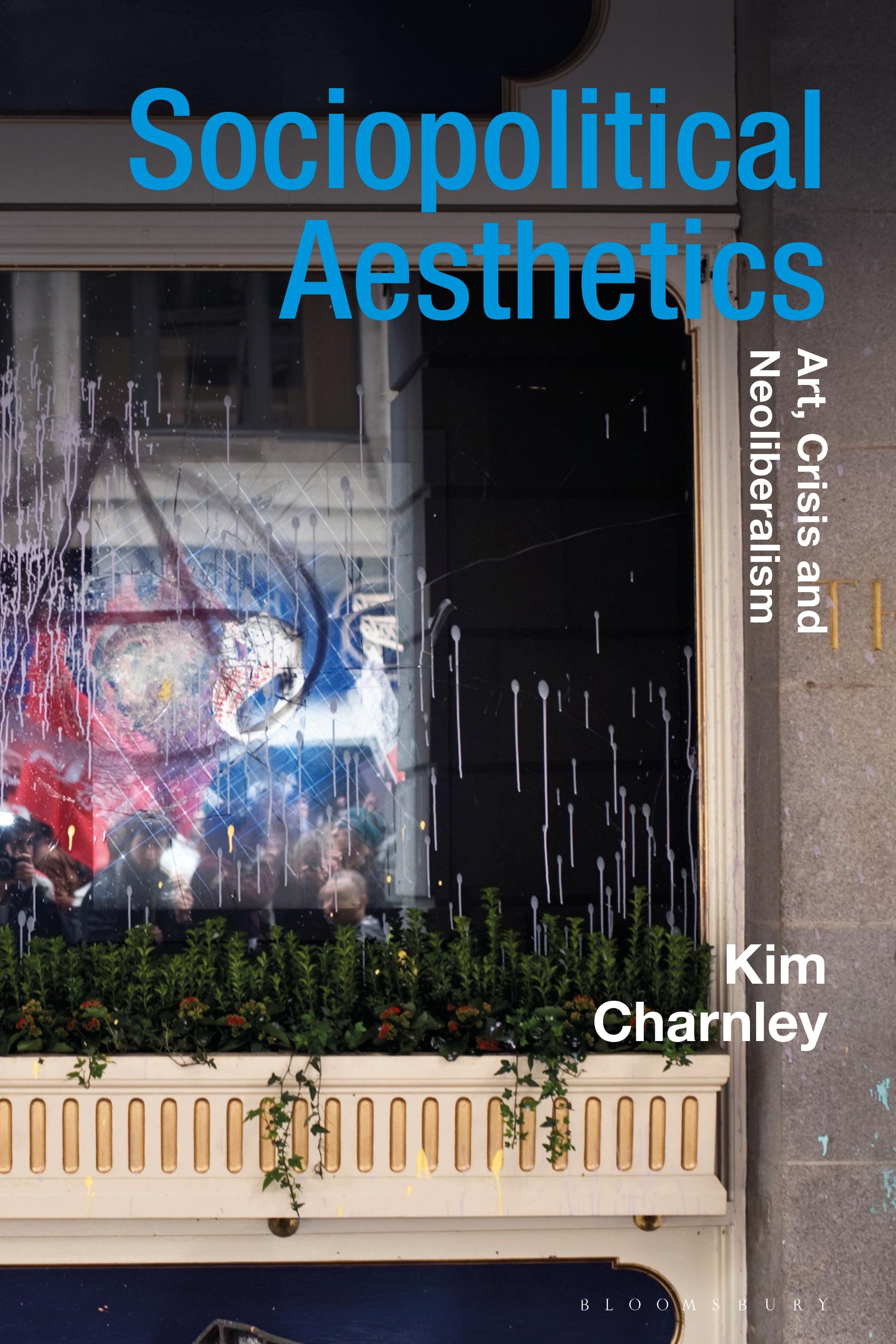
Since the turn of the millennium, protests, meetings, schoolrooms, reading groups and many other social forms have been proposed as artworks or, more ambiguously, as interventions that are somewhere between art and politics. This book surveys the resurgence of politicized art, tracing key currents of theory and practice, and mapping them against the dominant experience of the last decade: crisis.
Drawing upon leading artists and theorists within this field – including Hito Steyerl, Marina Vishmidt, Art & Language, Gregory Sholette, John Roberts and Dave Beech – this book argues for a new interpretation of the relationship between socially-engaged art and neoliberalism. Kim Charnley explores the possibility that neoliberalism has destabilized the art system so that it is no longer able to absorb and neutralize dissent. As a result, the relationship between aesthetics and politics is experienced with fresh urgency and militancy.
Drawing upon leading artists and theorists within this field – including Hito Steyerl, Marina Vishmidt, Art & Language, Gregory Sholette, John Roberts and Dave Beech – this book argues for a new interpretation of the relationship between socially-engaged art and neoliberalism. Kim Charnley explores the possibility that neoliberalism has destabilized the art system so that it is no longer able to absorb and neutralize dissent. As a result, the relationship between aesthetics and politics is experienced with fresh urgency and militancy.
Betal nemt med kort, Klarna, Apple Pay eller Google Pay. Ikke tilfreds? Du har altid 14 dages fortrydelsesret. Læs mere i vores vilkår. Har du spørgsmål, så send os en mail på hello@memmo.org.
Memmo gør det nemmere at studere – uanset hvor du er i verden. Hos os samler du dine kursusbøger og smarte studieværktøjer ét sted: resuméer, quizzer, podcasts og flashcards. Og så er der Ted, din studieven, der svarer på alt, du undrer dig over. Over 50 000 studerende studerer allerede her – bygget til at hjælpe dig med at lære hurtigere og stresse mindre.