
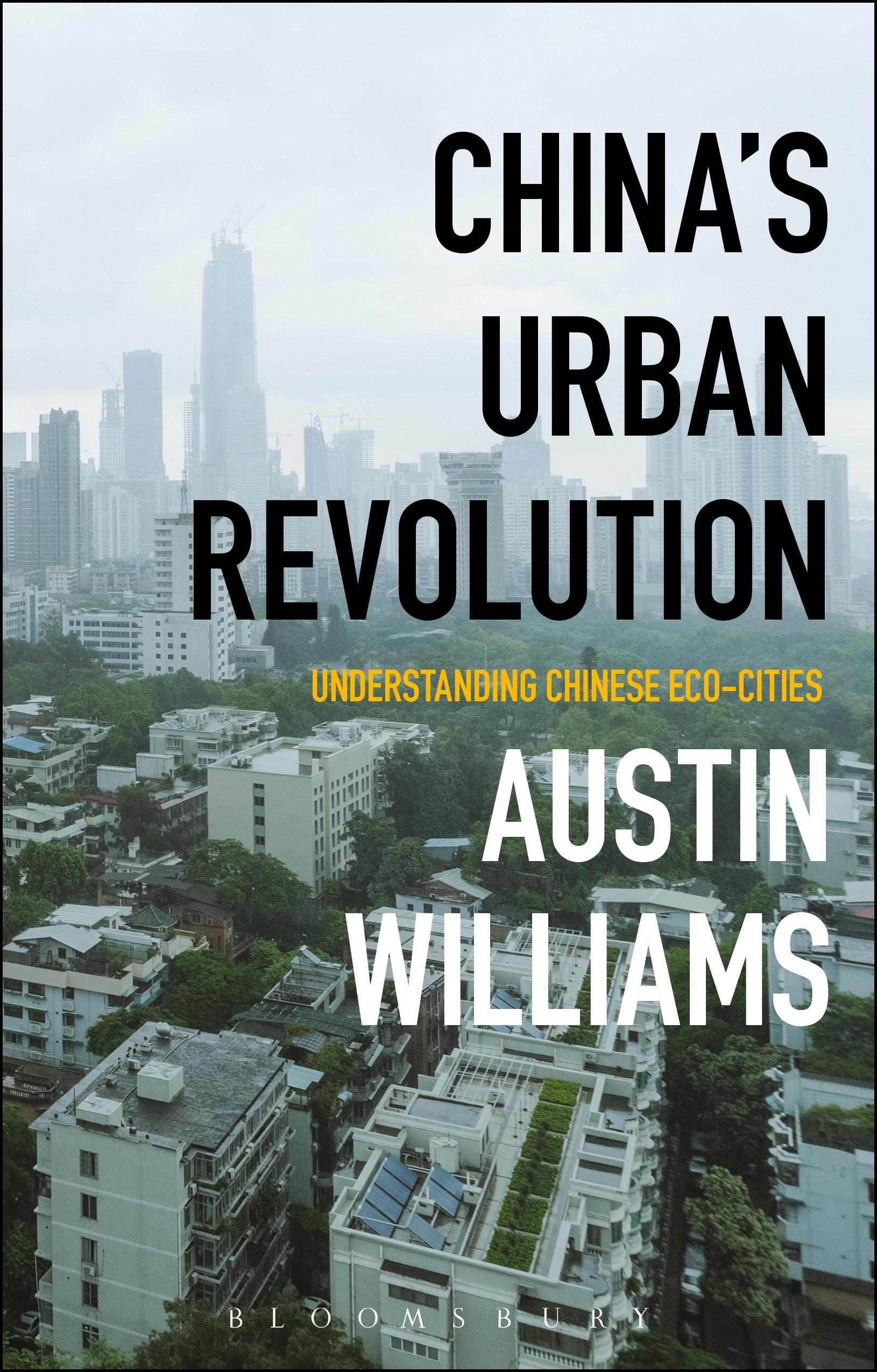
By 2025, China will have built fifteen new 'supercities' each with 25 million inhabitants. It will have created 250 'Eco-cities' as well: clean, green, car-free, people-friendly, high-tech urban centres. From the edge of an impending eco-catastrophe, we are arguably witnessing history's greatest environmental turnaround - an urban experiment that may provide valuable lessons for cities worldwide.
Whether or not we choose to believe the hype – there is little doubt that this is an experiment that needs unpicking, understanding, and learning from. Austin Williams, The Architectural Review's China correspondent, explores the progress and perils of China's vast eco-city program, describing the complexities which emerge in the race to balance the environment with industrialisation, quality with quantity, and the liberty of the individual with the authority of the Chinese state. Lifting the lid on the economic and social realities of the Chinese blueprint for eco-modernisation, Williams tells the story of China's rise, and reveals the pragmatic, political and economic motives that lurk behind the successes and failures of its eco-cities.
Will these new kinds of urban developments be good, humane, healthy places? Can China find a 'third way' in which humanity, nature, economic growth and sustainability are reconciled? And what lessons can we learn for our own vision of the urban future?
This is a timely and readable account which explores a range of themes – environmental, political, cultural and architectural – to show how the eco-city program sheds fascinating light on contemporary Chinese society, and provides a lens through which to view the politics of sustainability closer to home.
Whether or not we choose to believe the hype – there is little doubt that this is an experiment that needs unpicking, understanding, and learning from. Austin Williams, The Architectural Review's China correspondent, explores the progress and perils of China's vast eco-city program, describing the complexities which emerge in the race to balance the environment with industrialisation, quality with quantity, and the liberty of the individual with the authority of the Chinese state. Lifting the lid on the economic and social realities of the Chinese blueprint for eco-modernisation, Williams tells the story of China's rise, and reveals the pragmatic, political and economic motives that lurk behind the successes and failures of its eco-cities.
Will these new kinds of urban developments be good, humane, healthy places? Can China find a 'third way' in which humanity, nature, economic growth and sustainability are reconciled? And what lessons can we learn for our own vision of the urban future?
This is a timely and readable account which explores a range of themes – environmental, political, cultural and architectural – to show how the eco-city program sheds fascinating light on contemporary Chinese society, and provides a lens through which to view the politics of sustainability closer to home.
Betal nemt med kort, Klarna, Apple Pay eller Google Pay. Ikke tilfreds? Du har altid 14 dages fortrydelsesret. Læs mere i vores vilkår. Har du spørgsmål, så send os en mail på hello@memmo.org.
Memmo gør det nemmere at studere – uanset hvor du er i verden. Hos os samler du dine kursusbøger og smarte studieværktøjer ét sted: resuméer, quizzer, podcasts og flashcards. Og så er der Ted, din studieven, der svarer på alt, du undrer dig over. Over 50 000 studerende studerer allerede her – bygget til at hjælpe dig med at lære hurtigere og stresse mindre.