
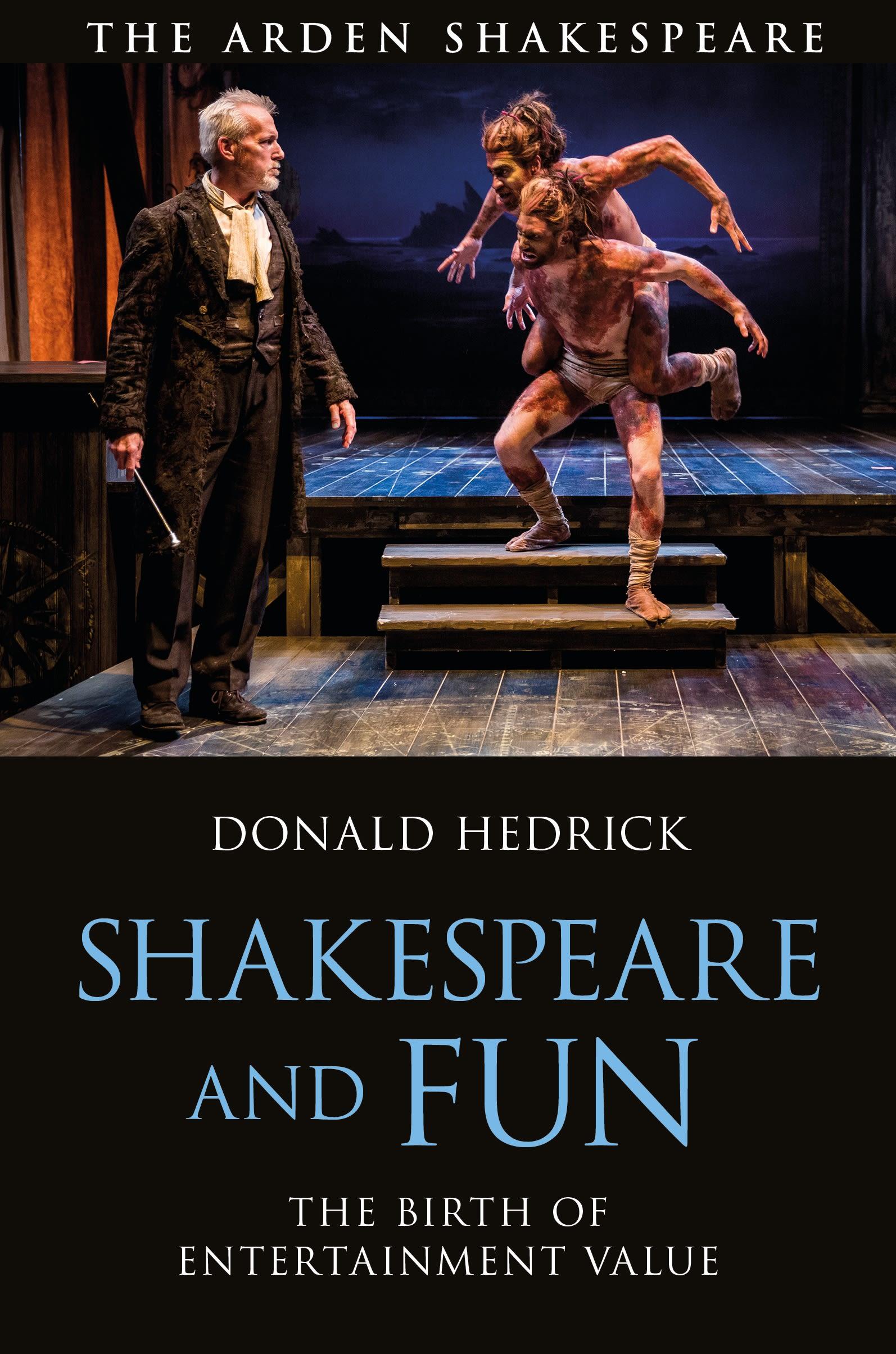
In this bold, original study Hedrick proposes an early modern 'entertainment value' revolution, to which Shakespeare contributed and in which he played a competitive role.
As London's nascent capitalist industry developed and the variety of entertainments proliferated, theatre contributes to the birth of entertainment value and a commercial trajectory toward what Marxist critic Adorno theorizes as 'fun,' seen contemporaneously in LasVegasization and the election of Donald Trump to U.S. Presidency.
In this innovative approach to Shakespeare's plays through their compulsory, competitive relation to other choices from London's entertainment industry, such as sex work and gaming, Hedrick recovers a coherent internal dynamic of theatre's 'pleasure enclosure' accompanying the revolutionary logic of capital's new cultural and economic extremes.
Applying these relations to original, insightful readings of A Midsummer Night's Dream, The Winter's Tale, and The Taming of the Shrew, Hedrick draws from cultural studies, contemporary and personal parallels, wide-ranging historical materials, and political theory. These include: the semantic shifts in keywords of pleasure, the practice of betting on actors, the psychology of paying admission before an entertainment, and various 'reality shows' such as contests of prose and verse. Continual insights emerge, both broad and specific: from ten 'entertainment value axioms' to Shakespeare's awareness of entertainment value's birth at moments in his late plays, marking a logic of value crisis, bubbles, and the danger of 'too much fun.'
As London's nascent capitalist industry developed and the variety of entertainments proliferated, theatre contributes to the birth of entertainment value and a commercial trajectory toward what Marxist critic Adorno theorizes as 'fun,' seen contemporaneously in LasVegasization and the election of Donald Trump to U.S. Presidency.
In this innovative approach to Shakespeare's plays through their compulsory, competitive relation to other choices from London's entertainment industry, such as sex work and gaming, Hedrick recovers a coherent internal dynamic of theatre's 'pleasure enclosure' accompanying the revolutionary logic of capital's new cultural and economic extremes.
Applying these relations to original, insightful readings of A Midsummer Night's Dream, The Winter's Tale, and The Taming of the Shrew, Hedrick draws from cultural studies, contemporary and personal parallels, wide-ranging historical materials, and political theory. These include: the semantic shifts in keywords of pleasure, the practice of betting on actors, the psychology of paying admission before an entertainment, and various 'reality shows' such as contests of prose and verse. Continual insights emerge, both broad and specific: from ten 'entertainment value axioms' to Shakespeare's awareness of entertainment value's birth at moments in his late plays, marking a logic of value crisis, bubbles, and the danger of 'too much fun.'
Betal nemt med kort, Klarna, Apple Pay eller Google Pay. Ikke tilfreds? Du har altid 14 dages fortrydelsesret. Læs mere i vores vilkår. Har du spørgsmål, så send os en mail på hello@memmo.org.
Memmo gør det nemmere at studere – uanset hvor du er i verden. Hos os samler du dine kursusbøger og smarte studieværktøjer ét sted: resuméer, quizzer, podcasts og flashcards. Og så er der Ted, din studieven, der svarer på alt, du undrer dig over. Over 50 000 studerende studerer allerede her – bygget til at hjælpe dig med at lære hurtigere og stresse mindre.