
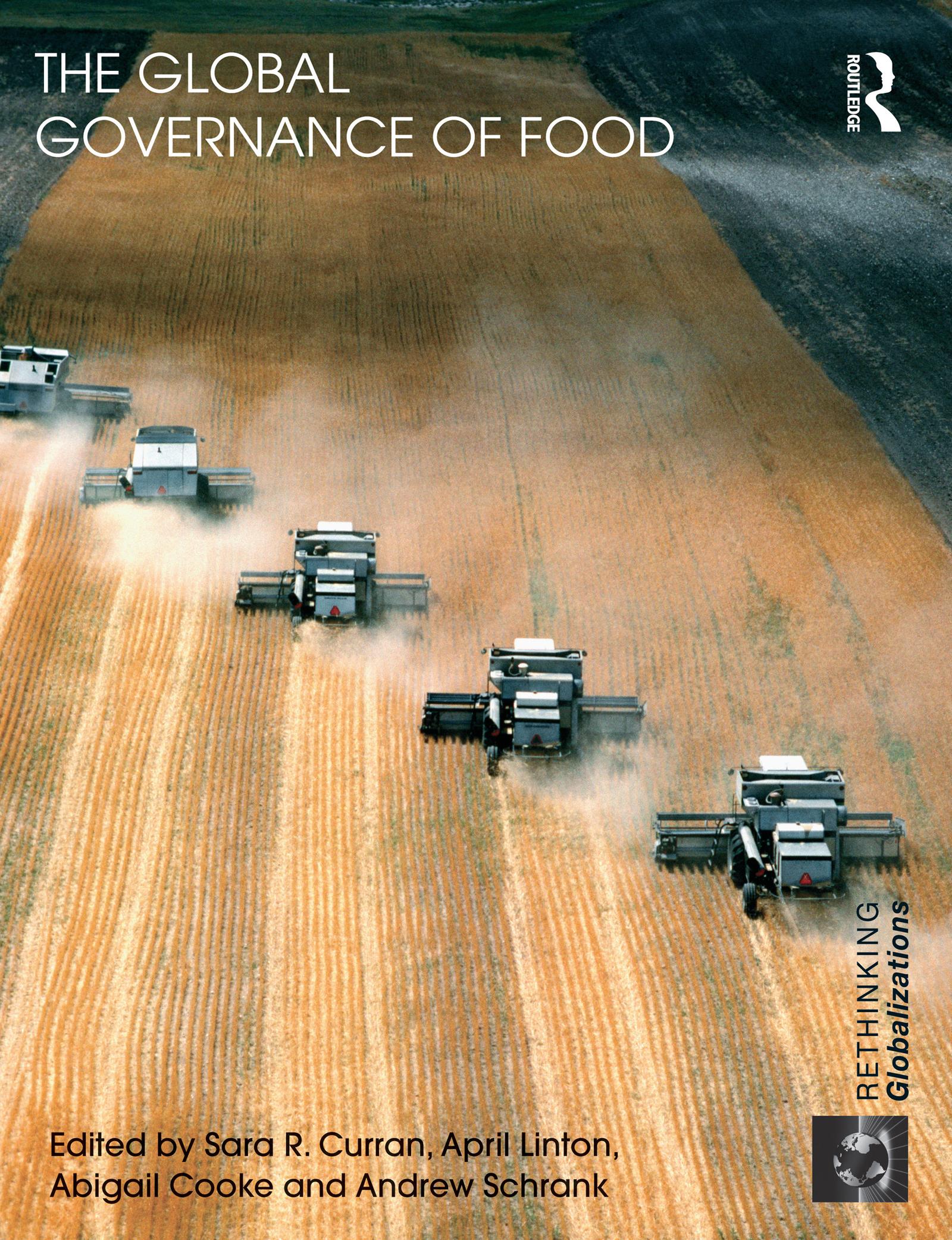
Food provides a particularly exciting and grounded research site for understanding the mechanisms governing global transactions in the 21st century. While food is intimately and fundamentally related to ecological and human well-being, food products now travel far flung trade routes to reach us. International trade in food has tripled in value and quadrupled in volume since 1960 and tracing the production, movement, transformation, and consumption of food necessitates research that situates localities within global networks and facilitates our capacity to "see the trees and the forest" by zooming from the global to the local and back to the global.
Our need for food is a constant; how we acquire food is a variable; and the production, commercialization, and consumption of food therefore offer an invaluable window onto the globalization of the world we inhabit. Food provides an ideal site for answering the fundamental questions of governance of central concern to globalization debates. This book presents recent and interdisciplinary scholarship about the variety of mechanisms governing global food systems and their impacts on human and environmental well-being
This book was previously published as a special issue of Globalizations
Betal nemt med kort, Klarna, Apple Pay eller Google Pay. Ikke tilfreds? Du har altid 14 dages fortrydelsesret. Læs mere i vores vilkår. Har du spørgsmål, så send os en mail på hello@memmo.org.
Memmo gør det nemmere at studere – uanset hvor du er i verden. Hos os samler du dine kursusbøger og smarte studieværktøjer ét sted: resuméer, quizzer, podcasts og flashcards. Og så er der Ted, din studieven, der svarer på alt, du undrer dig over. Over 50 000 studerende studerer allerede her – bygget til at hjælpe dig med at lære hurtigere og stresse mindre.