
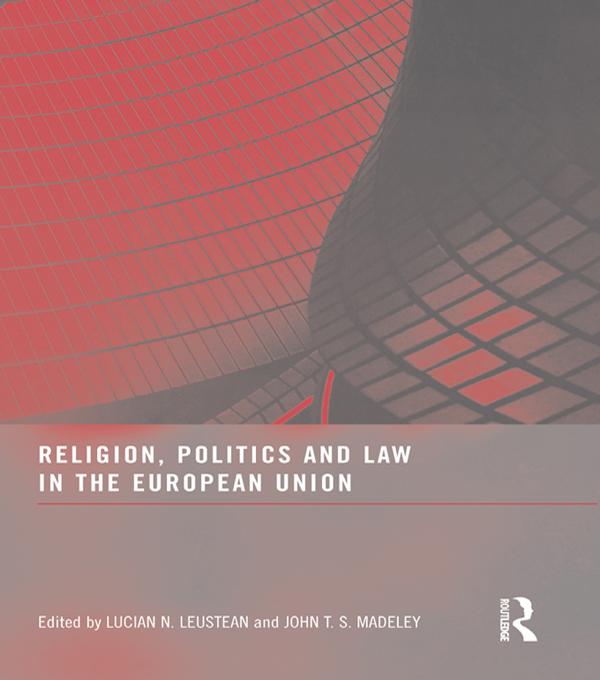
EU enlargement - to countries in Central and Eastern Europe in 2004, the inclusion of Bulgaria and Romania in 2007, and increasing debates on Turkey’s membership - has dramatically transformed the European Union into a multi-religious space. Religious communities are not only shaping identities but are also influential factors in political discourse. This edited volume examines the activities of religious actors in the context of supranational European institutions and the ways in which they have responded to the idea of Europe at local and international levels. By bringing together scholars working in political science, history, law and sociology, this volume analyses key religious factors in contemporary EU architecture, such as the transformation of religious identities, the role of political and religious leaders, EU legislation on religion, and, the activities of religious lobbies.
This book was published as a special issue of Religion, State and Society.
Betal nemt med kort, Klarna, Apple Pay eller Google Pay. Ikke tilfreds? Du har altid 14 dages fortrydelsesret. Læs mere i vores vilkår. Har du spørgsmål, så send os en mail på hello@memmo.org.
Memmo gør det nemmere at studere – uanset hvor du er i verden. Hos os samler du dine kursusbøger og smarte studieværktøjer ét sted: resuméer, quizzer, podcasts og flashcards. Og så er der Ted, din studieven, der svarer på alt, du undrer dig over. Over 50 000 studerende studerer allerede her – bygget til at hjælpe dig med at lære hurtigere og stresse mindre.