
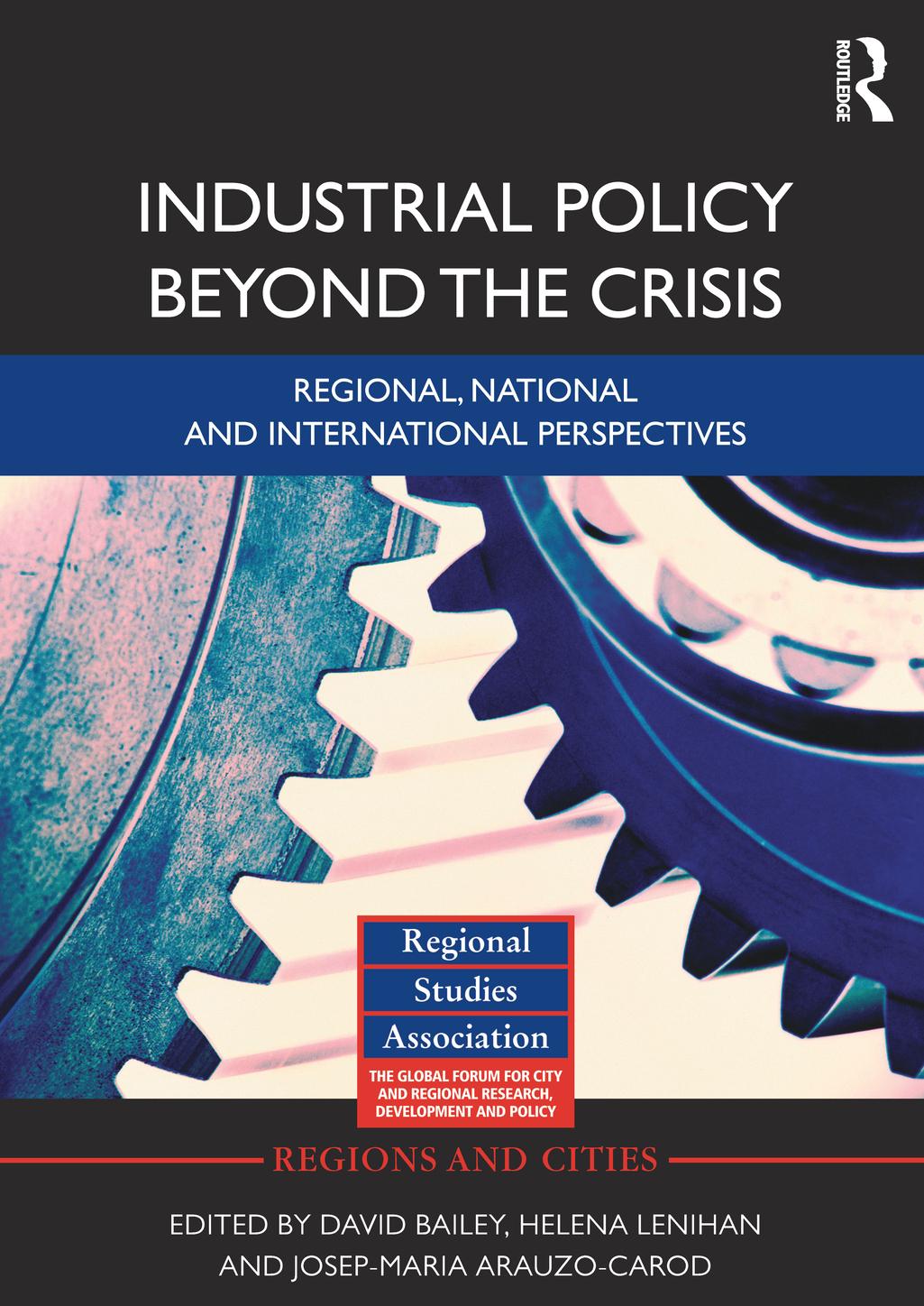
After years of official disrepute, industrial policy (IP) is back in vogue at regional, national and international levels driven by concerns over competitiveness, globalisation, de-industrialisation, unemployment and the comparatively slow growth of the EU economy especially in this post-recession phase. At the same time, IP has been seen as a catalyst for designing economic recovery strategies at regional, national and international levels, as well as being a concerted strategy to develop new ‘clean-tech’ industries to tackle environmental challenges.
If anything, the recent global recession and credit crunch have highlighted the fragility of some states’ and localities’ economic development paths and the unbalanced nature of their economies, in terms of an over-reliance on sectors such as retail, financial services, and construction, to the detriment of manufacturing. This also suggests an accompanying need for greater economic diversity so as to avoid over-dependencies on certain sectors, and a better balance of ownerships forms.
But what should be the shape of IP in the wake of the crisis and how can IP rebalance economies, help support sustainable development and catalyse new technologies and innovations whilst learning lessons from past experience and debate? This edited volume examines these questions through a wide range of diverse contributions from expert international authors.
This book was originally published as a special issue of Policy Studies.
Betal nemt med kort, Klarna, Apple Pay eller Google Pay. Ikke tilfreds? Du har altid 14 dages fortrydelsesret. Læs mere i vores vilkår. Har du spørgsmål, så send os en mail på hello@memmo.org.
Memmo gør det nemmere at studere – uanset hvor du er i verden. Hos os samler du dine kursusbøger og smarte studieværktøjer ét sted: resuméer, quizzer, podcasts og flashcards. Og så er der Ted, din studieven, der svarer på alt, du undrer dig over. Over 50 000 studerende studerer allerede her – bygget til at hjælpe dig med at lære hurtigere og stresse mindre.